Written by: Doug Camplejohn, CEO & Co-Founder, Coffee
Key Takeaways
- Clari focuses on enterprise AI pipeline forecasting with predictive deal scoring and pipeline health inspection, but it relies on clean CRM data and manual entry.
- Clari’s high costs (median ACV $81k+) and 30 to 60 day implementations make it a poor fit for SMBs without RevOps teams.
- Coffee’s autonomous agent automates data entry from emails, calendars, and meetings, which solves the “garbage in, garbage out” problem and supports more reliable forecasts.
- Coffee offers faster deployment measured in days or weeks, SMB-friendly pricing, and flexible integrations as a standalone CRM or Salesforce/HubSpot companion.
- Choose Coffee for agent-driven pipeline intelligence that saves 8 to 12 hours per week on manual tasks and delivers dependable revenue predictions.
Clari AI Pipeline Forecasting Overview for Enterprise Teams
Clari’s RevAI platform operates as an enterprise-grade AI system that analyzes CRM data to generate revenue predictions and pipeline insights. Clari maintains a 4.6/5 G2 rating with 92% satisfaction for pipeline management and primarily serves large organizations with complex sales processes.
How Clari Forecasting Processes CRM Data
Clari automatically captures data from connected CRM systems like Salesforce and HubSpot, then applies machine learning models to historical deal patterns, rep performance, and market conditions. The platform processes structured data such as deal stages, close dates, and opportunity values to generate predictive insights for revenue teams.
Clari Predictive Deal Scoring in Practice
The predictive scoring engine evaluates deals based on historical win and loss patterns, engagement metrics, and sales velocity indicators. G2 users rate Clari’s dashboard analytics and rep performance tracking positively, which highlights the strength of the platform’s analytical capabilities.
Clari Pipeline Health Inspection and Data Gaps
Pipeline health monitoring identifies at-risk deals through automated analysis of deal progression, stakeholder engagement, and competitive dynamics. However, ZoomInfo identifies incomplete CRM data and missed deal signals as key issues that undermine forecast accuracy in revenue intelligence platforms.
Clari Pros: Enterprise-grade analytics, comprehensive reporting, established integrations.
Clari Cons: High cost (median ACV $81,227 over $50k, ranging from $18k to $435k+), complex implementation, dependency on manual data entry, limited SMB accessibility.
Deep Dive on Clari Accuracy, Data Requirements, and Limits
Clari claims forecast accuracy rates of 95%+ for enterprise clients with clean data foundations. This claim sits above typical AI forecasting benchmarks of 75 to 90 percent, which already outperform traditional methods that reach only 50 to 70 percent accuracy. That level of performance depends on consistently clean CRM data, which many organizations struggle to maintain.
Implementation usually takes 30 to 60 days for full enterprise deployment, and much of that time goes into data preparation. Days 1 to 30 focus on a comprehensive data quality audit across CRM and related systems, while Days 31 to 60 involve loading 12 to 24 months of historical data for model training. This timeline reflects the effort required to reach the data standards that support Clari’s accuracy claims.
The platform’s primary limitation comes from its reliance on existing CRM data quality. Bad data creates bad forecasts, and revenue intelligence platforms that rely on incomplete or outdated information miss deal signals and generate unreliable predictions. For SMBs without dedicated RevOps teams, this dependency turns into a major barrier to adoption and long-term success.
Recent 2026 updates add enhanced AI conversation analysis and stronger integration capabilities. Pricing for smaller organizations remains opaque, which makes budgeting and comparison more difficult for SMB buyers.
Clari vs Coffee: Side-by-Side AI Pipeline Comparison
The following comparison shows how Coffee’s autonomous approach addresses Clari’s core constraints around data quality, implementation complexity, and SMB accessibility.
| Criteria | Clari | Coffee | Advantage |
|---|---|---|---|
| Data Automation | Manual CRM entry required | Autonomous agent captures emails, calendars, meetings | Coffee |
| Forecasting Accuracy | 95%+ with clean data | High accuracy via automated data quality | Tie |
| SMB Pricing | Median ACV $81,227 (over $50k, range $18k to $435k+) enterprise focus | Seat-based pricing for SMBs | Coffee |
| Implementation Time | 30-60 days for full enterprise deployment | Days to weeks with agent automation | Coffee |
| CRM Integrations | Salesforce, HubSpot, others | Standalone CRM + Salesforce/HubSpot companion | Coffee |
Coffee’s autonomous agent maintains ground-truth data quality by automatically capturing and structuring information from emails, calendars, and meeting transcripts. Coffee’s AI search on deals answers natural-language questions such as “Which deals are stuck in negotiation?” or “What’s closing this month?” and delivers pipeline intelligence without ongoing manual data maintenance.

A company generating tens of millions in revenue from custom AI solutions replaced spreadsheet-based sales management with Coffee’s agent. The autonomous data capture removed manual entry bottlenecks, and Pipeline Compare features automated weekly pipeline reviews. This shift demonstrated Coffee’s value for high-growth teams that need accurate forecasting without extra administrative overhead.
Best-Fit Coffee Use Cases Across SMB and Mid-Market
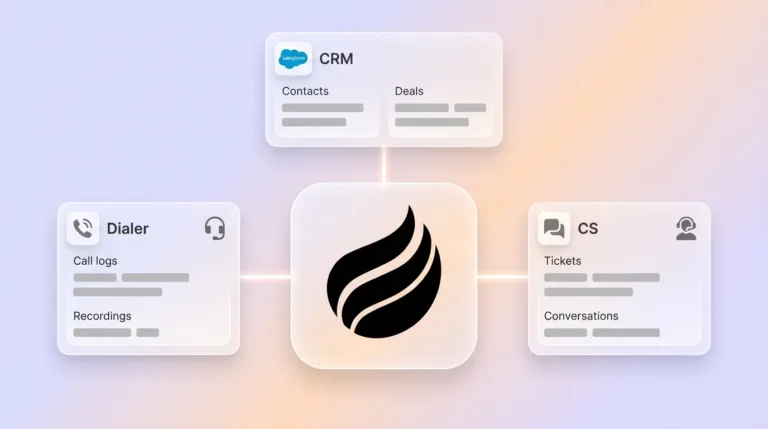
Coffee serves two main segments. SMBs use it as a standalone CRM that replaces spreadsheets and manual systems. Mid-market companies deploy Coffee as a companion agent for existing Salesforce or HubSpot instances. In both cases, the agent handles data hygiene, activity logging, and pipeline intelligence automatically, which makes it a strong fit for teams without dedicated RevOps resources. See Coffee’s pricing and deployment options to remove manual data entry from your sales process.

Coffee’s agent-first approach scales from founder-led sales teams to mid-market organizations and delivers consistent data quality regardless of team size or CRM sophistication. This contrasts with Clari’s focus on large enterprises that already have mature operations and data practices.
Operational Risks with Clari and How Coffee Reduces Them
Clari implementations face significant risk from data dependency, with sales reps failing to log activities and managers relying on spreadsheets, which severely compromises pipeline health visibility. High costs and complex deployments further limit SMB adoption and leave growing companies with forecasting blind spots.
Coffee reduces these risks through SOC 2 Type 2 compliance, Zapier integrations, and zero-training agent deployment. The autonomous data capture removes human error from routine updates and maintains data quality that rivals premium enrichment providers.
Decision Framework for Choosing Coffee or Clari
The choice between Coffee and Clari depends on your organization’s size and data management capabilities. If you prioritize automated data entry, need SMB-friendly pricing, or want faster implementation, Coffee’s agent-driven approach removes the manual data entry burden that often undermines Clari’s accuracy. Enterprises with dedicated RevOps teams and complex integration requirements may still favor Clari’s established ecosystem despite the higher cost. For most SMBs and mid-market teams without RevOps resources, Coffee delivers superior ROI by solving the data quality problem at its source. Compare Coffee’s plans to find the right fit for your forecasting needs.
FAQ
What is Clari AI pipeline forecasting?
Clari AI pipeline forecasting is an enterprise revenue intelligence platform that uses machine learning to analyze CRM data and predict sales outcomes. The system processes deal stages, rep performance, and historical patterns to generate revenue forecasts and identify at-risk opportunities. Clari’s RevAI engine automatically captures data from connected systems like Salesforce and HubSpot and then provides predictive insights for sales leadership.
How accurate is Clari forecasting?
Clari claims forecast accuracy rates of 95%+ for enterprise clients with clean data foundations. This performance exceeds typical AI forecasting benchmarks of 75 to 90 percent. However, accuracy depends heavily on underlying CRM data quality, and incomplete or manually entered data can significantly reduce prediction reliability.
What does Clari pricing cost?
Clari’s median annual contract value exceeds $81k, with deployments ranging from $18k to over $435k depending on user count and modules. The platform targets large organizations with dedicated RevOps teams, which makes it cost-prohibitive for most SMBs and early-stage companies. Implementation and training requirements add further expense beyond software licensing.
What are the best Clari alternatives for SMBs?
Coffee stands out as a leading Clari alternative for SMBs, offering autonomous agent-driven data capture and pipeline intelligence at seat-based pricing. Unlike Clari’s enterprise focus, Coffee works as either a standalone CRM for small teams or a companion agent for existing Salesforce or HubSpot instances. The agent automates data entry from emails, calendars, and meetings, which supports accurate forecasting without manual maintenance.

How does Coffee improve pipeline forecasting?
Coffee improves pipeline forecasting through autonomous data capture that removes manual entry errors and supports consistent data quality. The agent automatically logs activities, enriches contacts, and tracks deal progression from email and calendar interactions. Pipeline Compare features visualize week-over-week changes and highlight stalled opportunities, so teams gain accurate insights without asking reps to update CRM fields manually.