Written by: Doug Camplejohn, CEO & Co-Founder, Coffee
Key Takeaways
- AI agent automation eliminates manual CRM data entry, freeing sales reps from 71% time waste and boosting selling time to over 35%.
- Pipeline forecasting AI delivers 15-50% accuracy gains over traditional weighted methods by capturing ground-truth data from emails, calls, and transcripts.
- Coffee’s agent saves 8-12 hours per rep weekly with real-time Pipeline Compare and seamless Salesforce and HubSpot integration.
- Implementation moves quickly, with value in days via Google Workspace or Microsoft 365 connection and full adoption in 30-90 days with SOC 2 security.
- Transform your forecasts with Coffee’s agent automation for reliable revenue predictability in 2026.
How This Comparison Between AI and Traditional Forecasting Works
This analysis compares AI-powered pipeline forecasting, specifically agent-driven systems that automatically capture data from emails, calls, and transcripts, against traditional weighted pipeline methods that rely on manual CRM updates. The core difference lies in data collection. AI agents remove human data entry bottlenecks, while traditional methods depend on sales reps to maintain accurate records. Both approaches aim to provide pipeline visibility and revenue predictability. AI, however, directly addresses the data quality problems that traditional methods ignore.
Five Criteria That Decide Forecasting Effectiveness
To evaluate which approach delivers better results, this comparison uses five criteria that directly affect forecast reliability. These criteria are data quality and sources, accuracy improvements, implementation effort and adoption rates, CRM integration capabilities, and real-time scalability. Each factor connects to Coffee’s core principle of “good data in, good data out.” Automated data capture must translate into reliable forecasting insights without extra manual effort from sales teams.
AI vs Traditional Pipeline Forecasting: Key Differences in Practice
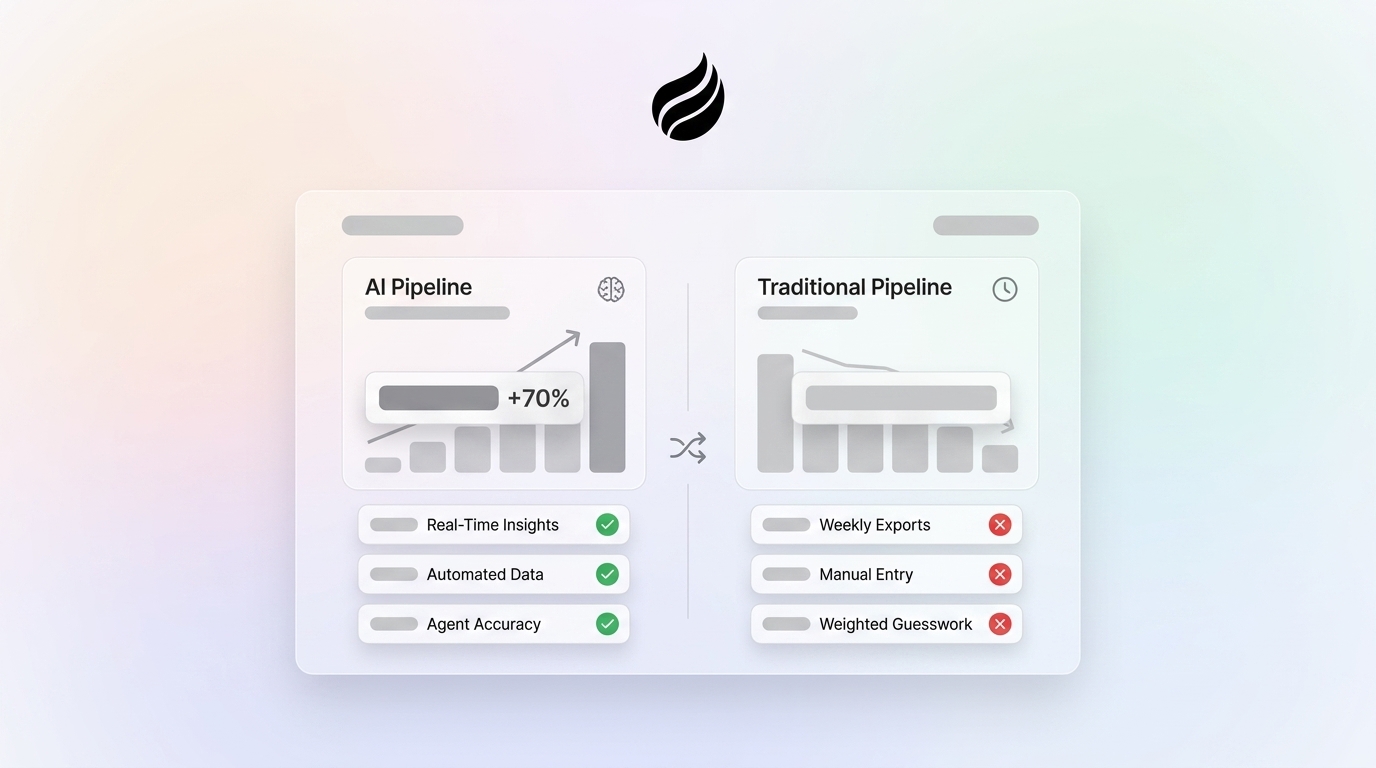
AI offers higher accuracy by automatically capturing emails and calls compared to traditional manual methods. The table below shows how Coffee’s agent automation outperforms traditional forecasting across six critical dimensions, especially in data input, where it removes most manual work, and in speed, where it delivers real-time visibility instead of weekly exports.

| Criteria | Traditional | Coffee Agent |
|---|---|---|
| Data Input | Manual CRM (71% rep time) | Auto emails, calls, transcripts |
| Accuracy | Typically lower | Higher with measurable lift |
| Speed | Weekly exports | Real-time Pipeline Compare |
| Cost | Low upfront, high labor | Seat-based, 8-12 hours per week saved |
| Adoption | Low, feels like a chore | Rep-friendly agent experience |
| Scalability | Mid-market limits | SMB to mid-market hybrid |
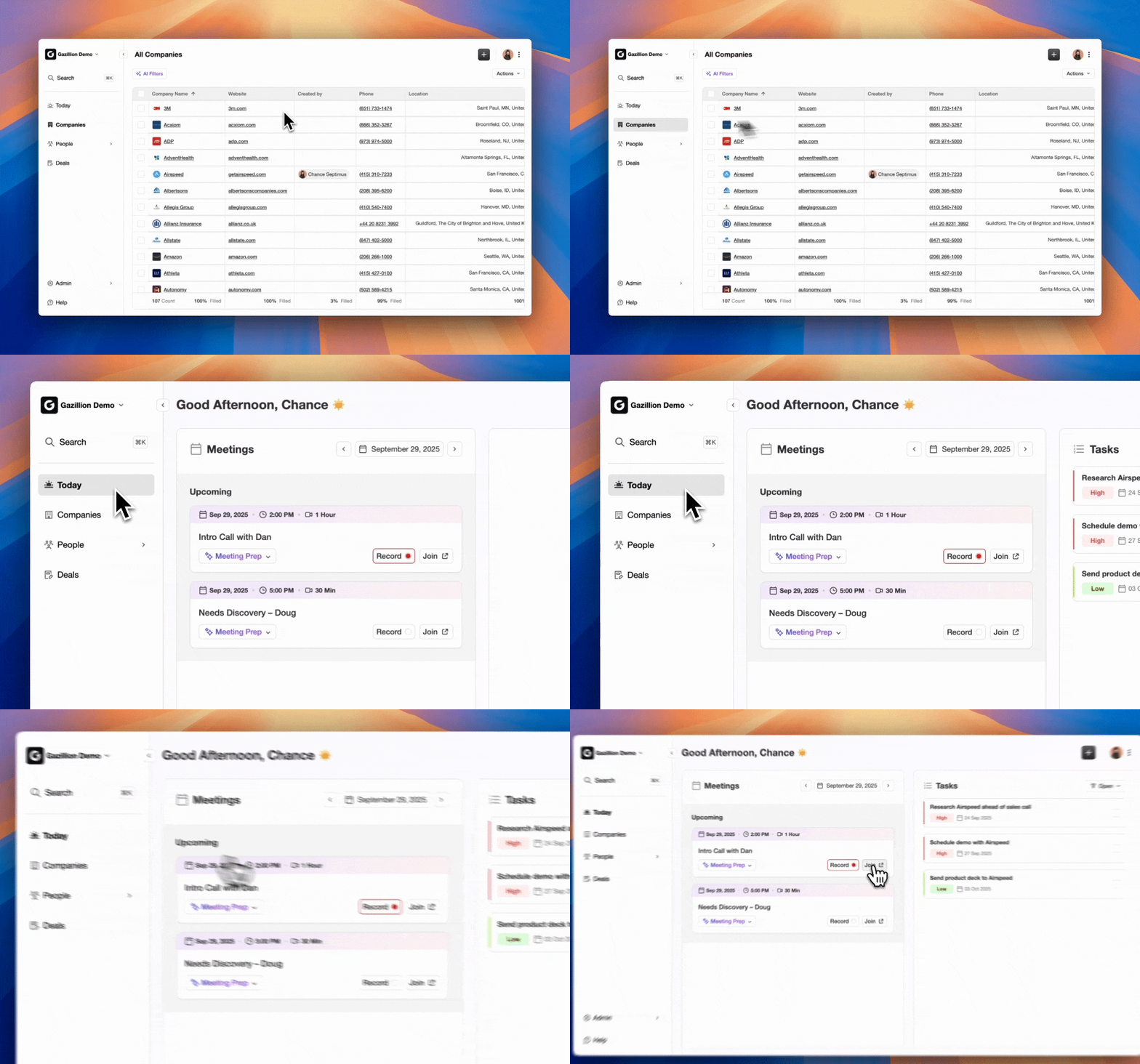
Coffee’s agent architecture delivers measurable improvements, including 8-12 hours saved per rep weekly, Pipeline Compare for real-time visibility, and seamless Salesforce and HubSpot integration. See these features in action with a personalized demo.
Data Quality: Manual Grind vs Agent Automation
Traditional forecasting suffers from the manual data entry bottleneck mentioned earlier, where reps update pipelines in batches days after calls and leave critical fields blank. Coffee’s agent automatically creates contacts, enriches company data, and logs activities from Google Workspace or Microsoft 365 connections. This automation removes the lag and inconsistency that undermine traditional CRM-based forecasts.

Accuracy and Reliability: How Teams Reach 15-50% Gains
Agent-led AI forecasting improves accuracy by capturing ground-truth data at scale and feeding it into consistent models. Coffee’s approach uses complete activity histories instead of partial notes, which reduces human bias and guesswork in deal stages and probabilities. A tens-of-millions revenue company using Coffee achieved a 20% forecast accuracy improvement after replacing spreadsheet-based tracking with automated pipeline management. Smaller teams with lighter data volumes often see gains closer to 15%, while larger, multi-segment organizations with complex cycles can reach 30-50% improvements once the agent has sufficient historical data.
Real-Time Insights vs Weekly Exports
AI forecasting gives sales leaders real-time guidance, similar to GPS navigation, while traditional methods provide static snapshots. Coffee’s Pipeline Compare feature visualizes week-over-week changes automatically. It highlights progressed deals, stalled opportunities, and new additions without manual CSV exports or spreadsheet manipulation. Leaders see what changed, why it changed, and where to intervene during the current week.

CRM Integrations for Teams on Salesforce or HubSpot
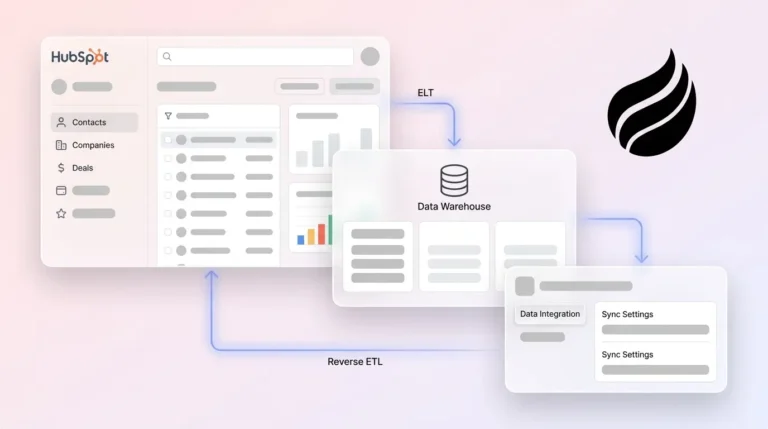
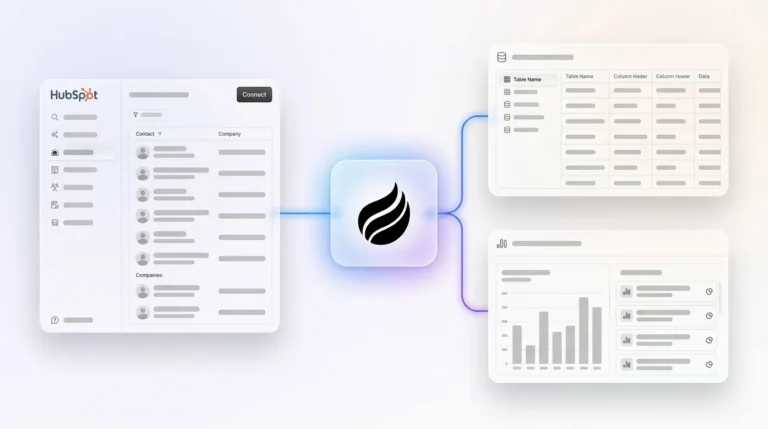
Coffee supports teams that rely on existing Salesforce or HubSpot instances through its Companion App model. The agent acts as an intelligent layer that handles data input while preserving the familiar CRM interface. This approach reduces adoption friction that often blocks traditional forecasting improvements and lets teams benefit from automation without a disruptive system switch.
Best-Fit Use Cases and How to Choose Your Approach
Best-fit use cases help teams decide when to adopt agent-led AI forecasting and how to deploy it. Small businesses benefit from Coffee’s Standalone CRM, where the agent powers the entire platform and removes the need for multiple disconnected tools. Mid-market companies with existing Salesforce or HubSpot investments should deploy Coffee’s Companion App to enhance their current system while keeping established workflows intact.

Traditional methods remain viable only for very small teams with stable, highly predictable sales cycles, although these teams trade away accuracy for simplicity. Any organization that prioritizes growth, data accuracy, and consistent forecasting benefits from agent-led automation as volume and complexity increase. Agent AI proves most reliable when it runs on ground-truth data warehouse architecture, which keeps all captured activity data consistent and queryable over time.
2026 Implementation Roadmap and Key Buying Considerations
A clear implementation roadmap helps teams plan the shift from traditional forecasting to agent-led AI. Coffee deployment typically starts in Week 1 by connecting Google Workspace or Microsoft 365, which enables immediate contact and activity capture. Month 1 focuses on Pipeline Compare adoption and team training so managers and reps build habits around real-time views instead of static reports.
Full enterprise deployment often takes 6-12 months, with initial results visible within 90 days. This longer phase covers rollout across regions, teams, and complex approval flows. During planning, teams should evaluate Zapier integration capabilities for connecting adjacent tools, SOC 2 security compliance for enterprise standards, and seat-based pricing models that scale with team growth. These considerations align the deployment timeline with security, budget, and integration requirements.
Risks, Limitations, and a Practical Decision Framework
Traditional forecasting offers low upfront software costs but often delivers consistently inaccurate results that hurt planning and quota setting. Generic AI solutions provide surface-level improvements yet fail to fix the underlying data quality issues that come from manual entry. Coffee’s agent-first architecture scores highest for data-driven organizations that want measurable forecast improvements based on complete, accurate activity data.
The decision matrix favors Coffee for teams experiencing forecast variance above 20% or spending excessive time on manual pipeline updates. Teams that fit this profile can use a Coffee-led pipeline audit to compare current accuracy, data completeness, and rep time spent against an automated baseline. Schedule a pipeline audit with Coffee’s agent to see where automation can close your accuracy gap.
Frequently Asked Questions
How much better is AI vs weighted pipeline accuracy?
AI forecasting typically delivers around 20% better accuracy than traditional weighted pipeline methods for most mid-market teams. AI systems reach higher accuracy for near-term forecasts because they process more complete data sources and reduce human bias in pipeline assessment. Larger organizations with complex deal cycles can see improvements beyond 20% once the agent has enough historical data to learn from.
What is the best AI solution for HubSpot users?
Coffee’s Companion App represents a strong AI solution for existing HubSpot users. It deploys as an intelligent agent layer that automatically captures data from emails and calls, then syncs insights back to HubSpot without disrupting established workflows. This approach keeps familiar interfaces in place while adding agent-powered automation and more reliable forecasting.
How long does AI forecasting implementation take?
Coffee implementation begins delivering value within days of connecting Google Workspace or Microsoft 365. Initial pipeline insights appear immediately, and most teams reach full adoption within about 30 days. More complex enterprise deployments may require up to 90 days for complete rollout across regions and teams, but core functionality activates as soon as the connection is live.
Is AI forecasting secure for enterprise use?
Coffee maintains SOC 2 Type 2 and GDPR compliance for enterprise security requirements. Customer data is not used to train public AI models, which keeps proprietary information protected. The agent processes data within secure, isolated environments that align with enterprise security standards.
Which forecast model is most reliable?
Agent-led AI forecasting built on clean, automatically captured data proves most reliable for consistent accuracy. Traditional methods depend on manual data entry, and generic AI often works with poor-quality inputs. Agent-based systems like Coffee protect data integrity from capture through analysis, which produces the most dependable forecast outputs.
Conclusion: Choosing AI Agents Over Manual Forecasting
AI agents like Coffee solve the root cause of forecast inaccuracy, which is bad data from manual entry processes. By automating data capture from emails, calls, and calendars, Coffee enables the 15-50% accuracy improvements that support quota attainment and revenue predictability. The choice between traditional and AI forecasting determines whether sales teams spend their time on data entry or on strategic selling. Get started with Coffee to turn your pipeline from a manual burden into an automated competitive advantage.