Written by: Doug Camplejohn, CEO & Co-Founder, Coffee
Key Takeaways
- Enterprise deals stall when teams miss the MEDDIC Economic Buyer, the budget owner with final veto authority.
- Use a 7-step playbook: map via champions, follow money trails, apply the 3-3-3 rule, ask targeted questions, spot red flags, read buyer stages, and confirm engagement.
- Separate Economic Buyers, who focus on ROI and budgets, from Technical Buyers and other roles by authority level and clear behavioral signals.
- Avoid traps like trusting titles alone and ignoring red flags such as “I will check with my manager” or a purely technical focus.
- Speed up economic buyer discovery up to 2x with Coffee’s AI CRM Agent, which pulls intelligence from transcripts and emails automatically.
Why the MEDDIC Economic Buyer Controls Enterprise Outcomes
Enterprise buying committees involve complex structures with about 13 stakeholders on average and 89% of decisions crossing multiple departments. Champions often protect economic buyers from direct outreach, while legacy CRMs ignore unstructured intelligence from emails and calls that exposes real budget control.
Misidentifying the economic buyer creates wasted pilots, longer sales cycles, and lower win rates on complex deals. Traditional CRM systems miss crucial signals hidden in conversations and messages, so sales teams work from partial data when they try to map the buying committee.
Economic Buyer vs Technical Buyer: Readiness Check for EB Hunting
Teams need a solid foundation before they start serious economic buyer identification. Ensure your CRM logs calls, supports strong champion relationships, stores organizational charts, and reflects a basic understanding of the MEDDIC framework. The main blind spot usually sits in unstructured data from emails and transcripts where economic buyer clues appear.
Understanding the distinction between buyer roles supports this preparation. The table below shows how Economic Buyers differ from Technical Buyers and other stakeholders in focus, authority, and typical titles.
| Buyer Role | Focus | Authority Level | Common Titles |
|---|---|---|---|
| Economic | ROI/Budget | Veto/Approve | CFO, VP, or C-suite with budget authority |
| Technical | Fit/Tech | Validate | CTO/Eng Leads |
| User | Usability | Recommend | End Users |
| Influencer | Support | Advocate | Champions |
Coffee’s AI Agent enriches buyer role data from Google Workspace and Microsoft 365, so teams avoid manual stakeholder mapping.

7-Step MEDDIC Playbook for Finding the Economic Buyer
Core actions for identifying the Economic Buyer:
- Map Organization via Champion Intel
- Follow the Money Trail
- Apply the 3-3-3 Rule
- Use Focused Economic Buyer Questions
- Watch for Red Flags
- Read the 4 Buyer Stages in Conversations
- Confirm Authority and Engage
Step 1: Map Organization via Champion Intel
Start with your champion and build a clear picture of the org. Ask for organizational charts and trace P&L responsibility upward. Profit centre leaders with P&L responsibility or control over multiple budget lines across departments usually hold economic buyer authority. Request introductions to budget owners and record reporting lines as you go.
Step 2: Follow the Money Trail
Focus on how money moves through the account. Identify budget approval processes, RFP requirements, and procurement involvement, because these steps reveal who controls spending decisions. Budget approval often slows software buying decisions, so pay close attention to people who describe those gates in detail. Look for contacts who drive financial analysis and ROI conversations, since these signals often point to the economic buyer or someone close to them.
Step 3: Apply the 3-3-3 Rule
Validate your early assumptions with multiple perspectives. Schedule 3 meetings with 3 different influencers to gather 3 concrete pieces of proof about economic buyer identity. This structure reduces single-source bias and highlights consistent patterns that point toward real budget authority.
Step 4: Use Focused Economic Buyer Questions
Targeted questions reveal who truly controls budget and veto power. Use questions like the examples below during discovery and later-stage conversations.
| Question | Purpose |
|---|---|
| “Who holds budget authority for this investment level?” | Direct budget identification |
| “Who has veto power over this decision?” | Uncover hidden decision makers |
| “What is your approval process for $X investments?” | Map decision workflow |
| “Who else needs to sign off on investments at this level?” | Identify additional stakeholders |
| “How are similar purchases typically approved here?” | Understand precedent |
Step 5: Recognize Red Flags
Language often exposes when a contact is not the real economic buyer. Phrases such as “This looks good, but it needs to go to the board,” “I will have to check with my manager,” or “We need to run this by finance” signal limited authority. Use the table below to interpret common warning signs.
| Red Flag | Why Not Economic Buyer |
|---|---|
| “Check with manager” | No veto authority |
| Tech focus only | Ignores ROI considerations |
| “Too busy” for calls | Too busy to buy |
| No calendar control | Lacks executive authority |
Step 6: Read the 4 Buyer Stages in Live Deals
Use live conversations to place each contact in a clear buyer stage. Economic Buyers talk about budget cycles, risk, and ROI timelines. Technical Buyers focus on integration, security, and architecture. User Buyers describe workflows, adoption, and daily friction. Influencers advocate for your solution but defer budget questions to others. Mapping contacts to these stages prevents confusion between an enthusiastic Technical Buyer and the person who actually controls spend.
Step 7: Confirm Authority and Engage Strategically
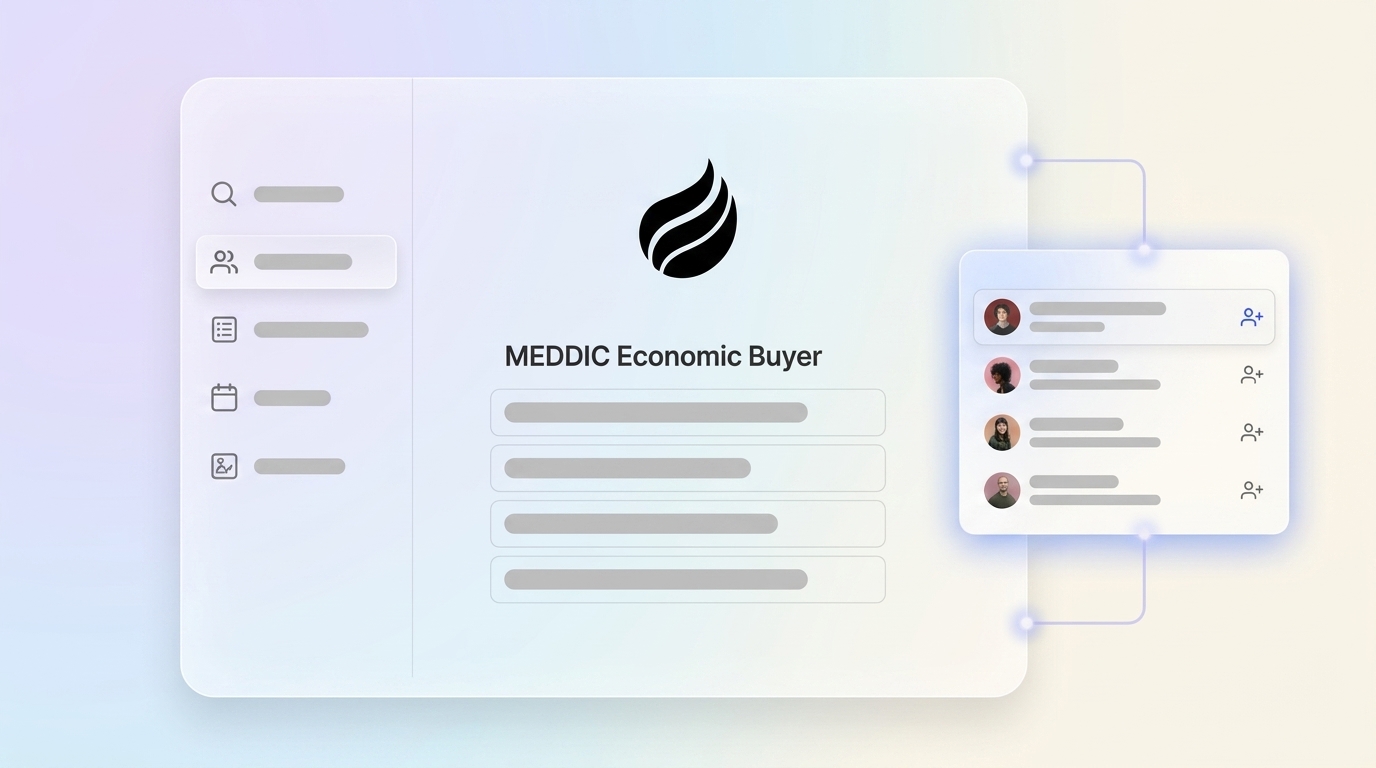
Confirm veto power with direct, respectful questions and then expand your reach across the account. Multi-threaded deals with 5 or more contacts reach about 30% win rates compared to 5% for single-threaded deals, a 6x improvement. Coffee’s AI Agent logs economic buyer intelligence from call transcripts and structures MEDDIC notes so teams can validate authority consistently across the pipeline.

See how Coffee automates MEDDIC qualification across every opportunity.
Common Economic Buyer Mistakes and How to Fix Them
Teams often lean on job titles instead of real authority, confuse energetic champions with budget holders, and overlook shadow approvers. A Director in one company may own P&L while a VP in another holds limited authority, so title-based assumptions break quickly. Coffee’s AI Agent connects structured CRM data with conversation insights, which exposes actual decision patterns and reduces these common errors.
Validation Signals: 4 Buyer Stages and the 3-3-3 Rule in Practice
Real economic buyers show budget sign-off authority, urgency around business outcomes, and interest in strategic impact instead of tactical details. Accurate economic buyer identification produces measurable gains. Early decision-maker involvement lifts win rates by 55% according to Ebsta and Pavilion’s 2025 B2B Sales Benchmarks. Coffee’s Pipeline Compare feature tracks how proper economic buyer engagement changes deal velocity and conversion.
Scaling Economic Buyer Discovery with Coffee
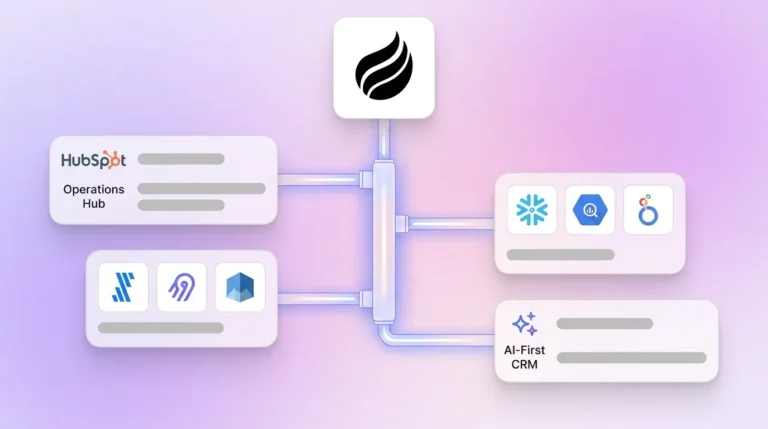
Large organizations with more than 1000 employees need repeatable economic buyer discovery across many business units and reporting layers. Coffee works as a standalone CRM or as a companion to Salesforce and HubSpot, delivering automated contact enrichment, meeting briefings, MEDDIC-structured summaries, and List Builder support. One recent customer with tens of millions in revenue rejected traditional CRMs due to heavy manual data entry and chose Coffee for automated economic buyer discovery through transcript analysis.

Deploy Coffee’s AI agent to automate economic buyer discovery across complex enterprise accounts.
Frequently Asked Questions
What titles do MEDDIC Economic Buyers typically hold?
Economic Buyers often hold CFO, COO, VP, or other C-suite roles with P&L responsibility. Titles vary widely across companies, so focus on who owns the budget and carries veto power. In enterprise software deals, economic buyers frequently include general managers, CEOs, presidents, and business unit leaders who control the relevant spend.
What tools help automatically identify Economic Buyers?
Coffee’s AI CRM Agent captures economic buyer intelligence from call transcripts, emails, and calendar data, then structures insights using the MEDDIC framework. The agent enriches contact records with titles, funding details, and org relationships while logging mentions of economic buyers and budget discussions without extra manual work.

How does Coffee support MEDDIC Economic Buyer identification?
Coffee’s AI Agent structures call notes around MEDDIC, flags economic buyer mentions from transcripts, enriches stakeholder data with budget authority signals, and uses Pipeline Compare analytics to show how economic buyer engagement affects deal speed and win rates.
Conclusion
Consistent identification of the MEDDIC Economic Buyer depends on a clear 7-step process that covers mapping, money trails, the 3-3-3 rule, focused questions, red flags, buyer stages, and authority confirmation. Coffee’s AI Agent turns this manual work into automated intelligence capture, which shortens economic buyer discovery cycles and supports higher win rates. Let Coffee’s AI agent handle economic buyer discovery while your team focuses on running great conversations and closing deals.