Written by: Doug Camplejohn, CEO & Co-Founder, Coffee
Key Takeaways
- B2B SaaS teams struggle with MEDDIC because checkbox fatigue, admin overload, and rep resistance turn qualification into paperwork.
- AI agents capture data from calls, emails, and calendars, then fill MEDDIC fields without manual CRM updates.
- Conversation analysis and stakeholder mapping help solve Economic Buyer identification and remote Champion building.
- MEDDIC fits most SaaS deals better than MEDDPICC, while AI adjusts qualification depth for short cycles and ABM motions.
- Implement AI-driven MEDDIC qualification with Coffee to improve forecasting accuracy and sales velocity.
How MEDDIC Works And Why SaaS Teams Get Stuck
MEDDIC (Metrics, Economic Buyer, Decision Criteria, Decision Process, Identify Pain, Champion) gives structure to complex B2B qualification. It goes deeper than simpler frameworks like BANT by mapping buying committees and decision processes that drive enterprise deals. However, 70% of CRM data is outdated, incomplete, or inaccurate, which weakens every MEDDIC field.
Modern B2B SaaS environments amplify these weaknesses. Remote selling limits the relationship building that strong Champions require, while compressed cycles push reps to skip full qualification. Fragmented tool stacks scatter MEDDIC data across platforms and force reps to stitch it together manually. As a result, sales reps spend just 2 hours per day actually selling, and MEDDIC-related admin work consumes much of the remaining time.
Choosing MEDDIC Or MEDDPICC For Modern SaaS
MEDDIC fits complex enterprise environments with 3 to 6 month sales cycles and $50K to $200K deal sizes. It can feel heavy for SMB SaaS or very short cycles. MEDDPICC targets complex enterprise B2B sales with $100K+ deals, 3 to 12 month cycles, and 5 to 15 or more stakeholders. For most B2B SaaS teams, MEDDIC delivers enough qualification depth without the extra Paper Process and Competition overhead.
Even this simpler framework still breaks down in practice. The next seven challenges show how MEDDIC fails inside modern SaaS motions and how AI agents close those gaps.
Challenge 1: MEDDIC Turns Into A Checkbox Routine
Sales teams often treat the MEDDIC sales methodology as a rigid checklist, which creates time-intensive paperwork and checklist fatigue. Reps fill CRM fields after calls instead of weaving qualification into live conversations. This pattern produces shallow Champions, weak pain discovery, and unreliable forecasts.
Hybrid selling models in B2B SaaS intensify this checkbox behavior. Reps rush through rapid demo cycles and skip real Pain Identification, then backfill MEDDIC fields later just to satisfy managers. Treating MEDDPICC as a post-call checklist represents the most common failure mode, and the same dynamic appears with MEDDIC.
AI-Agent Playbook:
- Use conversation intelligence to auto-tag MEDDIC elements during calls.
- Structure meeting summaries around Metrics, Pain, and Champion discovery.
- Suggest follow-up questions when MEDDIC components remain blank.
- Fill CRM fields directly from transcript analysis.
The following table shows how AI agents correct specific MEDDIC checkbox failures that coaching alone rarely fixes.
| MEDDIC Element | Checkbox Challenge | Traditional Fix Failure | AI Agent Mitigation |
|---|---|---|---|
| Metrics | Generic ROI claims | Manual coaching ignored | Coffee's MEDDIC-structured summaries help log specific metrics |
| Pain | Surface-level symptoms | Discovery training gaps | AI identifies pain indicators from conversation context |
| Champion | Contact confusion | Relationship mapping fails | Automated stakeholder analysis from email patterns |
Stop treating MEDDIC as paperwork. Automate qualification capture with Coffee's AI agents.
Challenge 2: Admin Work And CRM Logging Drain Selling Time
Manual call notes and CRM updates create the largest time sink in many MEDDIC rollouts. Sales reps spend roughly 27% of their working hours dealing with inaccurate CRM data. That effort steals time from relationship building and deal movement.
Teams often juggle ZoomInfo for Economic Buyer research, Gong for conversation analysis, and manual CRM updates for Decision Process mapping. Because these tools rarely sync context automatically, reps must move insights by hand into the CRM. This fragmentation multiplies data entry work and creates qualification gaps when reps skip the consolidation step.
AI-Agent Playbook:
- Enrich contacts and companies automatically from email signatures.
- Create MEDDIC-formatted meeting summaries on every call.
- Sync qualification data across CRM, email, and calendar without manual effort.
- Open follow-up tasks whenever key MEDDIC elements remain incomplete.
The table below highlights how AI automation replaces specific MEDDIC admin tasks that slow reps down.

| Admin Task | Time Impact | Manual Process Failure | AI Automation Benefit |
|---|---|---|---|
| Contact Creation | Time per prospect | Incomplete profiles | Auto-enriched from email and calendar data |
| Meeting Notes | Full meeting notes take 5 to 10 minutes to generate post-call | Inconsistent format | MEDDIC-structured summaries in 30 seconds |
| Next Steps | Planning Next Steps takes a suggested 10 to 15 minutes | Forgotten follow-ups | AI-generated action items with deadlines |
This growing admin burden feeds the rep resistance covered next, as sellers feel every new MEDDIC rule adds more clicks.
Challenge 3: Reps Push Back On MEDDIC Rollouts
Sales framework rollouts often fail without daily reinforcement and clear value. Reps see MEDDIC as bureaucratic overhead that slows deals and adds scrutiny. Resistance to change, lack of understanding, and inconsistent application are common challenges when implementing the MEDDIC sales framework.
Fast-paced SaaS motions intensify this resistance. The thoroughness of MEDDIC can extend sales cycles, which conflicts with organizations that prioritize speed over deal quality. When reps already feel buried in admin work, they rarely embrace additional fields or steps.
AI-Agent Playbook:
- Show value through automated insights instead of extra tasks.
- Deliver real-time coaching during calls based on live MEDDIC gaps.
- Report pipeline improvements that come from stronger qualification.
- Cut manual effort while deepening MEDDIC coverage.
The following table outlines how AI agents address specific sources of rep resistance more effectively than traditional enforcement.
| Resistance Source | Rep Concern | Traditional Response | AI-Agent Solution |
|---|---|---|---|
| Time Investment | "Too much paperwork" | Manager enforcement | Automated data capture reduces effort |
| Complexity | "Too many fields" | Training sessions | Intelligent prompts guide discovery naturally |
| Relevance | "Doesn't fit our deals" | Process modification | Adaptive frameworks based on deal characteristics |
This resistance grows stronger in short-cycle environments, where every extra step feels like friction, which sets up the next challenge.
Challenge 4: Short Sales Cycles Create Analysis Paralysis
MEDDIC can feel heavy for SMB SaaS or short cycles where teams sometimes prefer BANT. Full MEDDIC coverage can create analysis paralysis in fast-moving deals when buyers expect quick answers. Guidance often suggests focusing on the most critical MEDDIC steps to maintain velocity.
Teams selling to SMBs often work within 30 to 60 day windows. Comprehensive MEDDIC qualification feels excessive in that context, so reps skip steps to keep momentum. Forecast accuracy then suffers because deals look qualified on paper but lack real depth.
AI-Agent Playbook:
- Rank MEDDIC elements by importance based on deal size and timeline.
- Use conversation analysis to qualify rapidly during early calls.
- Produce lightweight qualification summaries tailored to short cycles.
- Emphasize Economic Buyer and Pain for quick but meaningful coverage.
The table below shows how AI agents adjust MEDDIC focus by deal type without slowing cycles.
| Deal Type | Cycle Length | MEDDIC Focus | AI Optimization |
|---|---|---|---|
| SMB SaaS | <30 days | Economic Buyer and Pain | Rapid qualification from first call |
| Mid-Market | 30 to 90 days | Full MEDDIC minus Process | Progressive qualification across touchpoints |
| Enterprise | 90+ days | Complete MEDDIC | Comprehensive stakeholder mapping |
Right-sizing MEDDIC for deal speed still leaves a deeper challenge. Complex buying committees make Economic Buyer identification harder than ever.
Challenge 5: Finding The Real Economic Buyer In Committees
Common MEDDIC challenges include gaining access to the Economic Buyer, mapping the decision process, and building strong Champions. Modern B2B buying now involves an average of 13 internal stakeholders and nine external influencers, according to Forrester's 2026 “State of Business Buying” report. This complexity makes Economic Buyer identification far more difficult.
Many SaaS deals start with users or technical evaluators instead of budget owners. Reps often confuse the Economic Buyer, who controls budget, with the Champion, who advocates internally. That confusion leads to late-stage surprises when real decision makers appear with new requirements.
AI-Agent Playbook:
- Build organizational hierarchies from email domains and signatures.
- Infer budget authority from conversation cues and role titles.
- Track stakeholder engagement across all touchpoints.
- Propose Economic Buyer outreach plans based on Champion insights.
The next table illustrates how AI clarifies stakeholder roles that often blur in manual MEDDIC execution.

| Stakeholder Role | Identification Challenge | Traditional Approach | AI-Enhanced Method |
|---|---|---|---|
| Economic Buyer | Hidden from initial contact | Champion introduction requests | Org chart analysis from email patterns |
| Technical Evaluator | Multiple evaluators | Discovery call mapping | Feature discussion analysis |
| Champion | Influence vs authority confusion | Relationship building | Engagement scoring across interactions |
Identifying the Economic Buyer still leaves another gap. Teams must also build and maintain Champions in remote-first environments.
Challenge 6: Building And Reading Champions In Remote Deals
Remote selling limits the informal interactions that often create strong Champions. Missing early engagement with the Economic Buyer can also prolong cycles, which raises the stakes for every Champion interaction. Video calls provide fewer relationship signals than in-person meetings, so Champion identification becomes harder.

Digital touchpoints now carry most Champion development work. Teams must interpret email, chat, and calendar data to understand influence and advocacy. Traditional indicators like meeting count or basic responsiveness no longer tell the full story in remote environments.
AI-Agent Playbook:
- Score email sentiment and response patterns for Champion signals.
- Track meeting participation depth and engagement levels.
- Detect internal advocacy through forwarded emails and introductions.
- Recommend Champion development plays based on interaction history.
The table below shows how AI surfaces remote Champion signals that manual tracking often misses.
| Champion Signal | Remote Challenge | Manual Tracking | AI Detection |
|---|---|---|---|
| Internal Advocacy | Invisible conversations | Direct questioning | Email forwarding pattern analysis |
| Influence Level | Limited org visibility | LinkedIn research | Meeting attendee hierarchy mapping |
| Engagement Quality | Video call limitations | Subjective assessment | Response time and sentiment scoring |
These Champion and Economic Buyer challenges compound when teams run Account-Based Marketing programs across many contacts in each account.
Challenge 7: Extending MEDDIC Across ABM Accounts
Account-Based Marketing requires consistent MEDDIC qualification across many contacts in each target account. That requirement creates data fragmentation and visibility gaps. Traditional CRMs rarely unify MEDDIC data across account teams, so opportunities slip through the cracks.
ABM-focused SaaS teams need MEDDIC visibility across marketing campaigns, SDR outreach, and AE conversations. Manual coordination between these groups introduces blind spots and duplicate work, especially when each team tracks qualification in separate tools.
AI-Agent Playbook:
- Aggregate MEDDIC data from every account interaction.
- Highlight qualification gaps at the account level.
- Coordinate SDR and AE qualification efforts with shared insights.
- Produce account-wide MEDDIC summaries for planning and reviews.
The following table summarizes how AI agents unify MEDDIC data across ABM motions that usually stay siloed.

| ABM Challenge | Data Fragmentation | Manual Coordination | AI Unification |
|---|---|---|---|
| Multi-contact qualification | Scattered across reps | Weekly sync meetings | Real-time account intelligence |
| Campaign attribution | Marketing and sales silos | CRM field mapping | Unified interaction timeline |
| Stakeholder mapping | Individual rep knowledge | Shared spreadsheets | Dynamic org chart updates |
These seven challenges, from checkbox fatigue to ABM fragmentation, share a common root cause. Legacy CRMs depend on manual data entry and maintenance, which MEDDIC magnifies. AI agents reverse this pattern by capturing qualification data automatically across every touchpoint.
How Coffee's AI Agents Scale MEDDIC
Agent-led CRMs turn MEDDIC from manual qualification into automated intelligence. Instead of waiting for humans to type notes, AI agents ingest unstructured data from emails, transcripts, and calendars, then populate qualification frameworks. Coffee.ai introduced an Intelligence layer in February 2026 that stores deep context on business model, product, ICP, and competitors for tailored suggestions and insights.
The Coffee Agent workflow starts with data ingestion from Google Workspace or Microsoft 365, then automatically creates contacts and enriches company records. Custom Meeting Briefings and Summaries, launched in February 2026, let users define formats such as executive summaries or technical breakdowns. This automation keeps MEDDIC data flowing into CRM systems without extra rep effort.

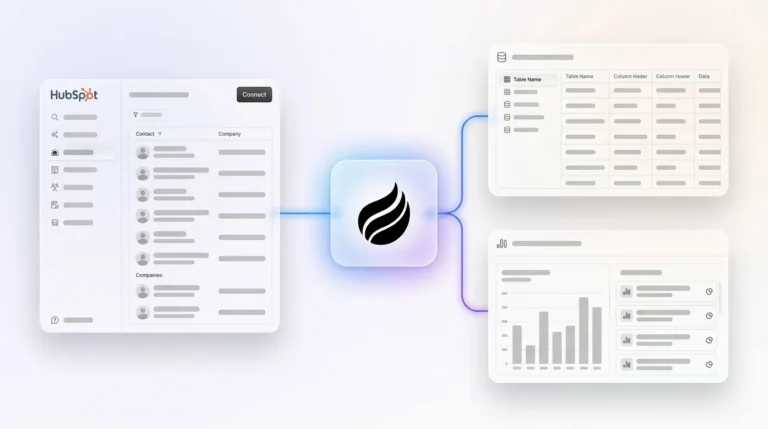
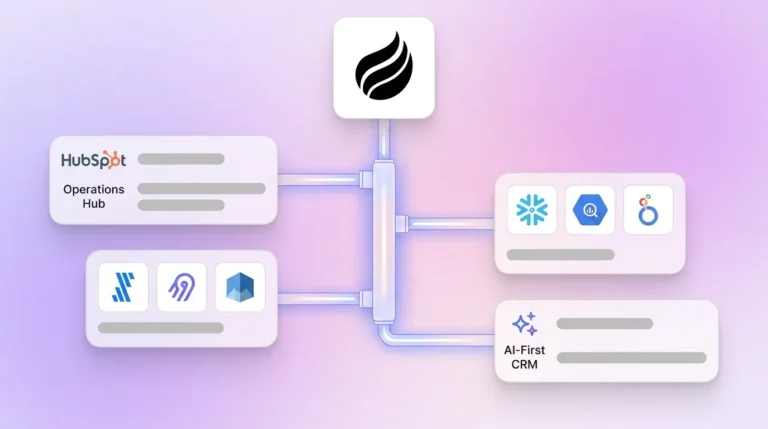
Coffee can run as a Standalone CRM for smaller teams or as a Companion App for Salesforce or HubSpot. This flexibility lets teams adopt AI-driven MEDDIC qualification without ripping out existing systems. One $10M ARR company, for example, moved from spreadsheets to agent-managed qualification using Coffee as the intelligence layer.
These capabilities need proof, so recent benchmarks and product releases help quantify the impact on MEDDIC workflows.
Evidence And 2026 MEDDIC Benchmarks
The 2-hour selling time mentioned earlier aligns with 2026 sales productivity benchmarks. The same data set shows that automation tools can reduce non-selling time by 66%, which directly supports automated MEDDIC qualification.
Coffee's agent-led approach differs from passive CRMs by actively managing data quality and qualification consistency. AI search on deals, released in January 2026, answers natural-language questions such as “Which deals are stuck in negotiation?” or “What's closing this month?”. This capability turns MEDDIC data into live pipeline intelligence instead of static fields.
Coffee maintains SOC 2 Type 2 and GDPR compliance to meet enterprise security standards. Improved summary templates released in November 2025 are customizable to match workflows and can write back to Coffee, HubSpot, or Salesforce. These controls keep sensitive MEDDIC data secure while still enabling automation.
Frequently Asked Questions
What are the main MEDDIC challenges in B2B SaaS sales teams?
The primary challenges include checkbox fatigue where reps fill fields without real qualification, high administrative burden from manual CRM logging, and rep resistance to perceived bureaucracy. Teams also struggle with mismatched complexity for short cycles, difficulty finding Economic Buyers in committees, remote Champion building, and ABM data fragmentation. Legacy CRMs that depend on manual data entry sit at the center of these issues.
How does AI automate MEDDIC qualification in CRM systems?
AI agents automate MEDDIC by ingesting unstructured data from emails, call transcripts, and calendars, then filling qualification fields. The system detects Metrics discussions, flags Economic Buyer mentions, tracks Decision Criteria changes, maps Decision Processes from stakeholder interactions, extracts Pain indicators from customer language, and scores Champion engagement. This automation delivers consistent qualification with far less manual effort.
Should B2B SaaS teams use MEDDIC or MEDDPICC?
Most B2B SaaS teams benefit more from MEDDIC than MEDDPICC. MEDDIC provides enough qualification depth for deals under $100K with shorter cycles. MEDDPICC adds Paper Process and Competition, which can create unnecessary overhead for typical SaaS transactions. Teams selling enterprise contracts above $100K with formal procurement cycles gain more from MEDDPICC's extra detail.
How does Coffee integrate with existing Salesforce or HubSpot systems?
Coffee works as a Companion App that syncs qualification data in both directions with Salesforce or HubSpot. The agent enriches existing records, creates new contacts from email interactions, and writes MEDDIC-structured summaries back to the primary CRM. This approach preserves the system of record while adding an intelligent automation layer for MEDDIC consistency.
What are the best practices for improving MEDDIC adoption rates?
Teams improve MEDDIC adoption by cutting manual effort through automation, proving value with better forecast accuracy, and offering real-time coaching during qualification conversations. Matching framework complexity to deal characteristics also helps, as does consistent reinforcement through AI-driven insights. The focus should stay on automated data capture paired with rigorous qualification standards.
How secure is AI agent technology for sensitive sales data?
Enterprise-grade AI agents maintain SOC 2 Type 2 and GDPR compliance with encrypted data in transit and at rest. Customer data does not train public models, which protects confidentiality. Access controls, audit trails, and clear data retention policies support enterprise security while still enabling automated MEDDIC workflows.
Conclusion
MEDDIC implementation challenges in modern B2B SaaS sales stem from legacy CRMs that demand manual data entry and ongoing maintenance. AI agents solve these problems by capturing data automatically, unifying qualification insights, and sustaining MEDDIC adoption without extra admin work. Teams ready to turn qualification from paperwork into pipeline intelligence should evaluate agent-led platforms that deliver clean data in and actionable insights out. Start automating your MEDDIC qualification today with Coffee to unlock consistent, scalable qualification.