Written by: Doug Camplejohn, CEO & Co-Founder, Coffee
Key Takeaways
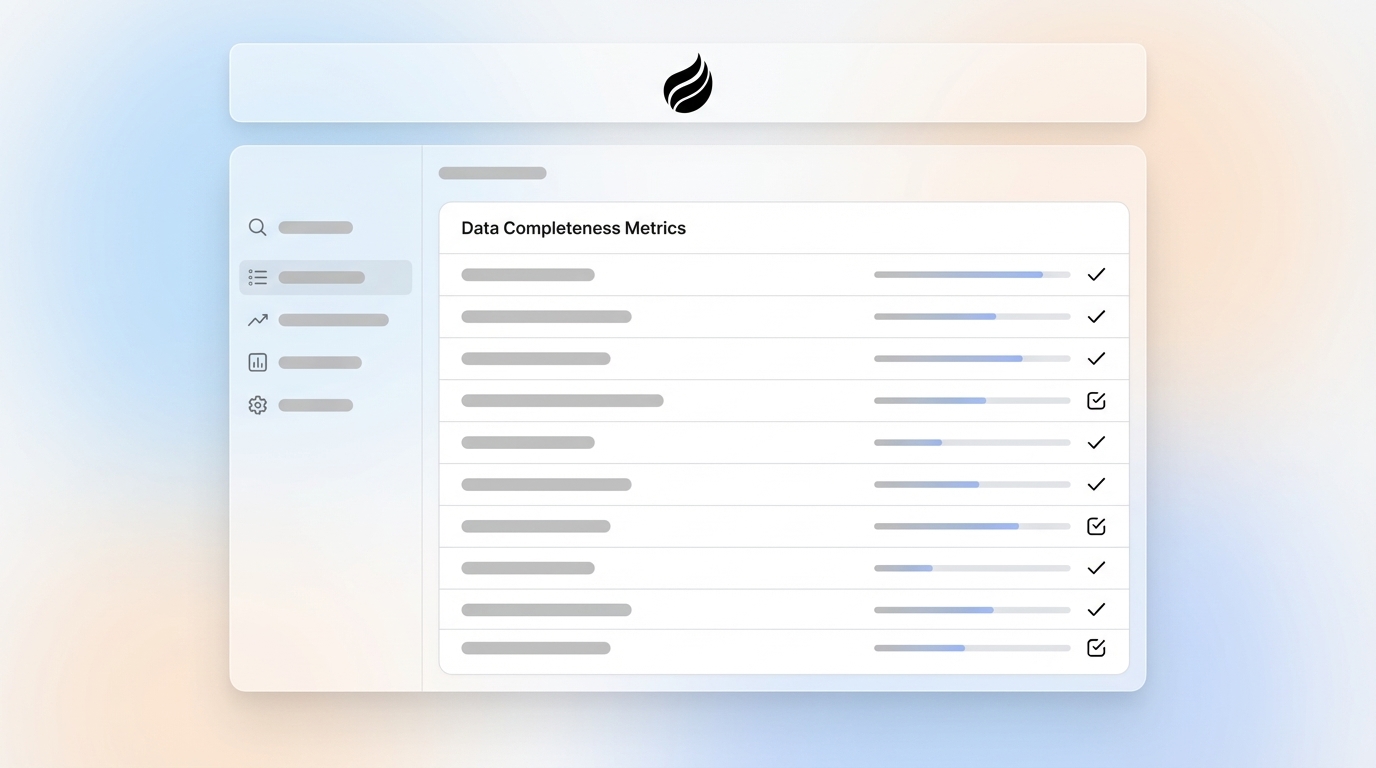
Strong CRM data completeness directly improves forecast accuracy, pipeline visibility, and rep productivity. Most teams still struggle to keep data current without burning out their sellers. The 10 metrics below work together as a simple system you can track, improve, and eventually automate with an AI Agent.
- Track 10 essential CRM data completeness metrics like Mandatory Field Completeness (95%+ target) to reduce data gaps by 70% and improve pipeline visibility.
- Prioritize Contact Detail Coverage (90%+) and Activity Logging Compliance (90%+) to boost outreach effectiveness and forecast accuracy.
- Monitor Pipeline Stage Hygiene (85%+) and Ownership Assignment Rate (98%+) to eliminate stale deals and accountability gaps.
- Achieve Record-Level Completeness (80%+) and Forecast Data Integrity (95%+) for reliable revenue predictions and shorter sales cycles.
- Automate CRM data entry with Coffee so emails, meetings, and calendars keep your records complete without extra work for reps.
The 10 Best CRM Data Completeness Metrics for Sales Teams in 2026
1. Mandatory Field Completeness (%)
Mandatory Field Completeness shows what percentage of records contain every required field for effective sales operations. monday.com defines this as (Number of records with required fields complete / Total records) × 100. Missing mandatory fields create pipeline bottlenecks, block lead qualification, and stall deal progression.
Formula: (Complete Records / Total Records) × 100
The table below highlights an aggressive but realistic target for 2026.
| Metric | 2026 Target | Source | Sales Impact |
|---|---|---|---|
| Field Completeness | 95%+ | monday.com | Clear, trustworthy pipeline visibility |
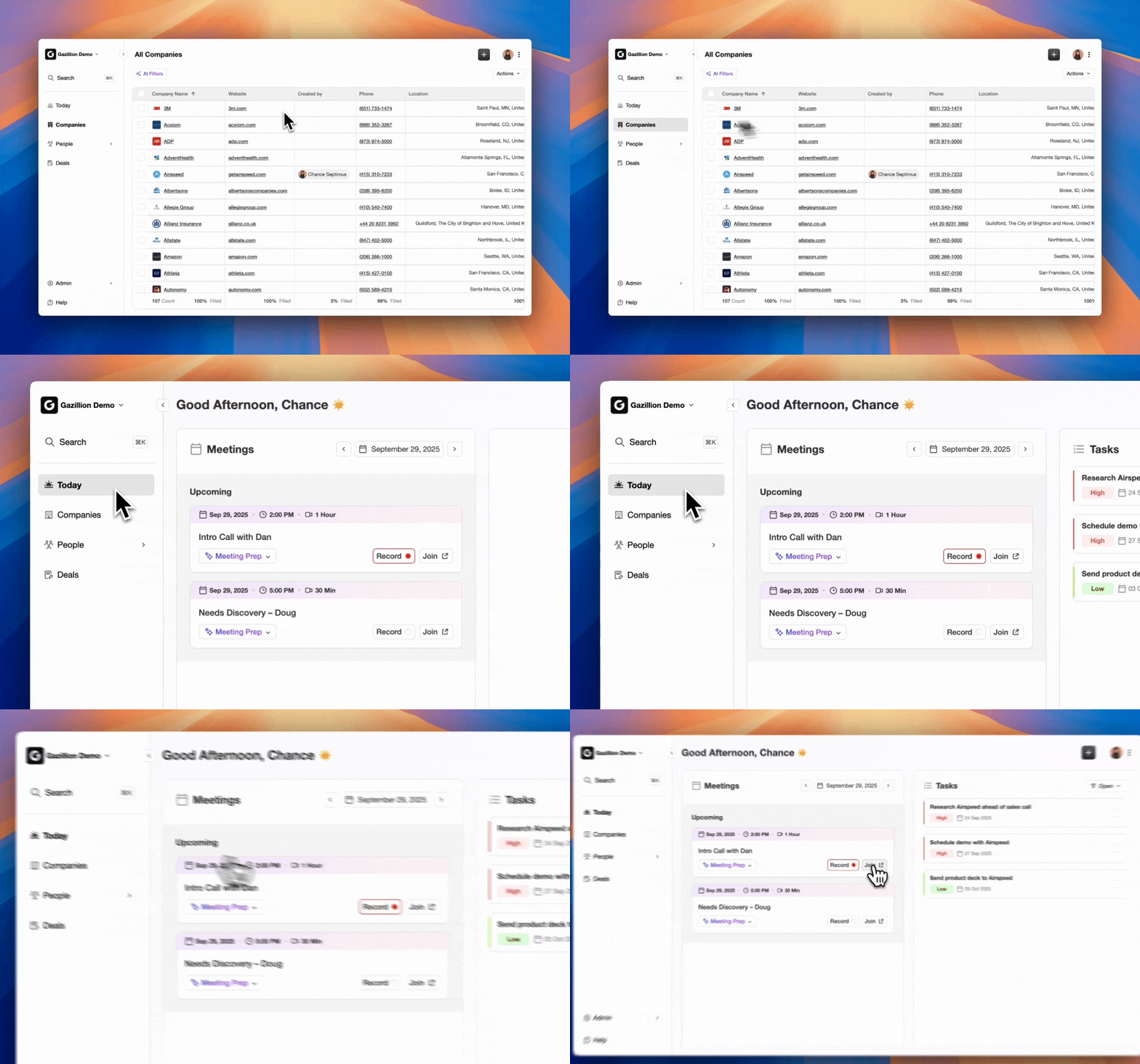
Coffee’s AI Agent populates required fields from emails, calendars, and meeting transcripts, so reps work with complete records instead of chasing missing details.

2. Contact Detail Coverage (%)
Contact Detail Coverage tracks the percentage of contact records that include the core communication details your team needs. monday.com recommends minimum fields: first name, last name, email, phone, and company. Missing contact details block outreach, follow-ups, and relationship building.
Formula: (Contacts with Complete Details / Total Contacts) × 100
Use the benchmark below to gauge whether your team can reliably reach the people in your database.
| Metric | 2026 Target | Source | Sales Impact |
|---|---|---|---|
| Contact Coverage | 90%+ | Industry Standard | Higher outreach effectiveness |
Incomplete contact records push reps into manual research, which cuts into selling time and slows deals that should move quickly.

3. Pipeline Stage Hygiene Score
Pipeline Stage Hygiene Score reflects how accurately and promptly your team updates opportunity stages. Dear Lucy flags deals stuck in late stages without activity as damaging data quality behaviors. Poor stage hygiene inflates pipeline value and distorts forecasts.
Formula: (Opportunities with Current Stages / Total Opportunities) × 100
The benchmark below shows what healthy stage maintenance looks like for modern sales teams.
| Metric | 2026 Target | Source | Sales Impact |
|---|---|---|---|
| Stage Hygiene | 85%+ | Best Practice | More accurate forecasting |
See how Coffee automates pipeline tracking so stage changes follow real interactions instead of manual updates.
4. Activity Logging Compliance (%)
Activity Logging Compliance measures what percentage of sales activities appear in the CRM. HubSpot research shows sales reps spend 19% of their time, roughly 8–12 hours per week, updating CRM systems. Weak activity logging hides key conversations and prevents accurate pipeline analysis.
Formula: (Logged Activities / Total Activities) × 100
Use the target below to understand how much of your team’s work actually shows up in reports.
| Metric | 2026 Target | Source | Sales Impact |
|---|---|---|---|
| Activity Logging | 90%+ | monday.com | Reliable pipeline visibility |
Coffee’s Agent logs calls, emails, and meetings automatically, which removes manual entry and preserves a complete interaction history.

5. Record-Level Completeness Index
Record-Level Completeness Index scores the overall quality of each record across several dimensions. Exec’s CRM Score methodology combines data quality, usage frequency, and process adherence. This metric highlights specific records that need cleanup before they mislead your team.
Formula: Σ(Field Weights × Completion Status) / Total Possible Score
The benchmark below reflects a healthy baseline for record quality across your CRM.
| Metric | 2026 Target | Source | Sales Impact |
|---|---|---|---|
| Record Completeness | 80%+ | Exec.com | Trustworthy data for decisions |
High-scoring records support better segmentation, stronger personalization, and more confident sales strategy execution.
6. Weighted Data Completeness Score
Weighted Data Completeness Score focuses your team on the fields that matter most for revenue. monday.com recommends different minimum fields for opportunities: amount, close date, stage, and assigned owner. This metric directs attention toward high-value data gaps instead of treating every field as equal.
Formula: Σ(Field Importance × Completion Rate) / Total Weight
The target below represents a strong balance between thoroughness and practicality.
| Metric | 2026 Target | Source | Sales Impact |
|---|---|---|---|
| Weighted Score | 85%+ | Best Practice | Sharper strategic focus |
Coffee enriches key fields using connected data sources and meeting intelligence, which raises your weighted score without extra admin work.
7. Last Activity Timeliness (days)
Last Activity Timeliness tracks the average number of days since the most recent activity on active records. Exec recommends activity-logging timeliness as a complementary metric to CRM Score. Long gaps between activities signal neglected opportunities and weak pipeline management.
Formula: Average(Current Date - Last Activity Date)
The benchmark below shows how frequently healthy pipelines see fresh engagement.
| Metric | 2026 Target | Source | Sales Impact |
|---|---|---|---|
| Activity Timeliness | ≤7 days | Industry Standard | Stronger deal momentum |
Recent activity data supports accurate forecasting and quickly surfaces at-risk deals that need immediate action.
8. Ownership Assignment Rate (%)
Ownership Assignment Rate shows what percentage of records have a clearly assigned owner. 34% of workers do not know who is responsible for ensuring CRM data accuracy. Unassigned records create confusion, slow follow-up, and cause missed opportunities.
Formula: (Records with Owners / Total Records) × 100
The target below reflects the level of ownership needed for consistent follow-through.
| Metric | 2026 Target | Source | Sales Impact |
|---|---|---|---|
| Ownership Rate | 98%+ | Best Practice | Clear accountability |
Strong ownership coverage ensures every prospect receives timely outreach and ongoing attention.
9. Deal History Completeness (%)
Deal History Completeness measures how many opportunities include a full interaction and progression history. Missing contact information prevents sales teams from reaching prospects, resulting in lost opportunities. Incomplete deal history weakens handoffs, renewals, and upsell conversations.
Formula: (Deals with Complete History / Total Deals) × 100
The benchmark below indicates how much context your team can rely on when revisiting accounts.
| Metric | 2026 Target | Source | Sales Impact |
|---|---|---|---|
| Deal History | 85%+ | Best Practice | Smoother deal continuity |
Complete deal history supports effective account management and better decisions throughout the sales cycle.
10. Forecast Data Integrity (%)
Forecast Data Integrity reflects the accuracy and completeness of the data that feeds your sales forecasts. Validation failures, such as revenue fields containing negative numbers, result in inaccurate sales forecasts. Weak forecast data integrity undermines planning and resource allocation.
Formula: (Valid Forecast Records / Total Forecast Records) × 100
The target below shows the level of integrity needed for leadership to trust the numbers.
| Metric | 2026 Target | Source | Sales Impact |
|---|---|---|---|
| Forecast Integrity | 95%+ | Best Practice | Confident planning accuracy |
High forecast data integrity supports reliable revenue predictions and stronger strategic decisions.
2026 Benchmarks and Practical Dashboards
Once each metric is clear, you can track them together in a simple dashboard. The table below summarizes four high-impact metrics and their 2026 targets so leaders can scan performance at a glance.
| Metric | 2026 Target | Industry Source | Impact |
|---|---|---|---|
| Field Completeness | 95%+ | monday.com | Reliable pipeline visibility |
| Contact Coverage | 90%+ | Industry Standard | Effective outreach |
| Stage Hygiene | 85%+ | Best Practice | Accurate forecasts |
| Activity Logging | 90%+ | monday.com | Full pipeline context |
Build This in Salesforce or HubSpot: Navigate to Reports, create a New Report, filter by missing required fields, group by record type, then schedule weekly delivery to sales managers.
Agent-Era Automation: 84% of organizations need complete data strategy overhauls before AI initiatives succeed, which shows that manual reporting alone is not enough. Coffee’s AI Agent unifies Google Workspace, Zoom, and email data streams to enrich records automatically without extra effort from reps. For example, a tens-of-millions revenue firm replaced spreadsheet-based sales tracking with Coffee’s automated data capture and gained real-time forecasting for the first time.
Explore Coffee’s automated data capture to reach high data completeness without adding manual overhead.
Frequently Asked Questions
How does Coffee automate CRM data completeness metrics?
Coffee’s AI Agent connects to Google Workspace, Microsoft 365, Zoom, and other business tools to capture and structure sales data automatically. The Agent scans emails for contact information, joins meetings to record interactions, and enriches records with third-party data sources. This automation removes 8–12 hours of weekly manual data entry work per sales rep.
What is a realistic benchmark for activity logging compliance in 2026?
Leading sales organizations target at least 90% activity logging compliance, and advanced teams reach 95% or higher with automation. Manual logging usually lands around 60–70% compliance because reps are busy and forget to update records. AI-powered systems like Coffee capture email, call, and meeting activities automatically, which preserves a complete interaction history without human effort.
Which CRM data completeness metrics have the highest ROI impact?
Mandatory Field Completeness and Forecast Data Integrity deliver the strongest ROI because they directly affect pipeline visibility and revenue predictability. Organizations with 95% or higher field completeness often see about 30% better forecast accuracy and 25% shorter sales cycles. Contact Detail Coverage ranks next by enabling more effective outreach and relationship-building activities.
How can small sales teams implement these metrics without dedicated RevOps resources?
Small teams can start with five core metrics: Mandatory Field Completeness, Contact Detail Coverage, Activity Logging Compliance, Ownership Assignment Rate, and Forecast Data Integrity. Most CRM platforms provide basic reporting for these metrics through standard dashboards. Coffee’s Standalone CRM and Companion App add automated data capture for these same metrics, so small teams avoid building and maintaining complex dashboards themselves.
What is Coffee’s pricing model for CRM data automation?
Coffee uses a simple seat-based pricing model where you pay for human users while the AI Agent’s unlimited work is included. You do not manage metering on data processing, API calls, or automation tasks. This transparent approach makes it easier to budget for complete CRM data automation without surprise overages or usage limits.
Conclusion: Turn CRM Data Completeness into an Automated System
Manual CRM data tracking drains sales teams and still produces unreliable metrics. The 10 CRM data completeness metrics in this guide give you a clear framework for accurate forecasting and pipeline management when you support them with automation. Coffee’s AI Agent captures, enriches, and maintains CRM data from everyday business interactions so your system stays complete in the background.
High-performing sales organizations reclaim 8–12 hours per week per rep through intelligent automation, which removes the data entry work an AI Agent can handle more accurately and consistently. That time returns to selling, coaching, and strategic account work instead of form filling.
Transform your CRM into an intelligent revenue engine with Coffee’s AI-powered automation so good data goes in and dependable insights come out.