Written by: Doug Camplejohn, CEO & Co-Founder, Coffee
Key Takeaways
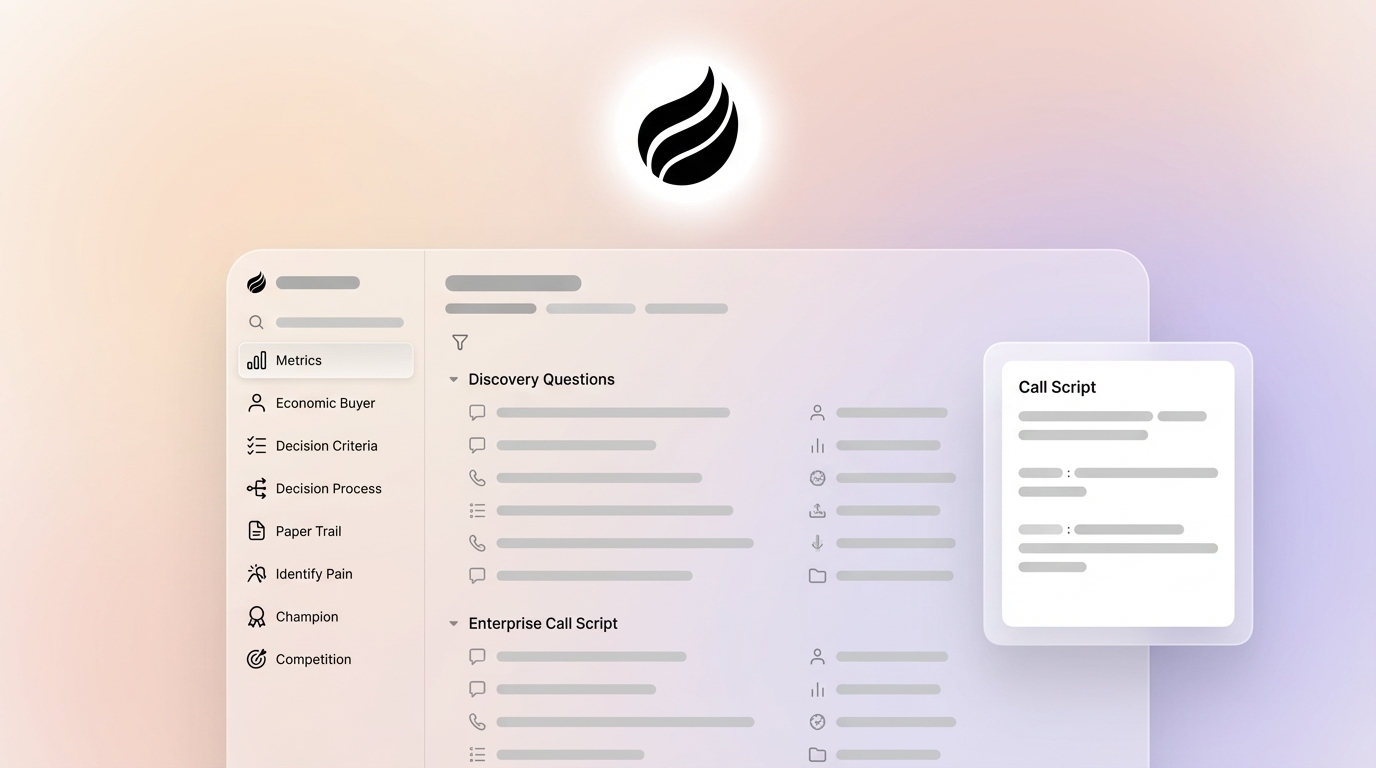
- The MEDDPICC framework – Metrics, Economic Buyer, Decision Criteria, Decision Process, Paper Trail, Identify Pain, Champion, Competition – qualifies complex enterprise B2B deals with 13+ decision-makers and 90-180 day cycles.
- Targeted questions for each MEDDPICC element uncover KPIs, budget authority, pains, and competition, boosting win rates by 18% and deal sizes by 24%.
- Enterprise discovery that quantifies ROI in customer language, maps approval processes early, and de-risks procurement hurdles can close deals 30-40% faster.
- True Champions take political risks such as scheduling economic buyer meetings, which separates them from information-sharing Coaches.
- Combining these 50+ questions with Coffee’s AI automation auto-captures and structures discovery data for accurate forecasting with zero manual entry.
Metrics Discovery Questions: Uncover KPIs That Drive Enterprise Deals
Metrics discovery forms the foundation of MEDDPICC qualification because quantified outcomes create the business case for every later conversation. These questions probe ROI and measurable outcomes amid intensified budget scrutiny. MEDDPICC Metrics must be co-created in customer language so Champions can repeat them internally to Economic Buyers.
• What does success look like for you and your team in 12 months? How do you measure it today?
• What specific KPIs or metrics do you hope to improve with a new solution?
• How much time does your team currently spend on [manual process]? What is that worth annually?
• What is the cost of your current inefficiencies in dollar terms?
• If we reduced [specific process] time by 40%, what would that save you per year?
• What metrics is your CEO tracking that this initiative would impact?
• How do you currently measure ROI on technology investments?
For Fortune 1000 accounts, focus on enterprise-scale impacts such as “reducing onboarding time from 8 weeks to 4 weeks, saving $200K annually in ramp costs.” Coffee’s AI meeting bot captures key details verbatim and enriches your CRM without manual entry, which saves 8-12 hours per week.

Economic Buyer Discovery Questions: Identify the Budget Authority Fast
Economic Buyer discovery clarifies who actually controls budget and final approval. These questions cut through organizational complexity to find the real decision-maker. Missing the Economic Buyer accounts for 30% of MEDDIC qualification failures when reps engage evaluation teams without confirming deal-killing authority.
• Who is your organization’s go-to person for this business area?
• Whose “no” kills this deal? Have we met them yet?
• Who signs off on investments of this size in your organization?
• Do they need to see the product in action before giving the green light?
• What is the approval threshold where this decision moves up the chain?
• Who controls the budget for this type of initiative?
• When did you last make a similar purchase? Who was involved in that decision?
Enterprise deals now require C-level or SVP approval for software purchases that previously needed only VP discretionary budgets. Because these senior stakeholders interact across email, calls, and executive briefings, manual tracking of every touchpoint breaks down at scale. Track Economic Buyer interactions automatically across every channel with Coffee’s AI agent.

Decision Criteria Discovery Questions: Align to Your Strengths
Decision Criteria discovery clarifies how the prospect will judge success and which factors matter most. These questions uncover evaluation standards you can influence. Sales reps can influence decision criteria to align with their product strengths if they are not predefined.
• What is the most important factor you use to evaluate solutions like ours?
• How do you plan to measure ROI if you invest in our product?
• What are your must-have requirements versus nice-to-haves?
• What would cause you to eliminate a vendor from consideration?
• How important is integration with your existing tech stack?
• What compliance or security requirements must any solution meet?
• How do you typically weight price versus functionality in these decisions?
For Fortune 1000 prospects, emphasize enterprise requirements like SAP integration, mobile access, and GDPR compliance. Follow up with “Based on what you have shared, which of these criteria would you say is most critical to get right?” Once you understand what criteria the prospect will use to evaluate solutions, the next step is mapping how they will actually make the decision, including the approval timeline, stakeholders, and potential roadblocks.
Decision Process Discovery Questions: Map the Approval Timeline
Decision Process discovery shows how the deal will move from interest to signature. These questions reveal the buying journey and potential roadblocks. Deals confirming budget range, timeline, decision process, and competition by the end of call two close 30-40% faster.
• What was the process the last time you purchased a similar solution?
• Can you walk me through your team’s steps to decide on this?
• Who else needs to be involved in this evaluation?
• What is your ideal timeline for making this decision?
• Are any upcoming budget cycles or deadlines driving this?
• What approvals or sign-offs will be required before moving forward?
• How do you typically handle vendor evaluations and comparisons?
Enterprise processes often involve 4-month timelines with legal, IT, and procurement reviews. Each review stage introduces potential delays that can derail your forecast if you have not mapped them early. That is why you should probe deeper with “What could cause delays in this timeline?” Coffee automatically structures these process details in your CRM, which keeps handoffs between AEs and SEs aligned with complete timeline context.
Paper Trail Discovery Questions: De-Risk Procurement Hurdles
Paper Trail discovery brings legal and procurement requirements into view before they stall your deal. These questions surface legal and procurement requirements early. Front-loading Paper Process documents during discovery is the single highest-leverage best practice in enterprise sales to prevent Q4 deal delays.
• What legal or compliance reviews will be required for this purchase?
• Do you have standard contract terms or MSA requirements?
• What security questionnaires or certifications do vendors need to complete?
• How does your procurement team typically handle vendor onboarding?
• Are there any data processing agreements or privacy requirements?
• What is your standard contract approval process and timeline?
• Do you require SOC 2 Type II or other compliance certifications?
28% of deals fail due to inability to secure internal approval. Enterprise deals close 2-3 weeks faster when pre-built procurement packages arrive proactively at Stage 3. Once you have de-risked the paper process, you can turn to the business pain that justifies moving through that internal effort.
Identify Pain Discovery Questions: Quantify Hidden Enterprise Pains
Pain discovery explains why the deal matters enough to move through a long internal process. These questions surface and quantify business challenges. Unquantified Metrics cause 20% of MEDDIC qualification failures, and valid metrics must be specific rather than vague efficiency statements.
• What are the main problems or bottlenecks you experience today?
• How is this affecting your business operations and results?
• What happens if you do not solve this problem in the next 12 months?
• How much time does your team lose to these inefficiencies weekly?
• What is the cost of these problems in terms of lost revenue or productivity?
• How are these issues impacting your customers or end users?
• What workarounds does your team use, and how sustainable are they?
Quantify pain specifically, for example “40% decrease in productivity due to outdated collaboration tools costing $180K annually.” These precise quantifications feel easy to state in a single discovery call but become hard to recall weeks later when you build the business case. Capture and structure pain points automatically with Coffee’s discovery call AI, which preserves the exact language and numbers your prospect used.

Champion Discovery Questions: Build Internal Advocates
Champion discovery identifies who will sell your solution when you are not in the room. These questions identify and develop internal allies. Champion confusion, where reps mistake information-providing Coaches for action-taking Champions, causes 35% of MEDDIC qualification failures.
• Who within your organization speaks positively about solutions like ours?
• Is there someone who has influence and can help advocate internally?
• Who is presenting the business case internally? What pushback do they expect?
• Which team members would benefit most from solving this problem?
• Who would be willing to share their positive experience with the economic buyer?
• Is there anything we are missing as we prepare a business case?
• Who could help us navigate the internal decision-making process?
A true Champion takes politically risky actions such as scheduling economic buyer meetings or fighting for budget. A real champion has internal juice and is willing to spend it on you by sharing internal decks, mapping org charts, and bringing detractors into the room.
Competition Discovery Questions: Differentiate and Win
Competition discovery clarifies the alternatives in play and where you can stand out. These questions reveal the competitive landscape and positioning opportunities. MEDDPICC’s Competition step ensures sales professionals actively differentiate their solutions against rivals rather than selling in a vacuum.
• What other solutions are you evaluating for this initiative?
• How are you planning to compare different vendors?
• What has your experience been with similar solutions in the past?
• Are there any vendors you are specifically trying to avoid? Why?
• What would make one solution clearly better than the alternatives?
• How important is vendor reputation and market presence in your decision?
• What questions should we be prepared to answer about our competitors?
Follow up with “Based on your evaluation criteria, what would you say are the key differentiators you are looking for?” This follow-up positions your unique strengths against competitive weaknesses and prepares you for a multi-threaded discovery call.
Enterprise SDR Mock Call Script: Nail Your Next Discovery
Now that you have seen each MEDDPICC element in isolation, this example shows how several elements fit into one conversation. The script below demonstrates how Metrics, Pain, and Economic Buyer questions flow together in a natural discovery call.
SDR: “Before we dive into your specific challenges, help me understand, what does success look like for your sales team in 2026?”
Prospect: “We need to hit $50M ARR, but our current process is too manual.”
SDR: “That is a significant goal. What is the cost of that manual process today in terms of time or lost deals?”
Prospect: “Our reps spend 60% of their time on data entry instead of selling.”
SDR: “That is exactly what we help solve. Who in your organization would need to see the ROI case for automating that process?”
This script weaves Metrics, Pain, and Economic Buyer discovery into a natural conversation flow that qualifies enterprise prospects efficiently. It also highlights how a few targeted questions can uncover both business impact and decision authority in minutes.
AI-Powered MEDDPICC in 2026: Why Agents Like Coffee Win
Asking strong MEDDPICC questions represents only half of effective qualification. Capturing and structuring the answers across dozens of stakeholder conversations creates the real challenge for most enterprise reps. Coffee structures notes from call transcripts according to sales methodologies like MEDDIC, unifies data across touchpoints, and ensures accurate capture.
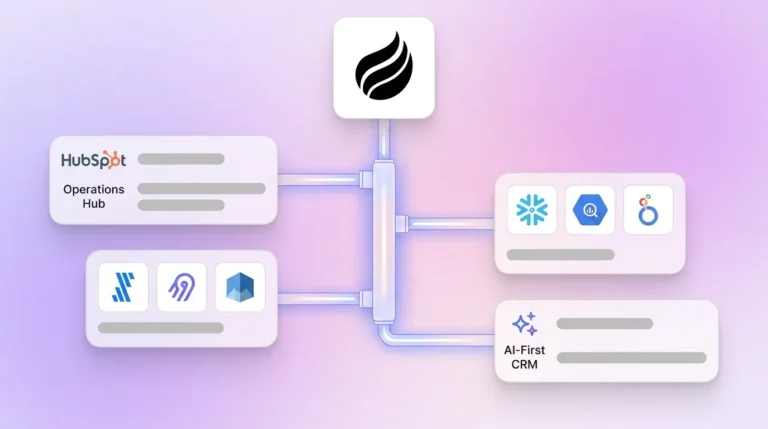
Legacy CRMs rely on manual entry, which turns into “bad data in” and unreliable forecasts. Coffee’s AI agent converts raw conversations into profitable insights that stay aligned with MEDDPICC fields. See how Coffee works as a Standalone CRM or Companion for Salesforce/HubSpot.
Conclusion
Master these 50+ MEDDPICC discovery questions to transform enterprise B2B qualification in 2026. As noted earlier, organizations that fully adopt this framework see significant improvements in both close rates and deal value. Combined with Coffee’s AI automation for seamless data capture and structuring, these questions become a durable competitive advantage in complex enterprise deals. See MEDDPICC auto-logging in action and accelerate your deal velocity with Coffee.
Frequently Asked Questions
What are the best MEDDPICC discovery questions for sales interviews?
The most effective MEDDPICC interview questions focus on quantified metrics, economic buyer identification, and champion development. Examples include “What does success look like in 12 months and how do you measure it?”, “Whose ‘no’ kills this deal?”, and “Who is presenting the business case internally?” These questions show your ability to qualify complex enterprise deals by uncovering decision-makers, quantifiable pain points, and internal advocates that are essential for closing high-value opportunities.
How does Coffee integrate MEDDPICC with Salesforce and HubSpot?
Coffee’s AI agent automatically captures qualification data from calls, emails, and meetings, then syncs this information to your existing Salesforce or HubSpot CRM. The agent enriches contact records, logs activities, and structures notes according to sales methodologies like MEDDIC. This approach removes manual data entry while keeping documentation complete for accurate forecasting.
What MEDDPICC questions work best for enterprise calls with multiple stakeholders?
For enterprise calls involving multiple stakeholders, focus on process mapping and stakeholder identification. Ask questions such as “Can you walk me through your team’s steps to decide on this?” and “Who else needs to be involved in this evaluation?” Also include questions about internal dynamics, for example “How do you typically handle disagreements between departments on vendor selection?” These questions help you navigate the complexity of enterprise buying committees that average 13 decision-makers per deal.
How long should MEDDPICC qualification take in enterprise sales cycles?
MEDDPICC qualification should finish within the first two discovery calls for enterprise deals. Enterprise sales cycles now average 90-180 days for deals over $100K, so front-loading qualification prevents wasted time on unqualified opportunities. The framework works best when you use it throughout the entire sales process, with initial qualification in discovery and continuous validation as stakeholders and requirements evolve.
What is the difference between a Champion and Coach in MEDDPICC qualification?
A Champion actively takes internal political risks to advance your deal, such as scheduling meetings with economic buyers, sharing internal presentations, or fighting for budget allocation. A Coach simply provides information like org charts or competitive intelligence without taking action. The litmus test is whether your contact has performed a politically risky action for your deal. True Champions have internal influence and spend their political capital to help you win, which makes them essential for navigating complex enterprise sales processes.