Written by: Doug Camplejohn, CEO & Co-Founder, Coffee
Key Takeaways
- Enterprise sales reps lose 71% of their time to manual CRM data entry, which stalls complex B2B deals with outdated qualification data.
- The MEDDPICC framework (Metrics, Economic Buyer, Decision Criteria, Decision Process, Paper Process, Identify Pain, Champion, Competition) increases win rates by 18% and deal sizes by 24% in enterprise sales.
- Static templates fail because they require 45–60 minutes of manual entry per deal and lack CRM integration and real-time intelligence.
- Coffee’s AI agent automates MEDDPICC qualification from emails and calls, saving 8–12 hours per week with seamless Salesforce and HubSpot sync.
- Implement Coffee’s agent-powered MEDDPICC today to transform qualification and scale enterprise pipelines: Start automating your MEDDPICC qualification today.
The Problem: Manual Qualification Killing Enterprise B2B Pipelines
Legacy CRM systems create a productivity crisis for enterprise sales teams. Sales professionals spend most of their time on data entry instead of selling, with 70% of CRM data outdated, incomplete, or inaccurate. Data decay occurs at 25–30% per year, which makes rigorous frameworks like MEDDPICC almost impossible to maintain manually.
The impact on enterprise deal velocity is severe. Seventy-two percent of deals fail because buyers do not see value. Another 28% fail when buyers cannot secure internal approval. Research analyzing 2.5 million sales conversations found that 40–60% of the average pipeline stalls due to buyer indecision.
Static templates from providers like Recapped make this even harder. They require manual data entry for every deal component, consuming 45–60 minutes per deal. Reps rarely keep them current, which results in incomplete qualification profiles and unreliable forecasts.
The Solution Category: MEDDPICC for Rigorous Deal Qualification
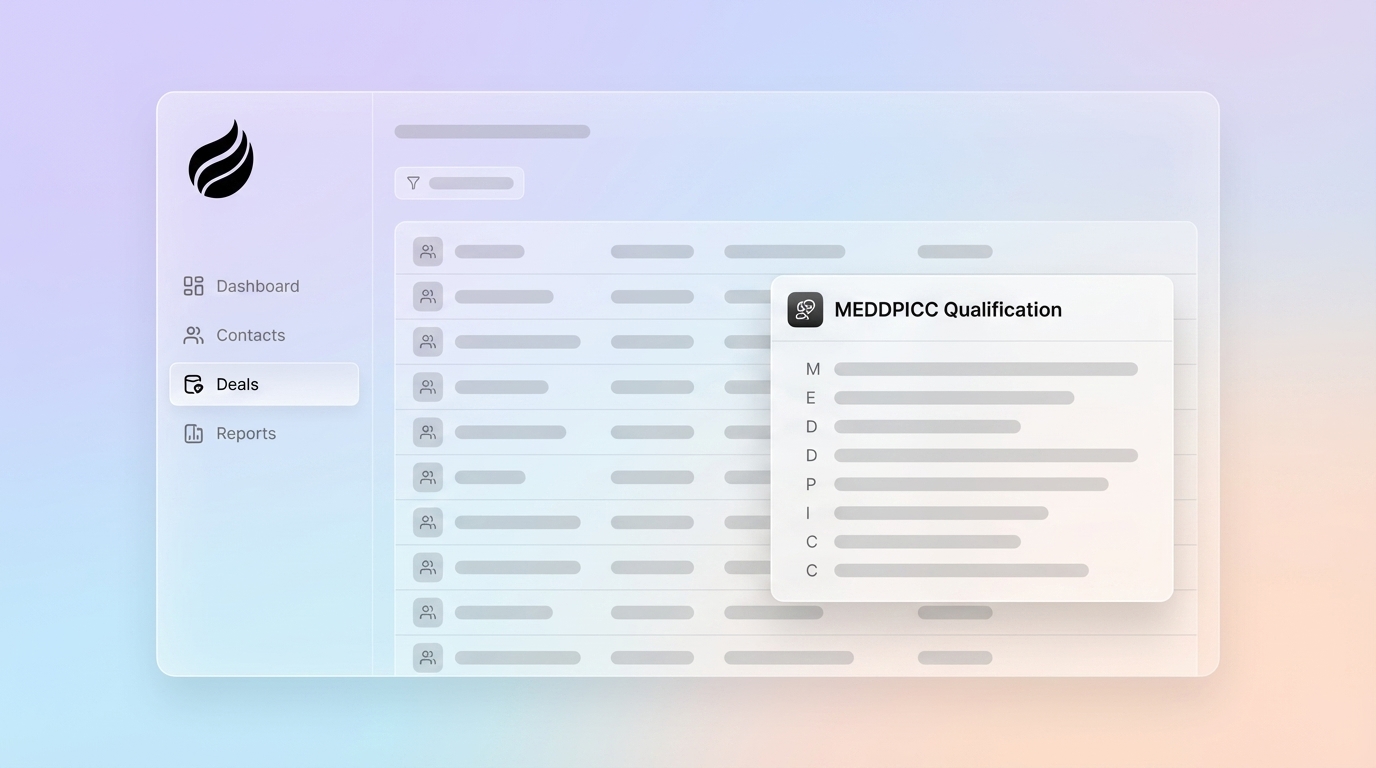
To fix these qualification challenges, enterprise sales teams need a structured framework that captures the complexity of multi-stakeholder deals. The MEDDPICC sales qualification framework consists of eight components designed for complex enterprise B2B sales. The table below maps each component to its definition and how it shows up in real enterprise opportunities.
| Component | Definition | Enterprise Application |
|---|---|---|
| Metrics | Quantifiable business outcomes and ROI | Cost savings, productivity improvements, revenue increases |
| Economic Buyer | Final decision-maker with budget authority | CFO, VP Sales, or executive who can approve when others cannot |
| Decision Criteria | Evaluation factors and benchmarks | Compliance standards, scalability requirements, integration needs |
| Decision Process | Steps, timeline, and stakeholders involved | IT approval, legal review, executive sign-off over 6–9 months |
| Paper Process | Procurement and legal requirements | Security questionnaires, contract negotiations, GDPR compliance |
| Identify Pain | Critical business challenges and their impact | Quantified revenue loss, productivity gaps, operational inefficiencies |
| Champion | Internal advocate with influence | Department head who benefits personally and influences stakeholders |
| Competition | Rival vendors and alternatives | Direct competitors, status quo, internal build options |
Organizations implementing MEDDPICC see meaningful performance gains. Companies report 18% higher win rates and 24% larger deal sizes when they fully adopt the methodology. The framework’s origins at PTC highlight its enterprise impact, as the company grew revenue from $300 million to $1 billion in four years using MEDDIC principles.
Agent-Powered MEDDPICC: Beyond Static Templates
Coffee’s agent supports sales methodologies including MEDDPICC by structuring notes according to MEDDIC, BANT, SPICED, and similar frameworks. This structure ensures consistent qualification data flows into the system without manual templates. Teams maintain rigorous qualification while spending their time on selling, not spreadsheets.
The agent’s automation features map directly to MEDDPICC’s core components, so each qualification dimension receives continuous updates:
- Deal overview and progression tracking (supporting Decision Process)
- Stakeholder analysis through contact creation and enrichment (identifying Economic Buyers and Champions)
- Competition context via integrated intelligence (Competition component)
- Timeline tracking through activity logging (Paper Process monitoring)
- ROI and metrics insights from pipeline intelligence (Metrics quantification)

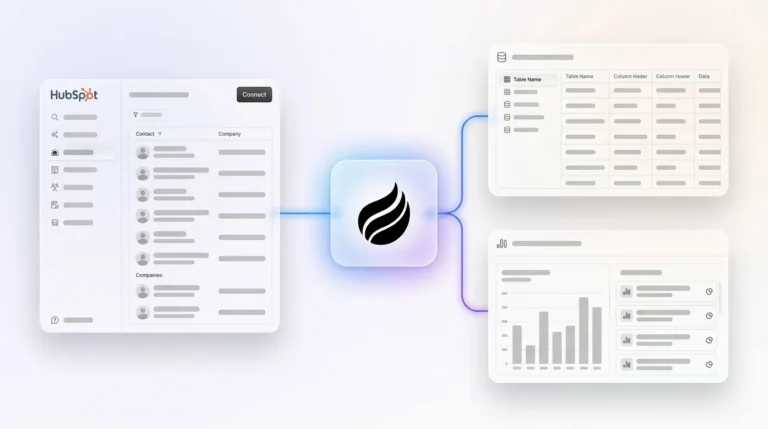
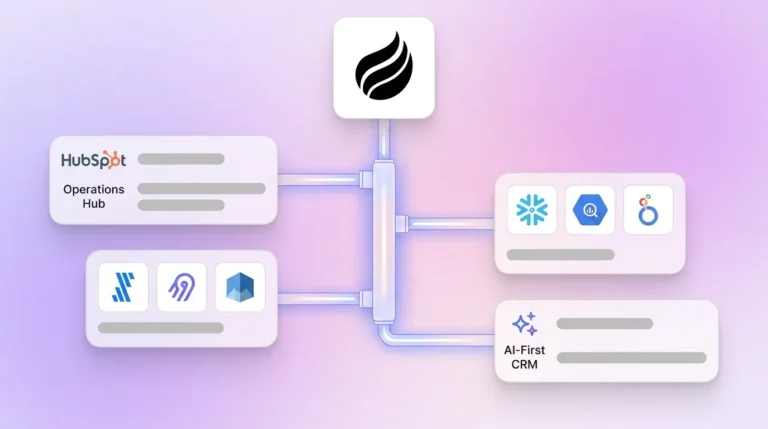
Coffee integrates with existing CRM workflows through simple authentication, which removes the need for manual data transfer between systems.
Try Coffee’s agent-powered qualification system to replace static MEDDPICC templates with live, automated data.
Why Static Templates Fail Enterprise B2B Sales
Traditional MEDDPICC templates from providers like Recapped act as passive documents that demand constant manual maintenance. These static tools ignore how modern enterprise sales actually work, where qualification data lives in email threads, call transcripts, and meeting notes.
Static templates create several critical limitations:
- No automatic data enrichment from sales conversations
- Manual entry requirements consuming the time burden mentioned earlier
- Lack of integration with CRM systems and sales tools
- No real-time pipeline intelligence or risk detection
- Limited collaboration features for multi-stakeholder deals
These gaps lead to low adoption and incomplete qualification data. As a result, the MEDDPICC framework cannot deliver its full value for enterprise teams managing complex, multi-million dollar opportunities.
The Best MEDDPICC Template: Powered by Coffee.ai Agent
Coffee turns MEDDPICC qualification into an automated, always-on process. Its intelligent agent captures, structures, and analyzes sales data without extra work from reps. The platform follows a “Good Data In, Good Data Out” philosophy, so qualification frameworks receive accurate and complete information.
Coffee’s agent delivers five clear advantages over static templates:
- Automatic structuring of notes according to sales methodologies like MEDDPICC from emails and call transcripts
- Real-time pipeline intelligence with deal progression tracking
- Integrated stakeholder analysis and relationship mapping
- AI-powered meeting briefings that include qualification insights
- Seamless Salesforce and HubSpot synchronization

This comparison illustrates the difference between passive documentation tools and active intelligence systems. Coffee’s agent removes the manual work that makes traditional approaches unsustainable:
| Feature | Legacy CRMs | Static Templates | Coffee.ai Agent |
|---|---|---|---|
| Auto-Qualification Structuring | Manual entry required | None available | Yes, from emails and transcripts |
| Live Pipeline Intelligence | Add-ons and exports | None available | Built-in Compare feature |
| Time Saved Per Week | 0 hours (71% manual grind) | Manual 45–60 min per deal | 8–12 hours automated |
The Coffee agent continuously monitors deal progression and updates qualification components as new information appears. Recent platform updates added an Intelligence layer that stores deep context on business models, ICP, and competitors for tailored AI suggestions. This context improves qualification accuracy for complex enterprise deals.
See how Coffee automates MEDDPICC tracking and replaces static templates with live deal intelligence.
Coffee.ai Integration Guide for MEDDPICC Tracking
Teams can implement Coffee’s MEDDPICC automation in four straightforward steps.
Step 1: Authentication and Setup
Connect Coffee to Google Workspace or Microsoft 365 for email access, then authenticate with Salesforce or HubSpot for CRM synchronization. The agent immediately scans existing deal data and begins populating records.
Step 2: Automatic Data Capture
Coffee’s agent joins sales calls and analyzes email threads to extract information. The system structures notes according to BANT, MEDDIC, or SPICED frameworks, which ensures consistent data entry across all opportunities.

Step 3: Qualification Integration
Once your deal data is automatically captured and structured, the next step is activating real-time qualification monitoring. Coffee’s agent then maintains live qualification data, and the platform provides real-time status for pipeline reviews through its built-in features.
Step 4: Pipeline Intelligence Reviews
Use Coffee’s Compare feature to visualize week-over-week deal progression. The platform highlights stalled opportunities so managers can manage risk proactively and coach reps on specific deals.
This integration removes the manual data entry burden mentioned earlier and lets teams focus on strategic selling activities and stakeholder engagement.
Enterprise Case Study: Scaling MEDDPICC with Coffee
A custom AI solutions company generating tens of millions in revenue struggled to scale with spreadsheet-based sales management. The organization rejected traditional CRM solutions like Salesforce and HubSpot because of heavy manual data entry that would not support their growth.
After implementing Coffee’s agent, the company achieved:
- Automated contact creation from Google Workspace integration
- Streamlined weekly pipeline reviews through the Compare feature
- API access that enabled custom briefing scripts for deal preparation
- Seamless team adoption without traditional CRM complexity
The Coffee platform’s February 2026 Intelligence layer updates added further value by storing deep context about the company’s ICP and competitive landscape. This context produced more accurate insights for complex enterprise opportunities.
This implementation shows how Coffee’s agent-based approach removes the productivity drain of manual CRM maintenance while delivering better data for enterprise sales teams.
MEDDPICC Customization for Salesforce and HubSpot: Best Practices and Pitfalls
Qualification Customization
Coffee’s agent supports customization through its Intelligence layer, which stores context on business models, ICP, and competitors. Sales teams can tailor AI suggestions and note structuring so they match specific qualification requirements.
Best Practices for Implementation
Successful MEDDPICC adoption starts with a structured scoring methodology. Use a scorecard rating each component 1–5 (totaling 40), with 35–40 indicating high-confidence deals, 25–34 for qualified but risky opportunities, and below 25 requiring urgent attention. This scoring system becomes actionable through weekly reviews that focus on qualification gaps instead of just close dates, which helps managers see which MEDDPICC components need attention before deals stall.
Common Pitfalls and Solutions
Teams often treat MEDDPICC as a checkbox exercise instead of a living process. Sales reps frequently confuse Economic Buyers with Champions, which causes late-stage deal failures. Teams also delay Paper Process mapping, even though procurement requirements can add 6–8 weeks if addressed only after verbal agreement.
Coffee’s AI agent addresses these pitfalls by monitoring deal progression continuously and providing structured qualification data without relying on manual rep discipline.
Frequently Asked Questions
What is the best free MEDDPICC template for enterprise sales?
Coffee.ai provides agent-powered MEDDPICC qualification that automatically structures notes according to MEDDIC or similar frameworks with CRM integration and AI automation. Unlike basic static PDF templates from some competitors, Coffee’s solution captures qualification data from sales conversations and updates CRM records in real time. The platform includes scoring, stakeholder mapping, and pipeline intelligence designed for enterprise B2B teams managing complex, multi-stakeholder deals.
How does Coffee automate MEDDPICC qualification in HubSpot and Salesforce?
Coffee’s intelligent agent connects to HubSpot and Salesforce through secure API integrations and structures sales notes according to MEDDPICC frameworks. The agent analyzes email threads, call transcripts, and meeting recordings to extract qualification information, then populates custom CRM fields for each component. This automation removes manual data entry while keeping qualification data consistent and accurate across all opportunities.
What are the most common MEDDPICC implementation pitfalls?
The main pitfalls include treating MEDDPICC as a one-time checklist instead of a dynamic process, confusing Champions with Economic Buyers, and delaying Paper Process mapping. Manual maintenance with some solutions that consume 45–60 minutes per deal leads to incomplete data and low adoption. Coffee’s AI agent solves these issues by automating data capture and providing real-time qualification insights without manual CRM updates.
How does MEDDPICC improve enterprise sales win rates?
Organizations that fully implement MEDDPICC achieve the performance improvements discussed earlier, with significantly higher win rates and larger deal sizes than teams using basic qualification methods. The framework’s comprehensive approach addresses the main causes of deal failure, such as lack of perceived value, missing stakeholder approval, and competitive displacement. Early Economic Buyer involvement increases win rates by 55%, and strong qualification helps teams focus on viable opportunities while disqualifying poor-fit prospects earlier in the cycle.
Can MEDDPICC templates integrate with existing sales tools and workflows?
Coffee’s MEDDPICC capabilities integrate with existing sales technology stacks through API connections and workflow automation. The platform synchronizes with popular CRM systems, email platforms, calendar applications, and sales enablement tools. Sales teams keep their current processes while adding AI-powered qualification that enhances, rather than replaces, existing workflows.
Conclusion: Qualify Deals Faster with the Best MEDDPICC Template
Manual MEDDPICC tracking in legacy CRM systems wastes valuable selling time and produces inaccurate qualification data that hurts enterprise sales performance. Coffee’s AI-powered agent removes the manual data entry grind and delivers comprehensive qualification insights that improve win rates and deal velocity.
The combination of Coffee’s intelligent agent automation and structured note-taking represents the next stage of enterprise sales qualification. By capturing qualification data automatically from sales conversations and keeping CRM records accurate, Coffee lets sales teams focus on strategic activities that drive revenue growth.
Transform your enterprise sales qualification process today. Transform your qualification process with Coffee’s AI agent and experience AI-driven sales automation.