Written by: Doug Camplejohn, CEO & Co-Founder, Coffee | Last updated: July 14, 2026
Key Takeaways for 2026 Buyers
- Conversation intelligence software uses AI and NLP to transcribe sales calls, pull out details like objections and next steps, and write structured data directly into Salesforce or HubSpot fields without manual entry.
- 2026 buyers should focus on tools with accurate CRM write-back, automation above 95%, native integrations, transparent seat-based pricing, and SOC 2 Type 2 compliance to avoid hidden costs and bad data.
- Enterprise platforms like Gong and Chorus often add platform fees, long implementations, and paid add-ons, while native CRM options lack deep structured field mapping and stack consolidation.
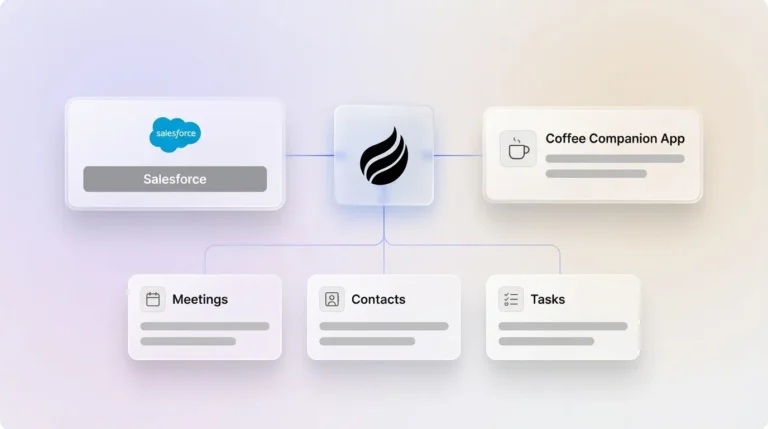
- Coffee stands out by automatically creating contacts, activities, and structured summaries from calls and emails, replacing several point solutions with a single Companion App layer on top of existing CRMs.
- Teams ready to remove manual data entry and improve CRM accuracy can get started with Coffee using transparent seat-based pricing with no platform fees.
2026 Buyer Criteria for Conversation Intelligence
Sales reps spend approximately 70% of their time on non-selling tasks such as administrative work and data entry. This finding comes from time-allocation studies across B2B sales teams. Multiple sources corroborate the same pattern. Salesforce research shows reps spend 28% of their time selling, while the State of Sales report indicates 30%. Both figures confirm that most rep time still goes to non-revenue activities.
Heads of Sales and RevOps leaders evaluating conversation intelligence in 2026 can use six criteria to separate tools that actually reduce admin work from tools that simply add another layer.
- CRM write-back quality. The tool must map extracted call data, such as budget, timeline, decision-makers, and objections, to specific Salesforce or HubSpot fields automatically. Validity’s 2025 State of CRM Data Management report found that 37% of CRM users lost revenue directly because of poor data quality. Field-level write-back directly affects revenue, not just convenience.
- Automation of data entry. Manual CRM data entry produces records that are typically 82–96% accurate, while AI-automated capture reaches 95%+ accuracy with consistent structured fields. Any tool that still asks reps to review and manually push data does not meet this bar.
- Integration friction with Salesforce and HubSpot. Many vendors gate field-level write-back behind paid tiers and require middleware or delayed syncs. Native or deep-native integrations that write directly to opportunity and contact records, without extra configuration, now represent the expected standard.
- Pricing transparency. Enterprise conversation intelligence platforms often impose seat minimums, annual contract lock-in, and extended onboarding that can include professional services fees. Transparent, seat-based pricing without hidden platform fees matters most for 20–100 person teams that need predictable budgets.
- Stack consolidation potential. A point-solution stack for a 50-seat team, with separate CI, dialer, engagement, coaching, and forecasting tools, typically costs $210,000 to $310,000 per year in licensing before integration and admin costs. Tools that replace multiple point solutions create compounding ROI.
- SOC 2 Type 2 and GDPR compliance. SOC 2 Type II certification is now table stakes for conversational intake AI in regulated workflows. Transparency obligations take effect on 2 August 2026, while the major high-risk AI obligations were postponed to December 2027 (Annex III) and August 2028 (Annex I) by the 2026 Digital Omnibus amendment. Buyers should confirm that vendors already align with these timelines.
Side-by-Side Comparison of Leading Tools
The table below compares five categories of conversation intelligence options on CRM write-back depth, 2026 pricing, and stack consolidation potential. Every figure comes from primary sources cited inline.
See Coffee’s transparent seat-based pricing with no platform fee.
How Leading Conversation Intelligence Tools Compare in Practice
Setup Effort for Each Platform
Conversation-to-CRM automation usually takes 1–2 weeks for CRM field mapping, meeting platform connection, and live-call testing. Gong and Chorus sit at the longer end of that range. Chorus implementation typically requires 2–3 months for full deployment and 40–80 hours of internal IT and training labor, which represents $4,000–$8,000 in opportunity cost for a mid-size team. Coffee’s Companion App connects to an existing Salesforce or HubSpot instance through a simple authentication and then begins scanning emails and calendars to populate records without a professional services engagement.
Data Capture from Calls and Emails
AI agents processing call transcripts can automatically extract pain points, budget details, timeline, decision-makers, next steps, objections, competitive mentions, and sentiment, then write them into CRM records. Gong performs this extraction well for calls. Independent testing places Gong’s real-world transcription accuracy at 85–90% across accents, and email-level data capture requires separate configuration. Coffee ingests both calls and emails from Google Workspace or Microsoft 365 at the moment of connection. This approach ensures every interaction, not just recorded calls, contributes to CRM record completeness.

Automated CRM Logging and Field Updates
Capturing data is only half of the equation, because that data must then land in the CRM automatically. A meeting captured through a conversation intelligence platform can create an activity record with the transcript and AI summary attached before the rep leaves the room. For Avoma, that level of automation requires the Revenue Intelligence add-on at an additional $29 per user per month on top of the base tier. HubSpot’s native AI suite (Breeze) can draft emails and summarize notes but does not autonomously update CRM fields based on discussion content. Coffee writes structured summaries, action items, and qualification data to the correct Salesforce or HubSpot fields after every call, with no add-on required.

Pipeline Intelligence Without Spreadsheets
Teams gain better forecasting when conversation data and CRM data work together. Gong’s 2026 State of Revenue AI report, based on analysis of 7.1 million opportunities, found that teams improved forecasting accuracy by combining CRM data with conversation intelligence and intent signals. That improvement depends on clean CRM data entering the system first. Coffee’s Pipeline Compare feature visualizes week-over-week changes, including progressed deals, stalled opportunities, and new additions, directly from the data its agent has already captured. This view replaces manual CSV exports and avoids the need for a separate forecasting module.
Long-Term Maintenance and Hidden Costs
Hidden costs in conversation intelligence platforms include integration setup and maintenance ($2,000–$10,000 initially plus ongoing), admin overhead (2–5 hours per week for non-native tools), storage and retention upcharges, and renewal escalation of 5–10% annually. Gong per-user pricing increased 25–56% between 2023 and 2026. Coffee’s seat-based model includes the agent’s labor with no metering on AI usage or processes. This structure removes the variable cost creep that compounds across multi-year Gong or Chorus contracts.
Best-Fit Use-Case Scenarios for Conversation Intelligence
Early-Stage Teams (1–20 People)
Early-stage teams that have outgrown spreadsheets but find Salesforce or HubSpot too heavy for their current headcount fit Coffee’s Standalone AI-First CRM well. In this setup, the agent manages the entire system of record. The main risk at this stage is over-investing in enterprise CI tooling. As noted in the pricing criteria above, platform fees can consume a significant portion of an early-stage budget before delivering any user value.
Growing Sales Orgs on Salesforce or HubSpot (20–100 People)
Growing teams already committed to Salesforce or HubSpot represent the primary fit for Coffee’s Companion App. These teams have invested in their CRM infrastructure and need an agent that improves data quality rather than replacing the system. Conversation intelligence tools deliver a 60–70% reduction in time spent on manual data entry and CRM updates, according to McKinsey B2B Sales Pulse 2025 data. One limitation to keep in mind is the complexity of some Salesforce orgs. Teams with advanced approval rules, multi-currency forecasting, or regulated field requirements should validate field mapping during a trial before signing a contract.

Teams Focused on Reducing Tool Count
Many teams now treat stack consolidation as a core goal. One Series-B SaaS company with 180 employees consolidated four AI notetakers plus transcription tools into a single native-AI platform, cutting $94,000 in annual spend. Coffee consolidates the work of enrichment tools such as ZoomInfo or Apollo, call recording apps like Fathom or Fireflies, and pipeline review add-ons into one Companion App. Teams evaluating newer alternatives such as Day.ai or Clarify should note that those tools still lack the Salesforce and HubSpot integration depth required to handle quotas, forecasting, and required fields at mid-market scale.
Decision Framework and Evaluation Questions
Use the following questions to match your constraints to the right tool category before you request a demo or trial.
- Does the tool write structured data to specific CRM fields automatically, or does it only sync notes and transcripts?
- Is CRM write-back included in the base price, or gated behind an add-on tier?
- Does the vendor publish pricing transparently, or require a sales call to share numbers?
- What is the total Year 1 cost, including platform fees, implementation, and required add-ons for your team size?
- Does the tool capture email and calendar data in addition to call recordings, or only calls?
- Is the vendor SOC 2 Type 2 certified and GDPR compliant, with data not used to train public models?
- How many existing point solutions, such as enrichment, recording, and forecasting tools, does this product replace?
- What is the estimated setup time to first structured CRM write-back from a live call?
Teams that can answer “yes” to questions 1, 2, 5, and 6 have identified the baseline requirements for effective conversation intelligence. Coffee is built for teams that want that mix of automated field write-back, transparent pricing, multi-channel capture, and compliance, and you can see how seat-based pricing scales for your team size.
Frequently Asked Questions
How long does implementation typically take?
For Coffee’s Companion App, implementation starts with a simple authentication to your existing Salesforce or HubSpot instance and a connection to Google Workspace or Microsoft 365. The agent begins scanning emails and calendars immediately after authentication, with no professional services engagement required. Most teams see their first automatically created contacts and logged activities within the same day. Full CRM field mapping for structured call write-back, including sales methodology frameworks like BANT, MEDDIC, or SPICED, usually takes one to two weeks of live-call testing to confirm field accuracy. Enterprise tools like Gong and Chorus often require four to twelve weeks of onboarding and internal IT coordination before the first structured data reaches CRM records.
What is the migration effort from Gong or Avoma?
Coffee operates as a Companion App on top of your existing Salesforce or HubSpot instance, so you avoid a CRM migration. Historical call recordings stored in Gong or Avoma remain in those systems, while Coffee captures new calls and emails from the point of connection forward. The main migration task is reconfiguring your call recording workflow. Coffee’s AI Meeting Bot joins Zoom, Teams, and Google Meet calls directly. As of January 2026, Coffee also supports Zapier-based integrations with tools like Fathom, Gong, and Fireflies for teams that want to route existing recordings through the Coffee agent during a transition period. Teams moving from Avoma’s Revenue Intelligence add-on will find that Coffee’s structured field write-back and Pipeline Compare feature cover the same pipeline visibility use cases without the separate add-on cost.
How does automated data quality compare with ZoomInfo enrichment?
ZoomInfo enrichment provides firmographic and contact data from its proprietary database of over 100 million contacts, including job titles, company size, funding, and technographics. Coffee’s enrichment agent augments CRM records with job titles, funding data, and LinkedIn profiles via licensed data partners, delivering coverage that is roughly on par with ZoomInfo for most mid-market use cases. The main difference lies in the data source. ZoomInfo enriches records from a static database that decays over time, while Coffee’s agent continuously enriches records from live email and calendar interactions. This approach captures relationship context, last activity, and next activity that no enrichment database can provide. For teams whose primary enrichment need is keeping existing CRM records accurate rather than prospecting into net-new accounts, Coffee’s built-in enrichment removes the need for a separate ZoomInfo or Apollo subscription.

Which platforms hold current SOC 2 Type 2 and GDPR certifications?
Coffee is SOC 2 Type 2 and GDPR compliant, with data not used to train public models. Among the tools compared in this article, several platforms have published SOC 2 Type 2 certifications. HubSpot’s native Conversation Intelligence follows HubSpot’s compliance standards for qualifying tiers. When you evaluate any vendor, confirm that the specific data flows involved, such as call recordings, transcript storage, and CRM field writes, fall under the vendor’s current certification scope, not just their corporate-level attestation. The EU AI Act’s high-risk AI obligations and transparency rules apply from August 2, 2026, and require documentation, conformity assessments, and transparency disclosures for relevant AI systems.
What are the 2026 pricing models and hidden costs?
Conversation intelligence pricing in 2026 follows four primary models: per-seat licensing, platform fee plus per-seat licensing, usage-based pricing tied to hours recorded or AI credits, and bundled platform pricing. Gong’s fully loaded Year 1 cost for a 20-user team runs approximately $70,000–$82,000 including platform fee and implementation. Avoma’s headline price of $19 per user per month rises to $77 per user per month when the Conversation Intelligence and Revenue Intelligence add-ons required for structured CRM write-back are included. Chorus is not available as a standalone purchase and requires a broader ZoomInfo platform commitment. Hidden costs across enterprise tools include integration setup and maintenance, admin overhead for non-native tools, storage and retention upcharges, and annual renewal escalation of 5–10%. Coffee uses straightforward seat-based pricing with no platform fee, no AI usage metering, and no add-ons required for CRM write-back, and the agent’s labor is included in the seat price.
Conclusion: Pick Conversation Intelligence That Actually Improves Your CRM
Conversation data only creates value when it automatically turns into accurate CRM data. Data and analytics leaders agree that AI outputs stay limited by the quality of the inputs, and Sherpas research cited by HubSpot puts B2B contact data decay at approximately 22.5% per year, a rate that manual logging cannot match. Traditional conversation intelligence tools add recording and analytics layers but leave the data entry problem unsolved. Coffee sits on top of Salesforce or HubSpot, automatically creates contacts and activities from transcripts, writes structured qualification data to specific CRM fields, and delivers pipeline intelligence, all without adding another manual workflow or fragmented point solution to your stack.
Get started with Coffee and put an agent to work on your CRM data today.