Written by: Doug Camplejohn, CEO & Co-Founder, Coffee | Last updated: July 21, 2026
Key Takeaways for Modern BANT
- BANT remains the dominant B2B qualification framework in 2026 when you run it as a conversational, Need-first flow instead of a rigid checklist.
- Modern discovery questions quantify pain, map the full buying committee, tie timelines to real events, and treat budget as a collaborative discussion after value is clear.
- Common rookie mistakes such as leading with budget, accepting vague timelines, and assuming a single decision-maker can be avoided by using the updated scripts and weighted scoring model (Need ×3, Timeline ×2, Authority ×2, Budget ×1).
- RevOps teams can add custom BANT fields in Salesforce or HubSpot, apply an 18/24-point threshold for AE handoff, and automate data capture to remove 8–12 hours of weekly manual entry.
- Let Coffee’s AI agent handle BANT for you so it joins calls, tags every BANT signal in real time, and writes structured notes directly to your CRM.
BANT Discovery Questions That Actually Work
Most modern teams start BANT with Need instead of the classic Budget-first sequence. The questions below keep the conversation natural while still covering each pillar.
Need
- “What pushed you to take this call today?”
- “What happens to the business if this problem is not solved in the next 90 days?”
- “How are you handling [problem] right now, and where does it break?”
- “What would solving this be worth to your team in time or revenue?”
Rookie trap: Accepting vague interest as qualified need. Reps most often confuse interest with urgency; a qualified need requires the organization to feel compelled to act now, with clear consequences for inaction. Correct follow-up: “What is the cost if nothing changes by Q3?”
Authority
- “Walk me through how a decision like this typically gets made at your company.”
- “Who else would want to be part of this conversation?”
- “Besides yourself, who else would weigh in on a decision like this?”
- “How did you buy something similar last time?”
Rookie trap: Assuming a single decision-maker. Forrester’s 2024 State of Business Buying Report states that an average B2B purchase now comprises 13 stakeholders and 89% of purchase decisions span multiple departments. Correct follow-up: “What is the approval process once you have chosen a vendor?”
Timeline
- “What event is driving the timing, such as a fiscal year, contract renewal, or board commitment?”
- “Is there a specific date that makes this urgent?”
- “What would need to be true for you to move by [date]?”
- “Are there internal approvals or procurement steps that affect your timeline?”
Rookie trap: Treating “sometime in Q3” as a real timeline. Vague timelines signal deals at high risk of stalling, while timelines tied to specific internal milestones or external business events indicate stronger urgency. Correct follow-up: “What event made you start looking now?”
Budget
- “Have you allocated funding for this, or would we be helping you build the case?”
- “What would a realistic investment look like for a problem of this scope?”
- “How does your organization typically fund new technology investments?”
- “Do you have a sense of what you would want to invest to solve this, or is that something we would scope together?”
Rookie trap: Leading with budget before establishing pain. Reps who ask about budget or authority before establishing pain see 3x higher objection rates. Correct follow-up: “What is the cost of inaction for your business?”
Common BANT Rookie Mistakes
Four patterns consistently derail first-year reps when they apply BANT on discovery calls.
- Budget-first interrogation. Opening with “What is your budget?” before demonstrating value signals that the rep cares more about deal size than the prospect’s problem. Establish Need first, then let budget surface naturally.
- Assuming a single decision-maker. Gong data shows deals without a decision-maker involved are 80% less likely to close. Map the full buying committee, including champion, economic buyer, technical evaluator, and potential blockers, on every call.
- Treating vague timelines as real. Sales leaders in 2026 require “Committed” deals to have a timeline anchored to an existing event such as a fiscal boundary or contract renewal. Without that anchor, the deal should not be forecasted.
- Running BANT as a checklist, not a conversation. Using BANT as a checklist instead of through full diagnostic questioning lowers win rates. Weave questions into the natural flow of the call.
Discovery Scripts That Fix Common BANT Mistakes
The following scripts show how to avoid those rookie mistakes by weaving BANT questions naturally into discovery conversations instead of running a rigid checklist.
Script 1: Strong Need First
Outcome: Prospect quantifies pain, which opens the door to budget and timeline. Post-call action: Log Need score and schedule follow-up with the economic buyer.
- Rep: “Thanks for making time. What pushed this to the top of your list this week?”
- Prospect: “We are losing about four hours a day to manual CRM updates.”
- Rep: “What does that cost you in deals that do not get followed up on time?”
- Prospect: “Probably two or three slipped opportunities a month.”
- Rep: “If that continued for another six months, what is the revenue impact?”
- Prospect: “Significant, maybe $80K in missed pipeline.”
- Rep: “Who else on your team feels that pain most directly?”
- Prospect: “Our Head of Sales and RevOps lead.”
- Rep: “Is there a contract renewal or planning cycle that makes solving this urgent now?”
- Prospect: “Q4 budget planning starts in eight weeks.”
Script 2: Authority Mapping
Outcome: Full buying committee identified before the demo is booked. Post-call action: Run multi-thread outreach to the economic buyer and technical evaluator.
- Rep: “Walk me through how decisions like this typically get made at your company.”
- Prospect: “I evaluate tools, then bring a shortlist to our VP of Sales.”
- Rep: “Does your VP have final sign-off, or does it go above them?”
- Prospect: “For anything over $20K, the CFO needs to approve.”
- Rep: “What does the CFO care most about, cost savings, efficiency, or revenue impact?”
- Prospect: “Efficiency and data quality. We have a garbage-in problem right now.”
- Rep: “What happens if that data quality issue is not fixed before your next board review?”
- Prospect: “Our forecasts look unreliable. That is a real problem.”
- Rep: “Would it make sense to include your VP and CFO in a short demo so we can address their questions directly?”
- Prospect: “Yes, let me check their calendars.”
Script 3: Timeline Anchored to an Event
Outcome: Real urgency is established and the deal moves to active pipeline. Post-call action: Set the next step tied to the triggering event date.
- Rep: “What event or change made you start looking at this now?”
- Prospect: “We just lost our RevOps manager. The manual work is piling up.”
- Rep: “How long can the team absorb that workload before it affects pipeline?”
- Prospect: “Honestly, maybe four to six weeks.”
- Rep: “So you would need something in place before the end of next month?”
- Prospect: “Ideally, yes.”
- Rep: “Have you set aside budget to address this, or is funding part of what we would need to figure out?”
- Prospect: “We have discretionary budget. It is not a huge number but it is real.”
- Rep: “Who else needs to sign off to move quickly?”
- Prospect: “Just my CEO. She is already aware of the problem.”
How to Use BANT in Your CRM
A recommended 2026 BANT scoring model assigns 0–3 points per dimension with weights of Need (×3), Timeline (×2), Authority (×2), and Budget (×1); leads scoring 18 or higher out of 24 advance to an AE. The standard threshold is 3 of 4 criteria met for active pursuit, while 2 of 4 goes to nurture.
Once you set these scoring thresholds in your CRM, the next challenge is keeping BANT data accurate on every opportunity. That requirement is where automation delivers the biggest time savings.
The shift from manual logging to agent-driven capture is where modern teams gain the most time. Automating BANT data capture reduces sales rep admin load by 5–8 hours per week. Coffee’s AI agent delivers these time savings by joining calls, transcribing in real time, tagging each BANT field, and writing structured notes back to the CRM without any manual entry.
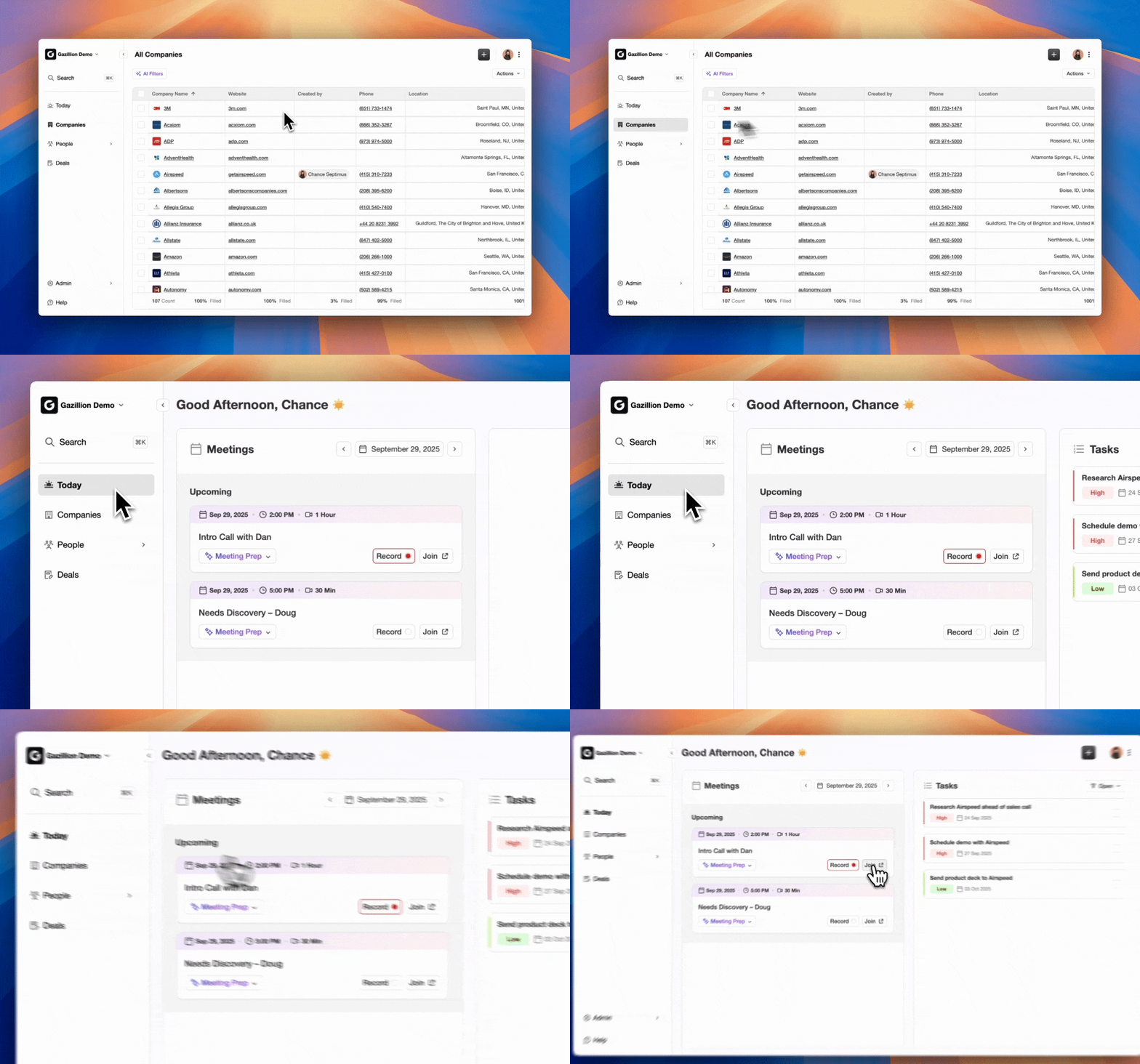
Automate your BANT data capture with Coffee and remove manual BANT data entry from your workflow.
BANT Example: Full Call Walkthrough
This annotated example shows flexible BANT ordering and AI urgency detection in a real discovery scenario.
- Rep: “What is pushing you to look at this now?” [Need, opens with pain, not budget]
- Prospect: “Our reps spend more time in the CRM than on calls.” [Need confirmed, quantifiable pain]
- Rep: “What does that cost you in quota attainment?” [Need deepened, cost of inaction]
- Prospect: “We missed Q2 by 15%. Data quality is part of it.” [AI urgency flag: missed quota plus data quality equals high Need score]
- Rep: “Walk me through how a decision like this gets made.” [Authority, mapped after Need is established]
- Prospect: “I own the evaluation. VP of Sales and CFO approve anything over $15K.” [Authority, buying committee identified: three stakeholders]
- Rep: “Is there a business event driving your timeline?” [Timeline, anchored to trigger event]
- Prospect: “Q3 planning starts in six weeks. We need something before then.” [Timeline confirmed, real anchor event]
- Rep: “Have you set aside budget, or are we building the case together?” [Budget, asked last and framed as collaboration]
- Prospect: “We have $20K approved for tooling this quarter.” [Budget confirmed, deal advances to AE]
Coffee’s AI agent detects the urgency signal in line 4, flags the buying committee in line 6, and auto-populates all four BANT fields in the CRM before the rep closes their laptop.
BANT vs MEDDIC vs CHAMP Comparison
The right framework depends on deal size, cycle length, and stakeholder count. Teams running the hybrid BANT for SDRs and MEDDIC for AEs often see higher qualification and close rates in enterprise B2B SaaS.
Classic vs Modern BANT Questions in 2026
| Pillar | Classic Question (Pre-2020) | Modern Question (2026) | Why It Works Better |
|---|---|---|---|
| Budget | “Do you have a budget?” | “How does this investment compare to other priorities in your department this quarter?” | Shifts from a yes or no answer to a relative priority assessment. |
| Authority | “Are you the decision-maker?” | “Who else needs to be in the room for this to move forward, and how do you see your role in that process?” | Maps the full influence network instead of assuming singular authority. |
| Need | “What are your needs?” | “What happens if this problem is not solved in the next 90 days?” | Turns a static list into dynamic consequence and urgency. |
| Timeline | “When do you want to buy?” | “What event or change made you start looking now?” | Separates real root-cause triggers from soft or vague timelines. |
BANT + AI Agent: Let Coffee Capture the Data
The biggest operational drag in BANT is not the questioning, it is the logging. 71% of sales reps say they spend too much time on data entry, leaving only 35% of their time for selling. Coffee’s autonomous AI agent removes that drag.
Here is how the Coffee agent works in a BANT workflow:

- Joins the call automatically. The Coffee agent joins Zoom, Teams, or Google Meet calls without rep intervention, recording and transcribing with speaker separation in real time.
- Tags BANT fields during the conversation. As the prospect mentions budget language, decision-maker roles, pain points, or timeline anchors, the agent maps each signal to the corresponding BANT field, Budget, Authority, Need, or Timeline, without waiting for the call to end.
- Writes structured notes to the CRM. After the call, the agent pushes a structured BANT summary, next steps, and a follow-up draft directly into the CRM record. No rep action is required.
- Flags missing qualification data. If a pillar was not addressed on the call, the agent surfaces the gap before the next forecast review so reps can fill it proactively.
- Saves 8–12 hours per week. By handling the data-entry work that legacy CRMs push onto reps, Coffee returns that time to selling.
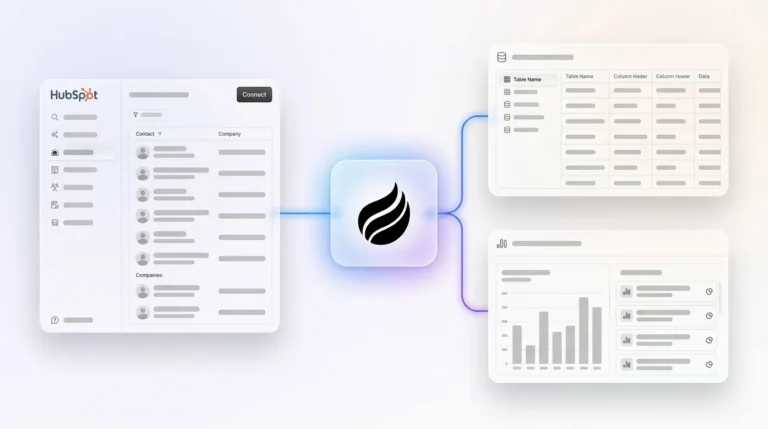
Coffee operates in two deployment models. As a Standalone CRM, it becomes the system of record for small to mid-sized teams that have outgrown spreadsheets. As a Companion App, it sits on top of existing Salesforce or HubSpot instances and acts as the intelligent data-in layer that keeps those systems accurate without manual effort. Both models are SOC 2 Type 2 and GDPR compliant, and call data is never used to train public models.

Let Coffee handle every BANT field on your next call so your reps can stay focused on the conversation.
One-Page Printable BANT Checklist
Use this checklist to score every discovery call. Using the weighted scoring model described earlier, calculate your total score and apply the thresholds below.
- Need (0–3 pts × 3 weight = 0–9 pts)
- 0, No pain identified
- 1, Vague interest stated
- 2, Specific problem described with business impact
- 3, Cost of inaction quantified and urgency confirmed
- 0, No stakeholder identified
- 1, One contact identified, role unclear
- 2, Decision-maker confirmed, buying committee partially mapped
- 3, Full buying committee mapped including economic buyer, champion, and blockers
- 0, No timeline given
- 1, Vague timeline such as “sometime this year”
- 2, Quarter confirmed but no anchor event
- 3, Timeline tied to a specific trigger event such as renewal, board review, or fiscal deadline
- 0, No budget discussion
- 1, Budget exists but unconfirmed
- 2, Budget range indicated
- 3, Budget approved and confirmed
Scoring thresholds: 18–24 pts → advance to AE demo. 10–17 pts → nurture with targeted content. Below 10 pts → disqualify or re-engage in 90 days.
Frequently Asked Questions
How does Coffee integrate with existing CRMs like Salesforce and HubSpot?
Coffee operates as a Companion App that sits on top of existing Salesforce or HubSpot installations. After a simple authentication step, the Coffee agent syncs bidirectionally with the primary CRM, reading existing records for call preparation and writing structured BANT notes, summaries, action items, and enriched contact data back into the system after every interaction. Coffee has deep knowledge of Salesforce and HubSpot architecture, including required fields, forecasting logic, and quota management, which distinguishes it from newer CRM alternatives that lack that integration depth. For teams on other tools, Coffee also connects via Zapier, with deeper integrations on the roadmap.
Is call data secure inside Coffee?
Yes. Coffee is SOC 2 Type 2 certified and GDPR compliant. Call recordings, transcripts, and extracted BANT data are stored securely and are never used to train public AI models. This approach keeps the qualification intelligence from your discovery calls inside your organization’s data environment. For teams in regulated industries, Coffee recommends confirming specific compliance requirements before deployment, because heavily regulated sectors such as healthcare and finance may require additional security review cycles beyond standard SOC 2 coverage.
How does the Coffee agent handle unstructured conversation data from discovery calls?
Legacy CRMs rely on relational databases that only store structured data, so they cannot process a call transcript or email thread and extract meaning from it. Coffee is built on a data warehouse architecture that ingests both structured data such as CRM fields and deal stages and unstructured data such as call transcripts, email text, and calendar context. During a discovery call, the agent uses natural-language processing to identify BANT signals, including budget language, decision-maker references, pain statements, and timeline anchors, even when the prospect does not state them explicitly. It then maps those signals to the appropriate BANT fields and writes a structured note to the CRM. If a signal is ambiguous, the agent flags it for rep review instead of auto-filling with low-confidence data, which preserves the data quality that keeps downstream forecasting reliable.
Does BANT still work in 2026, or should I use a different framework?
BANT remains the fastest qualification framework for SMB and mid-market transactional sales under $25K ACV and high-velocity SDR motions. It works best when you apply it conversationally in Need-first order instead of as a rigid Budget-first checklist. For complex enterprise deals above $50K with five or more stakeholders and cycles longer than 90 days, MEDDIC or a hybrid BANT plus MEDDIC approach delivers higher close rates and forecast accuracy. The practical 2026 recommendation is to use BANT at the SDR layer for initial triage and then layer in MEDDIC elements as deals grow in complexity and ACV.
What is the minimum BANT score needed to advance a deal to demo?
The 2026 weighted scoring model sets 18 out of 24 points as the threshold for advancing a lead to an AE demo. Need carries the highest weight at up to 9 points, followed by Authority and Timeline at up to 6 points each, and Budget at up to 3 points. A prospect with a strong Need and confirmed Timeline can qualify for a demo even without a fully approved budget, as long as the score clears 18. Deals scoring 10–17 go to a nurture track. Deals below 10 are disqualified or flagged for re-engagement in 90 days. Coffee’s agent calculates this score automatically from call data and updates it after every substantive interaction so the qualification picture in the CRM always reflects the most recent conversation.
Conclusion: Start Qualifying Smarter Today
BANT remains the most practical qualification framework for first-year SDRs and AEs running high-volume discovery calls in 2026. When you apply it in Need-first order, score it with weighted criteria, and update it continuously across the sales cycle, it gives reps a repeatable system for separating viable opportunities from time sinks. Companies that effectively implement BANT achieve a 59% increase in conversion rates.
The framework only reaches full value when the data it surfaces is captured accurately and consistently. Manual CRM entry after every call introduces errors, delays, and the kind of “garbage in, garbage out” data quality problem that makes pipeline reviews unreliable. Coffee’s AI agent solves that problem by joining calls, extracting BANT signals in real time, and writing structured qualification data directly to the CRM, whether that is Coffee’s own Standalone CRM or an existing Salesforce or HubSpot instance.
Run your first fully automated BANT discovery call with Coffee and keep your reps focused on selling instead of typing notes.