Written by: Doug Camplejohn, CEO & Co-Founder, Coffee | Last updated: August 26, 2026
Key Takeaways
- Bluedot works as a lightweight meeting note-taker and cannot update CRM records or deliver pipeline intelligence on its own.
- Lightfield requires a full CRM migration with six-to-nine-month timelines and a high total cost of ownership.
- Coffee’s agent model captures both structured and unstructured data while maintaining 99%+ field-level accuracy without manual entry.
- Teams can deploy Coffee as a Companion App on Salesforce or HubSpot for fast data-quality gains, or as a Standalone CRM for teams under 20 reps leaving spreadsheets.
- Eliminate manual data entry and unlock accurate pipeline intelligence with Coffee today.
Bluedot, Lightfield, and Coffee Compared in One View
Bluedot is a bot-free AI meeting note-taker using a Chrome extension, starting at $14/user/month, which makes it a lightweight capture tool rather than a CRM replacement. Lightfield is an AI-native CRM built to replace legacy systems entirely. Coffee is an autonomous CRM Agent that removes manual data entry and delivers pipeline intelligence whether it runs as the system of record or as a companion to an existing CRM.
| Criterion | Bluedot | Lightfield | Coffee |
|---|---|---|---|
| Primary role | Meeting notes and transcription | AI-native CRM replacement | Autonomous CRM Agent (standalone or companion) |
| Data capture | Call transcripts and summaries only | Structured CRM fields; limited unstructured data | Structured and unstructured data (emails, transcripts, calendars) unified in a built-in data warehouse |
| Works with existing CRM | Partial, syncs notes to HubSpot/Salesforce but does not enrich or update deal records autonomously | No, requires full migration away from existing CRM | Yes, Companion App writes enriched data and insights back to Salesforce or HubSpot automatically |
| Migration effort | None, overlay tool only | High, enterprise CRM implementations typically take six to nine months | Low, Companion deploys quickly and Standalone requires no data migration for new teams |
| 2026 pipeline accuracy | Not applicable, no pipeline layer | Dependent on rep-confirmed schema entries; incumbents still require manual confirmation | Agent-captured data achieves 99%+ consistent field-level accuracy versus manual entry’s 96–98% that degrades under load |
See how Coffee compares to Bluedot and Lightfield in a live demo
Match Coffee, Bluedot, or Lightfield to Your Team Size
The most reliable decision variable is not feature count, it is whether the current CRM workflow is structurally broken or merely under-automated. This distinction matters because smaller sales teams usually keep a CRM when workflow fit is good and replace it only when workflow and adoption are structurally broken.
Teams happy with Salesforce or HubSpot (10–30 reps). The system of record usually works; the data going into it does not. Sales reps spend a significant portion of their workday on data entry and CRM updates. Coffee’s Companion App deploys as an intelligent layer on top of the existing Salesforce or HubSpot instance. The agent captures emails, calendar events, and call transcripts, enriches contact and company records automatically, and writes accurate activity logs and pipeline changes back to the CRM without rep involvement. The system of record stays intact and the data quality problem is resolved.

Teams under 20 people ready to leave spreadsheets. Teams under 50 reps without dedicated sales ops support achieve higher adoption, fewer support tickets, and better data quality with consolidated platforms than with multi-tool best-of-breed stacks. Coffee’s Standalone CRM gives these teams an agent-powered system of record from day one. They avoid manual data entry and do not carry any legacy architecture.
Migration Effort and Total Value of Ownership
Migration cost is routinely underestimated. Three cost lines are routinely underestimated in CRM migration RFPs: data preparation labor, integration rework once actual field mappings are walked, and three weeks of side-by-side adoption and training support after go-live. For teams evaluating Lightfield as a full replacement, the realistic timeline is not weeks, it is the six-to-nine-month window mentioned earlier.
The overlay alternative moves faster in practice. Some companies have deployed AI middleware overlays that connect data to Salesforce and have seen reductions in meeting prep time compared to full migrations to an AI-native CRM.
Stack consolidation creates additional savings. Organizations with tightly integrated tech stacks achieve 27% higher quota attainment, so consolidation often beats layering more tools. Coffee replaces the jobs of multiple point solutions, including enrichment databases, meeting recorders, sequencing tools, and forecasting add-ons, under a single seat-based price with no complex metering.
Why Coffee’s Agent Delivers Higher 2026 Accuracy
The accuracy gap between agent-captured data and human-entered data is measurable and meaningful. Manual data entry achieves 96–98% accuracy that varies with fatigue, document complexity, and time pressure, while AI data entry tools achieve 99%+ consistent accuracy across all document volumes. At scale, that difference compounds into far fewer errors that require tracing and correction.
Human performance also drops through the workday. Manual data entry error rates increase due to fatigue over the course of the workday. Agent accuracy stays stable even under heavy load.
The downstream effect on pipeline intelligence is direct and visible. Many users of meeting assistants stop at summaries and notes, which leaves pipeline records stale. Coffee’s agent closes that gap by writing structured, enriched data into the pipeline automatically after every interaction. This approach enables accurate forecasting without manual CSV exports or expensive add-ons.

Request a custom accuracy benchmark for your team size
Decision Framework to Choose Coffee, Bluedot, or Lightfield
Two simple questions route most 10–30 person sales teams to the right configuration.
Question 1: Are you happy with your current CRM?
- Yes, but data quality and adoption are poor: The CRM architecture is not the problem. Deploy Coffee as a Companion App. The agent handles data entry, enrichment, and activity logging on top of Salesforce or HubSpot. No migration is required and deployment is rapid.
- No, and the team is on spreadsheets or a tool they have outgrown: Move to Question 2.
Question 2: How many reps need an agent?
- 1–20 reps, no legacy CRM investment: Coffee Standalone fits this scenario. The agent powers the entire system of record from day one, with automatic contact creation, pipeline tracking, and meeting intelligence built in. Teams avoid manual data entry and legacy architecture.
- 20–30 reps with moderate Salesforce or HubSpot customization: Coffee Companion is the lower-risk path. For teams with legacy data or complex integrations, the case for full CRM replacement is weaker, as migration risk and cost outweigh the benefits. The agent delivers the same data quality and pipeline intelligence outcomes without multi-month migration exposure.
Bluedot fits neither scenario because it captures notes but does not resolve data entry or pipeline accuracy at the system level. Lightfield fits only the second branch of Question 1 and only when the team has the organizational bandwidth for a multi-month migration.
Frequently Asked Questions
Does Coffee integrate with the tools already in our sales stack?
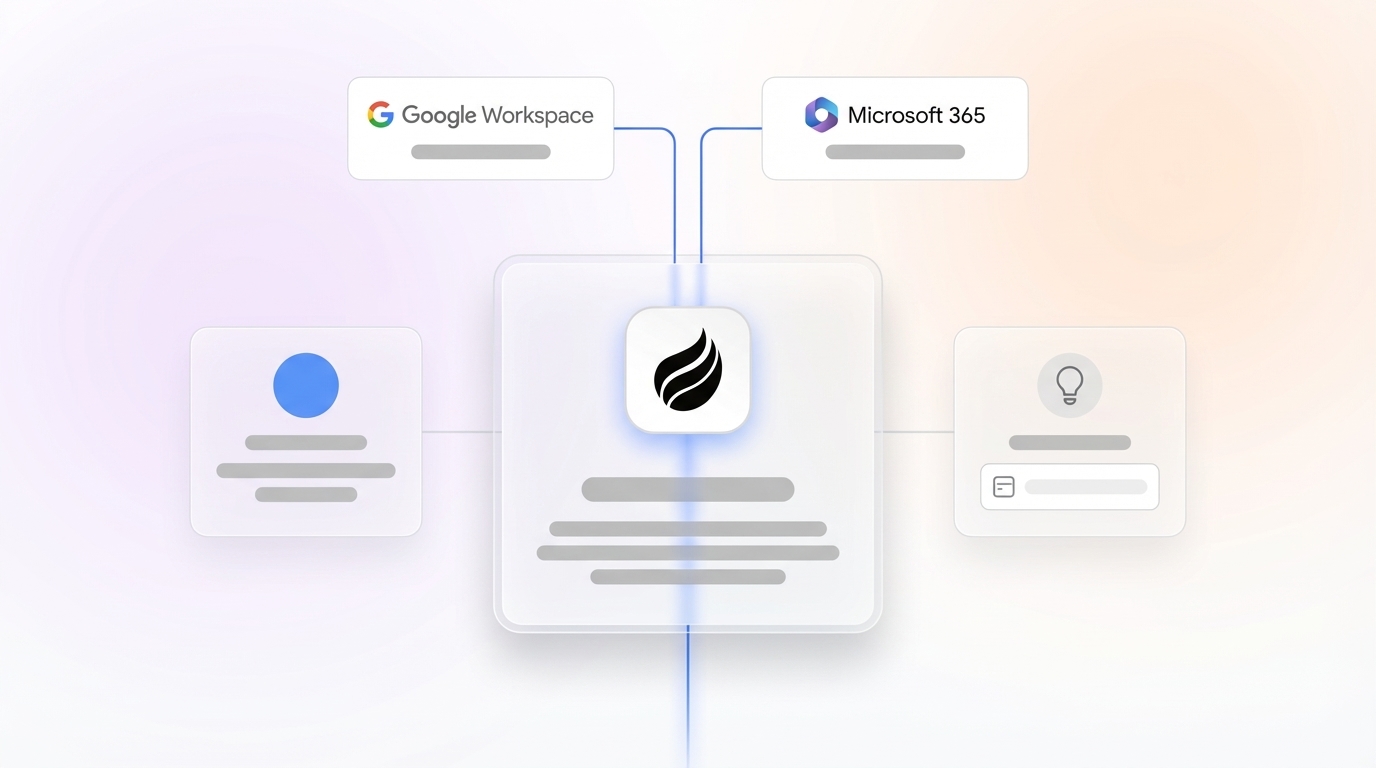
Coffee connects to Google Workspace and Microsoft 365 after authentication and immediately scans emails and calendars to populate and enrich CRM records. For other tools in the stack, Coffee currently supports integrations via Zapier, with deeper native integrations on the product roadmap. The Companion App writes enriched data and insights directly back to existing Salesforce or HubSpot instances, so the current system of record remains the hub for any downstream tools already connected to it.

How does Coffee handle data security and compliance?
Coffee is SOC 2 Type 2 certified and GDPR compliant. Customer data is not used to train public AI models. For teams in regulated industries or those subject to data residency requirements, these certifications cover the core data handling, enrichment, and storage functions of the agent. Teams with multi-year security review requirements or highly regulated workflows, such as healthcare or financial services, should evaluate whether their compliance posture requires additional vendor review beyond these certifications.
How does Coffee’s data accuracy compare to dedicated enrichment tools like ZoomInfo?
Coffee’s enrichment agent pulls job titles, funding data, and LinkedIn profiles via licensed data partners and delivers accuracy roughly on par with standalone enrichment databases for most sales use cases. The meaningful difference is architectural. ZoomInfo and Apollo.io are separate subscriptions that require manual export and import steps between tools, which introduces its own data quality risk. Coffee’s enrichment runs inside the same agent that captures activity data, logs interactions, and updates pipeline records, so the enriched data is immediately associated with the right contact and deal record without any manual stitching. For teams whose primary enrichment need is keeping CRM records current and complete, the built-in agent removes both the cost and the integration overhead of a standalone enrichment tool.

What happens to our historical CRM data if we switch to Coffee Standalone?
For teams migrating from a legacy CRM to Coffee Standalone, the agent supports data import for contacts, companies, deals, and activity history. Standard migration guidance recommends archiving contacts inactive for over two years with no open deals or recent communication, which reduces clutter and improves the accuracy of agent-generated insights from day one. Teams moving from spreadsheets or Notion have no historical data migration burden, because the agent begins building the system of record automatically from the first connected email and calendar. For teams with significant Salesforce or HubSpot customization, the Companion App is the lower-risk path, as it preserves all historical data and custom objects in place.
Conclusion: Why Coffee Solves the Real CRM Problem
The Bluedot versus Lightfield decision creates a false binary. Bluedot captures notes but leaves pipeline records stale and data entry unsolved. Lightfield replaces the CRM but demands a migration timeline measured in months and a total cost of ownership that often exceeds initial estimates by more than double. Neither tool resolves the core problem: 71% of sales reps spend too much time on data entry, leaving only 35% of their time for selling.
Coffee’s agent model is the only path in this comparison that addresses data entry automation, CRM flexibility, and pipeline accuracy at the same time. The Companion App deploys quickly on top of Salesforce or HubSpot. The Standalone CRM gives teams under 20 people an agent-powered system of record from day one. In both configurations, the agent handles the busywork so pipeline data stays accurate, forecasts stay reliable, and reps spend more time selling.