Written by: Doug Camplejohn, CEO & Co-Founder, Coffee | Last updated: July 12, 2026
Key Takeaways for 2026 Sales Teams
- Small sales teams face unqualified leads and limited time, and a flexible 0-2 BANT scoring system fixes this more reliably than a rigid checklist.
- A 0-2 score for Budget, Authority, Need, and Timeline creates consistent qualification decisions and clear next steps based on total scores out of 8.
- A 5-step workflow with ICP definition, natural discovery, structured scoring, CRM automation, and weekly reviews removes most manual data entry for reps.
- AI automation captures BANT signals from emails, calendars, and transcripts, saves hours per rep, enforces stage gates, and highlights stalled deals.
- Ready to automate BANT capture and scoring without adding headcount? See Coffee’s automation pricing today.
The 0-2 BANT Scorecard for Modern Pipelines
Use a simple 0-2 score per criterion instead of binary yes or no qualification. Score each criterion after discovery and sum for a total out of 8.
- Budget — 0: No budget information gathered. Example: prospect deflects all financial questions.
- Budget — 1: Budget exists but is unconfirmed or requires internal approval. Example: “We have something set aside but haven’t finalized it.”
- Budget — 2: Budget is confirmed and allocated. Example: prospect names a specific range that covers your contract value.
- Authority — 0: Decision-maker unknown. Example: rep has only spoken with an end user.
- Authority — 1: Champion identified but economic buyer not yet engaged. Example: manager is supportive but VP approval is required.
- Authority — 2: Economic buyer identified and engaged. Example: CFO or VP attended the last call.
- Need — 0: No clear pain articulated. Example: prospect is “just exploring.”
- Need — 1: Pain acknowledged but not quantified. Example: “Our current process is slow.”
- Need — 2: Pain is quantified with business impact. Example: “We lose roughly $40K per quarter to manual re-entry errors.”
- Timeline — 0: No timeline stated. Example: “Sometime next year, maybe.”
- Timeline — 1: General timeframe given without a driver. Example: “Probably Q3.”
- Timeline — 2: Specific milestone or deadline confirmed. Example: “We need this live before our fiscal year starts in October.”
Decision rules: Score 6-8, advance aggressively. Score 4-5, advance with a clear gap-filling plan. Score 2-3, route to nurture. Score 0-1, disqualify. Adjust thresholds by deal size when needed.
Readiness Checklist for a Connected BANT Workflow
Set up a few core pieces before rolling out this workflow so every step connects cleanly.
- CRM access confirmed for all reps with custom BANT fields created (Budget, Authority, Need, Timeline as required fields), since these fields store the agent’s scoring output.
- Google Workspace or Microsoft 365 connected so the AI agent can read emails, calendar events, and meeting transcripts, which become the data source for those BANT fields.
- Ideal Customer Profile (ICP) documented with firmographic thresholds (company size, industry, revenue range), which supports early disqualification in Step 1.
- BANT score thresholds defined by deal size tier before rollout, because these thresholds drive your stage gate rules.
- Weekly pipeline review cadence scheduled, which becomes the forum where you act on the agent’s scoring output.
5-Step Workflow for Small Sales Teams Using BANT
- Step 1: Define ICP and Disqualify Early
Input: Inbound lead or outbound prospect record. Owner: Rep or founder. Output: Lead marked ICP-fit or disqualified before any discovery call is booked.
Score the account against your ICP before scheduling a call, using company size, industry, revenue signals, and contact title. BANT can be applied upstream to pre-qualify cold lists by scoring contacts on budget signals such as company revenue and funding, authority via Director-level titles, need through ICP fit, and timeline through contract renewal signals. Early disqualification protects deliverability and rep time.

Building a company list with Coffee AI Input: Booked discovery call. Owner: Rep. Output: Conversational notes covering all four BANT criteria, captured by the AI agent in real time.
Lead with Need, not Budget, to keep buyers comfortable in 2026’s committee-driven deals. Reordering BANT to a need-first sequence avoids putting buyers on the defensive in modern committee-driven deals. Use these question templates:
- Need: “What’s this problem costing you in lost revenue, wasted time, or missed opportunities?” / “What happens if this remains unsolved for the next twelve months?”
- Authority: “Walk me through how decisions like this typically get made at your company.” / “Who else would need to be excited about this for it to move forward?”
- Timeline: “What’s driving the timing on this?” / “Are there any business milestones this needs to be in place before?”
- Budget: “How have you funded similar initiatives in the past?” / “Companies solving this challenge typically invest between $X and $Y annually, does that align with your planning?”
These templates work best when delivered conversationally. Pitfall: Sounding scripted. BANT should function as an internal guideline so reps gather qualification data without prospects feeling interrogated. Ask one question, listen fully, then probe deeper before moving to the next criterion.

Automated meeting prep with Coffee AI CRM Agent Input: Discovery call transcript and notes. Owner: AI agent (primary), rep (review). Output: Numeric BANT score logged to CRM with a qualification decision.
Right after the call, the Coffee agent scores each criterion 0-2 based on transcript evidence and fills the CRM fields. The rep reviews and confirms the score. After scoring, teams should follow specific next actions, such as advancing strong deals with senior rep involvement or focusing on stakeholder mapping when need and timeline are strong but authority is weak.

Create instant meeting follow-up emails with the Coffee AI CRM agent Pitfall: Ignoring partial scores. A score of 4 or 5 does not signal disqualification. It signals a gap-filling assignment. Document the missing criterion and set a next step to close it.
Input: Agent-extracted BANT scores and transcript summary. Owner: Coffee agent. Output: CRM record fully populated with Budget, Authority, Need, and Timeline fields, score, and next activity.
The Coffee agent reads emails, calendar data, and call transcripts to populate every BANT field without manual entry. Automating BANT extraction reclaims approximately 170 hours per rep annually, equating to $85,000 in recovered productivity for a 10-person team at average $100K OTE. Stage gates in the CRM prevent deals from advancing until minimum score thresholds are met, and these gates only work when BANT data stays current.
Pitfall: Failing to update fields. BANT data decays over time. Configure the agent to re-score whenever a new email thread or meeting transcript is added to the record.
Input: Agent-populated pipeline with BANT scores. Owner: Head of Sales or founder. Output: Prioritized deal list with stalled opportunities flagged and coaching actions assigned.
Coffee’s Pipeline Compare feature visualizes week-over-week changes, including progressed deals, stalled opportunities, and new additions, without spreadsheets. Reviews shift from status updates to strategic discussions about gap-filling actions and resource focus.
Ready to run this workflow without manual data entry? Try Coffee’s agent-powered workflow and let it handle BANT capture from day one.
CRM Field Mapping and Automation Rules
The Coffee agent’s signals map to four core CRM field groups so reps see clear, structured data instead of raw notes.
- Budget: Amount range, approval status, budget process notes, populated from email threads discussing investment or pricing.
- Authority: Stakeholder list with roles, decision-maker identification, buying committee map, populated from calendar invites and transcript speaker identification.
- Need: Problem description, business impact metrics, priority level, populated from discovery call transcripts.
- Timeline: Target decision date, timeline drivers, next milestone, populated from calendar events and prospect emails referencing deadlines.
Partial-BANT decision tree: When only three of four criteria are confirmed, the agent applies this routing logic:
- Need + Authority + Timeline confirmed, Budget missing → advance to next stage, and assign rep action to quantify budget path within 7 days.
- Need + Budget + Timeline confirmed, Authority missing → hold at current stage, and assign rep action to map the buying committee and secure an economic buyer meeting.
- Need + Authority + Budget confirmed, Timeline missing → advance with a nurture tag, and trigger an automated check-in sequence at 30-day intervals.
- Only two criteria confirmed → route to nurture sequence, and remove from active pipeline forecast.
Accounts scored against structured qualification signals convert into qualified pipeline more often and move faster through the qualification stage.
BANT Variations by Team Size and Sales Motion
Solo reps running the full cycle can compress Steps 2 and 3 into a single 30-minute discovery call while the agent scores in the background. The weekly review in Step 5 becomes a personal pipeline audit instead of a team meeting.
Teams of 6-10 reps gain more leverage by assigning SDRs to Steps 1 and 2 and AEs to Steps 3 through 5, with the agent ensuring handoff data is complete before the AE takes ownership. BANT is fast enough for new SDRs to learn in an hour, making it the right framework for high-velocity SMB motions with cycles under 30 days.

Build people lists automatically with Coffee AI CRM Agent Product-led teams with free-trial users should weight Need and Timeline most heavily at the scoring stage, since Budget and Authority often surface only after the prospect experiences product value. Sales-led teams with outbound motions should pre-qualify on Budget and Authority signals before booking discovery, which protects rep time from the start.
Validation: How to Measure Success
Track these signals at 30, 60, and 90 days after implementing the 5-step workflow to confirm it works for your 2026 pipeline.
- Connect-to-opportunity ratio increases as unqualified leads are filtered earlier.
- Pipeline reports show a higher percentage of deals with complete BANT fields.
- Manual CRM data entry time drops measurably per rep per week.
- Forecast accuracy improves because stage gates enforce minimum BANT scores before advancement.
- Win rate trends upward as reps focus time on deals scoring 6 or above, reflecting the win rate improvement mentioned in Step 5.
Review these metrics quarterly and adjust scoring thresholds by deal size tier as your pipeline data matures.
Frequently Asked Questions
How long does it take to set up this BANT workflow with Coffee?
Small teams can often be operational within a few business days. Connecting Google Workspace or Microsoft 365 takes minutes. Coffee’s agent immediately begins reading emails and calendar data to populate contacts and companies. Custom BANT fields in the CRM can be configured in under an hour. The first agent-generated BANT score typically appears after the first recorded discovery call. There is no complex implementation project, no professional services engagement, and no training program required for reps to start seeing scored opportunities.
Is Coffee secure enough for sales data, including call transcripts and email content?
Coffee is SOC 2 Type 2 certified and GDPR compliant. Data ingested by the agent, including email threads, calendar events, and call transcripts, is not used to train public AI models. Each customer’s data remains isolated within their instance. For teams in lightly regulated industries such as SaaS, professional services, or manufacturing, Coffee’s compliance posture covers standard enterprise security requirements. Teams in heavily regulated sectors such as healthcare or financial services with multi-year security review requirements fall outside Coffee’s current ideal customer profile.
Which CRMs does Coffee integrate with, and how deep is the integration?
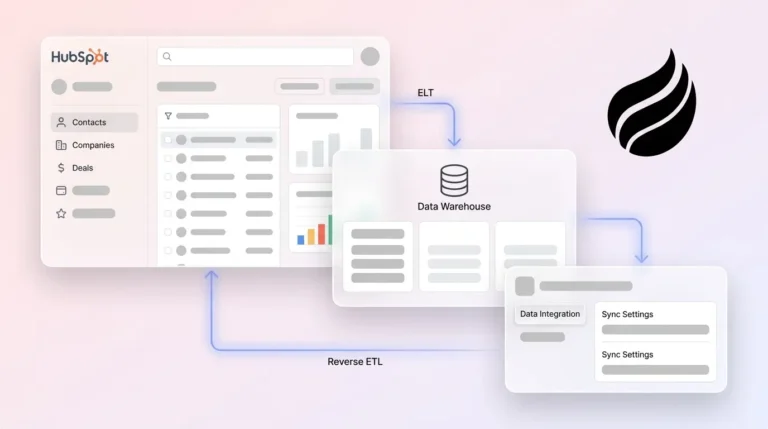
Coffee operates in two modes. As a standalone CRM, it replaces legacy systems entirely and the agent manages the full system of record. As a Companion App, it sits on top of existing Salesforce or HubSpot installations, writing enriched BANT data, contact records, activity logs, and pipeline scores back to the primary CRM without disrupting existing workflows, required fields, quotas, or forecasting configurations. Additional tool integrations beyond Salesforce and HubSpot are currently available via Zapier, with deeper native integrations on the product roadmap.
What happens when the agent captures only partial BANT data from a call?
The agent logs whatever signals are present and scores each criterion independently. A partial score is not treated as a disqualification. It generates a specific gap-filling action assigned to the rep. For example, if Budget and Need are confirmed but Authority is missing, the agent flags the deal and prompts the rep to secure an economic buyer meeting before the next stage gate. The partial-BANT decision tree routes deals to nurture sequences, active pursuit, or hold status based on which combination of criteria is confirmed, so no lead falls through the pipeline without a defined next step.
How does this 5-step process scale when the team grows beyond 10 reps?
The workflow scales without structural changes. As headcount grows, the agent continues handling data capture and scoring regardless of call volume. The Pipeline Compare feature surfaces deal-level changes across a larger rep pool without requiring managers to manually audit individual records. BANT score thresholds can be adjusted by deal size tier and rep segment as the team matures. Teams that eventually move upmarket toward enterprise deals with longer cycles and larger buying committees may find it useful to layer in a more complex framework such as MEDDIC for those specific segments, while retaining BANT for SMB and mid-market velocity deals.
Conclusion: A 2026-Ready BANT Playbook for Small Teams
The BANT framework remains one of the most effective qualification tools available to small sales teams in 2026 when used as a flexible 0-2 scoring system instead of a rigid checklist. The 5-step workflow here gives 1-10 rep teams a repeatable process: disqualify early against ICP, run conversational discovery using natural question templates, score each criterion objectively, let the AI agent log and automate CRM data, and review pipeline weekly using agent-generated compare views.
The automation layer makes consistency achievable without extra headcount. Coffee’s agent reads emails, calendars, and transcripts to populate every BANT field, enforce stage gates, and surface stalled deals, so reps spend time selling instead of entering data. Start building your pipeline engine with Coffee today.