Written by: Doug Camplejohn, CEO & Co-Founder, Coffee
Key Takeaways for 2026 AI CRM Pricing
- Day.ai pricing starts at $30 per user monthly and focuses on call automation, while broader CRM features sit behind higher tiers or add-ons.
- Coffee delivers stronger value with simple seat-based pricing that includes unlimited agent automation for data entry, meetings, and pipeline work.
- Compared with HubSpot at $9–$90 per seat and Pipedrive at $14 per user, Coffee removes hidden fees and saves 8–12 hours per week.
- Day.ai’s total cost of ownership for a 10-user team often passes $15,000 per year once required add-ons are included.
- Choosing Coffee’s transparent pricing gives SMBs a complete AI CRM that scales without feature locks.
Day.ai Pricing Tiers 2026: What Each Plan Really Includes
Day.ai builds its 2026 pricing around call-focused automation across three main tiers. The Basic plan starts at $30 per user monthly and targets teams that mainly need call recording and email sync. The Pro tier costs $60 per user monthly and adds team collaboration tools plus more advanced analytics. Enterprise pricing uses custom quotes that usually start above $100 per user for larger organizations.
| Tier | Price/User/Month | Key Features | Limits |
|---|---|---|---|
| Basic | $30 | Call recording, email sync | Limited integrations |
| Pro | $60 | Team features, analytics | Advanced features locked |
| Enterprise | $100+ | Custom workflows | Minimum user requirements |
For a 10-user team, Day.ai’s Basic plan reaches $300 per month before any add-ons. Full CRM capabilities, deeper integrations, and richer reporting usually require Pro or Enterprise tiers, which pushes overall spend up quickly.
Day.ai Monthly Costs: Per-User Pricing and Hidden Add-Ons
Day.ai’s per-user pricing looks predictable at first, yet extra expenses appear once teams add required features. The $30 monthly entry price covers core call tools, while full CRM workflows generally require upgrades to Pro or above.
| Team Size | Day.ai Monthly | Annual Savings | Hidden TCO |
|---|---|---|---|
| 5 users | $150 | 10-15% | +$50 add-ons |
| 10 users | $300 | 10-15% | +$100 add-ons |
| 25 users | $750 | 10-15% | +$250 add-ons |
Annual billing usually offers 10–15% discounts, yet many teams still uncover extra costs for integrations, advanced capabilities, and data storage that were not obvious during early pricing talks.
Day.ai vs Coffee CRM Pricing 2026: Direct Cost and Value Matchup
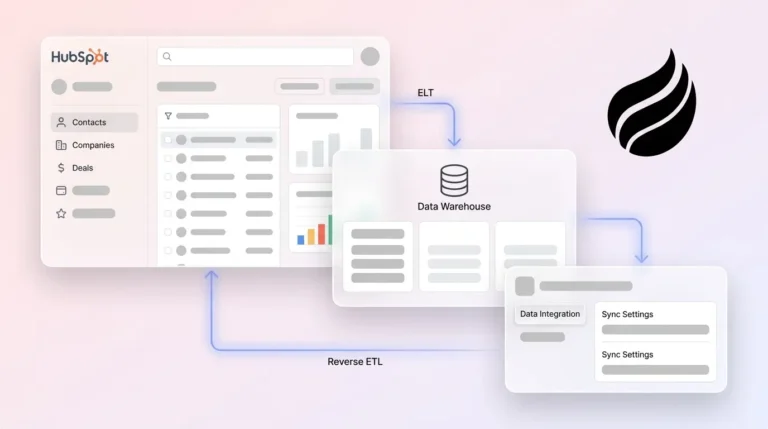
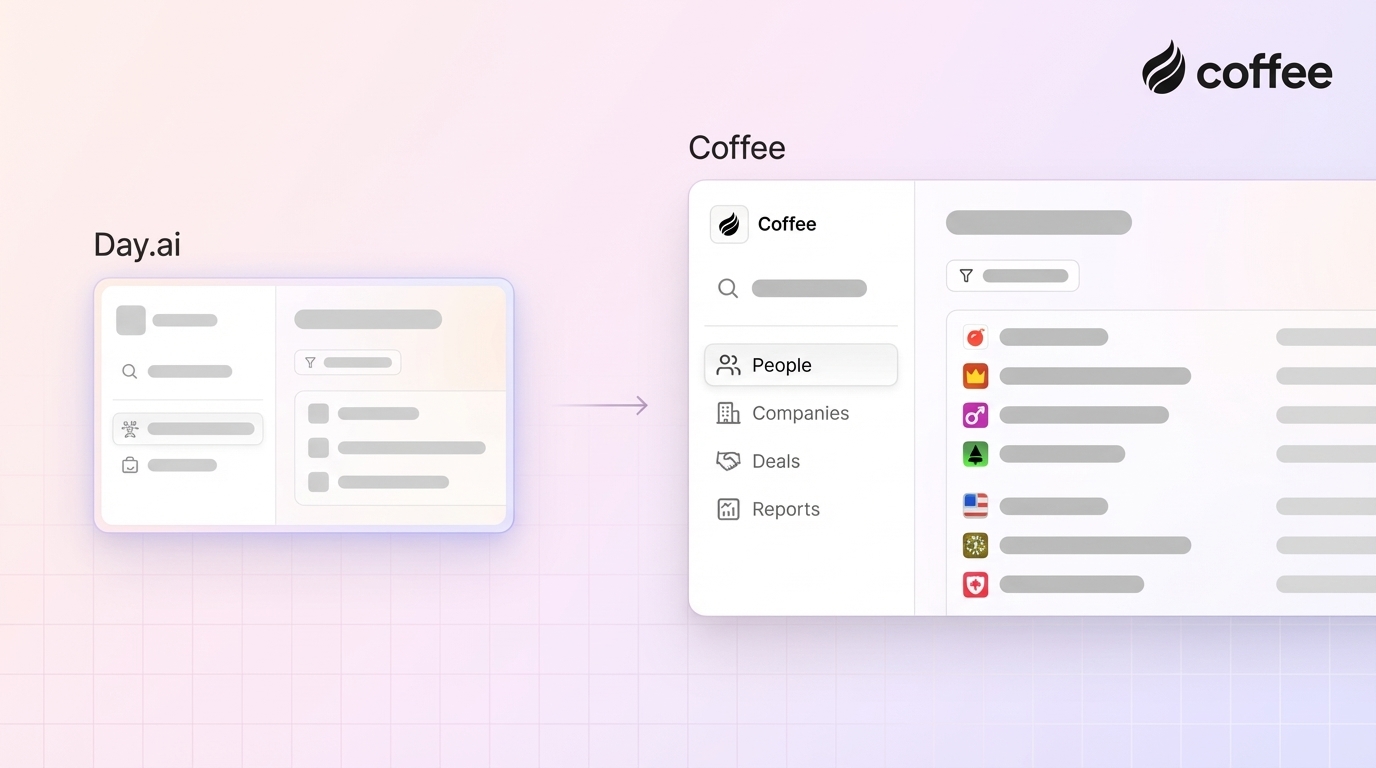
Coffee’s dual-model structure delivers more value by using an agent-based architecture instead of narrow call tools. The Standalone model replaces a traditional CRM with simple seat-based pricing and unlimited agent labor included. The Companion model connects to Salesforce or HubSpot at the same pricing structure, without extra feature charges or usage fees.

| Metric | Day.ai | Coffee Standalone | Coffee Companion |
|---|---|---|---|
| Starting Price | $30/user/month | Super simple seat-based pricing | Super simple seat-based pricing |
| Automation Depth | Call-focused only | Full agent automation | Full agent automation |
| Time Savings | 2-4 hours/week | 8-12 hours/week | 8-12 hours/week |
| ROI Potential | Limited scope | High comprehensive | High comprehensive |
Coffee delivers stronger results because its agents handle data entry, meeting scheduling and summaries, and pipeline intelligence, while Day.ai focuses only on calls. Businesses see average ROI of $8.71 per $1 invested in CRM, so Coffee’s broader automation usually creates more value than Day.ai’s narrow feature set.
Day.ai vs HubSpot and Pipedrive Pricing 2026: Multi-Tool Cost View
HubSpot Sales Hub Starter costs $9 per seat monthly on a monthly plan, with lower rates on annual contracts, while Sales Hub Professional reaches $90 per seat monthly. Pipedrive starts at $14 per user monthly on annual billing, which creates a competitive entry price for smaller teams.
| Tool | Starting Price | Per-User Pro | TCO/10 Users/Year |
|---|---|---|---|
| Day.ai | $30/month | $60/month | $7,200+ |
| Coffee | Super simple seat-based pricing | Same pricing | Transparent seat-based |
| HubSpot | $9/month | $90/month | $10,800+ |
| Pipedrive | $14/month | $49/month | $5,880 |
Coffee keeps its advantage by including data enrichment, call recording, and advanced automation that others often sell as add-ons. Most companies pay 30–35% above HubSpot’s listed prices, while Coffee’s seat-based model already includes its full agent feature set.
Best AI CRM Pricing 2026: Feature-Per-Dollar and TCO Snapshot
Feature-per-dollar comparisons highlight Coffee’s value because its agents cover the full CRM workflow. Day.ai charges $30 monthly for call tools, while Coffee includes data entry, meeting management, and pipeline intelligence within its simple seat-based pricing.
| Feature | Day.ai Cost/Feature | Coffee Cost | Others Average |
|---|---|---|---|
| Auto Data Entry | Not included | Included | $20+ add-on |
| Call Intelligence | $30/user | Included | $25+ add-on |
| Pipeline Management | Pro tier required | Included | $15+ add-on |
Total cost of ownership for a 10-user team often pushes Day.ai to about $15,000 per year once essential add-ons are active. Coffee delivers full functionality under its simple seat-based pricing. 83% of companies using AI features within CRM exceed sales goals, so Coffee’s complete agent coverage usually outperforms Day.ai’s limited automation.

Get started with Coffee to access full AI CRM capabilities without surprise feature fees.
Real-World Use Cases and Pros and Cons for Each CRM
Small teams that want full automation across their CRM stack benefit most from Coffee Standalone as a complete replacement. Existing HubSpot or Salesforce customers gain value from Coffee Companion, which layers agent intelligence on top of current systems without a migration. Day.ai works best for teams that only care about call intelligence and have modest CRM needs elsewhere.
Day.ai Pros:
- Lower entry price at $30 monthly per user
- Focused call recording and analysis tools
- Simple rollout for call-centric teams
Day.ai Cons:
- Automation limited to call-related workflows
- Requires extra tools for a complete CRM stack
- Higher long-term costs once add-ons are included
Coffee Pros:
- Single agent handles end-to-end CRM tasks
- Saves 8–12 hours of manual work each week
- Transparent pricing without hidden fees
- Works as a standalone CRM or as a companion layer
Coffee Cons:
- Higher upfront cost than basic call-only tools
- May exceed needs for teams that only want call analytics
One company generating tens of millions in revenue on custom AI solutions moved from spreadsheets to Coffee after rejecting Salesforce and HubSpot due to heavy manual work. Coffee’s automated data entry from Google Workspace and its Pipeline Compare feature removed weekly review bottlenecks and still allowed API access for custom briefings.

CRM Decision Matrix and Selection Guide for 2026
| Team Situation | Day.ai Fit | HubSpot/Pipedrive | Coffee Recommendation |
|---|---|---|---|
| Call-only focus | Good match | Overkill | Consider if growth planned |
| Data entry problems | Poor fit | Manual effort required | Perfect solution |
| Existing CRM users | Limited value | Platform lock-in | Companion model ideal |
| Growing sales teams | Outgrow quickly | Scales effectively | Scales seamlessly |
Teams that hate data entry and want broad automation should choose Coffee. Teams that only need call intelligence and already rely on other tools can consider Day.ai. Teams that prefer traditional CRMs with manual processes can explore HubSpot or Pipedrive.
Frequently Asked Questions
Day.ai vs Coffee: Which is cheaper for SMB teams?
Day.ai starts at $30 per user monthly, while Coffee uses simple seat-based pricing that may appear higher at first glance. Total cost analysis usually shows Coffee as the better value for SMBs that want full automation. Day.ai often needs extra tools and higher tiers to match Coffee’s CRM coverage, which pushes real costs above Coffee’s all-inclusive model. Coffee also removes separate spending on data enrichment, advanced automation, and integration tools that Day.ai customers often buy later.
What is the best AI CRM for sales teams in 2026?
Coffee stands out for 2026 because its agents handle data entry, meeting workflows, and pipeline intelligence without manual effort. Competing tools often focus on one slice of the process, while Coffee removes 8–12 hours of weekly admin work and improves forecasting accuracy. The Standalone and Companion options let teams either replace their CRM or enhance an existing platform, which suits a wide range of sales setups and tech stacks.
How does Coffee CRM pricing compare with traditional models?
Coffee uses transparent seat-based pricing where companies pay for human users and receive unlimited agent labor. Traditional CRMs usually charge per feature, integration, or usage metric, which complicates budgeting. Coffee’s pricing includes automation, data enrichment, meeting intelligence, and pipeline management in one package. The rate stays consistent in both Standalone and Companion modes, so finance teams can plan without surprise fees for core features.
What are Day.ai’s monthly costs including hidden fees?
Day.ai advertises $30 per user monthly for basic call recording and email sync, yet full CRM coverage usually requires the $60 Pro tier or custom Enterprise pricing. Extra costs often appear through integration needs, advanced analytics, and storage limits. Many teams end up paying 30–50% above the base price, which brings real monthly costs to roughly $40–45 per user for a workable CRM beyond basic call intelligence.
Which CRM delivers the strongest ROI for automation-focused teams?
Coffee delivers the strongest ROI for automation-focused teams because its agents remove nearly all manual CRM tasks. Traditional CRMs still depend on humans for contact creation, meeting notes, pipeline updates, and follow-up drafting. Coffee automates those steps, which saves 8–12 hours per week and lets sales reps spend more time selling. Consistent data quality and better forecasting then support higher win rates and lower operational overhead.

Conclusion: Choose Coffee for Higher 2026 CRM ROI
Day.ai’s call-first design and tiered pricing limit ROI for SMBs that want full CRM automation. Coffee’s agent-based model delivers more value by automating data entry, meeting workflows, and pipeline intelligence under a clear seat-based price.
Coffee removes the manual work that slows traditional CRMs and still provides accurate insights and forecasts. The Standalone and Companion options support both full CRM replacement and add-on automation, which makes Coffee a flexible and cost-effective choice for 2026.
Get started with Coffee today to unlock true CRM automation that saves time, improves data quality, and drives sales without hidden fees or locked features.