Written by: Doug Camplejohn, CEO & Co-Founder, Coffee | Last updated: July 5, 2026
Key Takeaways for Small Sales Teams
- Legacy CRMs still force manual data entry, while agent-first platforms like Coffee capture and enrich interactions from email, calendar, and calls automatically.
- Small US sales teams lose 8–12 hours per rep each week to CRM admin; Coffee removes that work with zero manual logging required.
- Coffee offers two deployment models: a standalone CRM for teams outgrowing spreadsheets and a companion agent that writes enriched data into Salesforce or HubSpot without migration.
- Compared with competitors, Coffee combines full pipeline intelligence, SOC 2 Type 2 compliance, and transparent seat-based pricing with no hidden AI metering fees.
- Eliminate manual data entry and reclaim hours every week, and see Coffee’s pricing and deployment options.
How We Define “Automated CRM” in 2026
The term “automated CRM” is overloaded. Every vendor claims automation, yet few deliver the depth small teams actually feel in their calendars and inboxes. To cut through the marketing noise, this guide uses five criteria that directly affect whether a small team saves time or just moves manual work into new screens.
These criteria move from how data enters the system to whether the platform remains affordable, secure, and sustainable for a growing team.
- Depth of data capture and enrichment: The system should automatically create contacts, log activities, and enrich records from email, calendar, and call transcripts. Tools that only auto-fill a few fields after a human creates the record do not qualify.
- Elimination of manual data entry and admin time: B2B sales reps spend an average of 10–11.5 hours per week on manual CRM data entry. A genuinely automated CRM must cut that figure in a clear and measurable way.
- Pipeline intelligence and reporting accuracy without spreadsheets: Managers should see week-over-week pipeline changes, at-risk deals, and forecast variance inside the CRM. CSV exports and spreadsheet gymnastics signal missing automation.
- Ease of implementation and ongoing maintenance burden: 60–70% of CRM implementations fail to meet expectations, often due to low adoption and organizational issues rather than pure technology. Setup complexity and maintenance overhead are real costs for small teams.
- US pricing transparency plus SOC 2/GDPR compliance: Small teams need predictable per-seat pricing and documented security certifications before they commit budget and data.
Coffee: Agent-First CRM Built for Small Teams
Coffee uses an autonomous agent, not a rules engine or bolt-on AI feature, to manage the full data lifecycle. With a Google Workspace or Microsoft 365 connection, the Coffee Agent scans emails and calendars to identify every person and company your team has contacted. It then auto-creates contact and company records, logs last and next activity so you see a complete interaction timeline, and enriches those records with job titles, funding data, and LinkedIn profiles via licensed data partners.

In February 2026, Coffee added an Intelligence layer that stores deep context on business model, ICP, and competitors to generate tailored AI suggestions without manual input. This context turns raw activity data into practical guidance for reps and managers.

The time savings match the figures outlined earlier, so reps get back the hours they previously spent on logging. The agent also joins Zoom, Teams, and Meet calls to record, transcribe, and generate structured summaries aligned to BANT, MEDDIC, or SPICED. It then drafts follow-up emails in Gmail for one-click review. Hindsight in Pipeline CRM, introduced in February 2025, allows comparing today’s pipeline to a previous date to visualize deal changes like new, updated, or removed opportunities without spreadsheets. Coffee delivers a similar outcome inside its own pipeline intelligence.

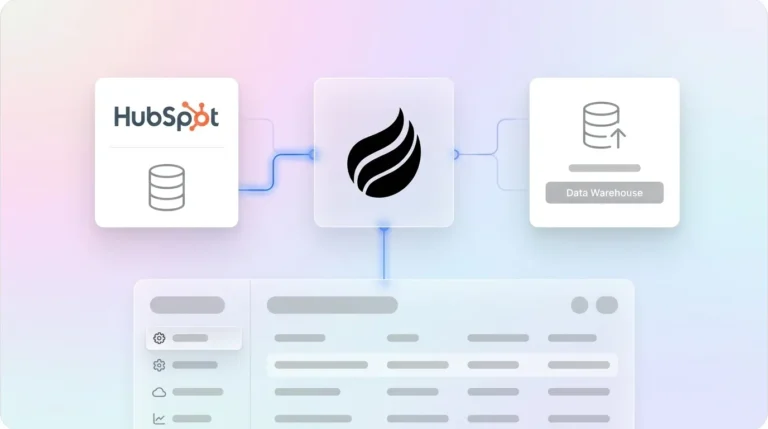
Coffee supports two deployment models. The Standalone CRM replaces legacy systems for teams of 1–20 that have outgrown spreadsheets. The Companion App runs as an intelligent data layer on top of existing Salesforce or HubSpot instances and writes enriched, structured data back to the system of record without migration. A January 2026 Stripe integration automatically imports customers, enriches them, and marks paid invoices as Closed Won, which shows how the agent unifies structured and unstructured data sources that legacy CRMs struggle to connect.

Pricing uses a simple seat-based model with no metering on AI actions. Coffee is SOC 2 Type 2 and GDPR compliant, and customer data never trains public models.
Explore Coffee’s agent-first CRM and end CRM logging work in your sales workflow.
Side-by-Side Automation Comparison
The table below highlights a clear pattern. Coffee and Salesflare remove manual entry for most core logging, yet Coffee is the only platform that combines zero manual entry with deep pipeline intelligence and a companion model for existing Salesforce and HubSpot users.
| Vendor | Auto Data Capture & Enrichment | Manual Entry Required | Pipeline Intelligence | Implementation Effort | Pricing (per user/mo) | SOC 2 / GDPR |
|---|---|---|---|---|---|---|
| Coffee | Full, including email, calendar, calls, and enrichment via licensed partners | None for core logging, agent handles contacts, activities, and enrichment automatically | Pipeline Compare and AI natural-language deal search launched Jan 2026 | Connect Google Workspace or M365, agent activates immediately | Seat-based, contact for pricing | SOC 2 Type 2 + GDPR |
| Pipedrive | Partial, AI Sales Assistant surfaces at-risk deals nightly, contact creation still largely manual | High, reps must log calls and update stages | Visual pipeline with optional AI deal scoring add-on | Low-to-medium, intuitive UI | Pipedrive pricing starts at $14 per user per month. | GDPR, SOC 2 not publicly confirmed at Essential tier |
| HubSpot | Partial, Breeze AI agents automate prospecting research and data hygiene, full automation requires paid tiers | Medium, free tier requires significant manual input | Reporting dashboards with forecasting on paid tiers | Medium, broad feature set increases configuration time | HubSpot paid plans start from $7 per seat per month with annual commitment or $10 per seat per month month-to-month. | SOC 2 + GDPR |
| Salesforce Starter | Partial, Agentforce (2025) adds autonomous lead qualification and record updates, Starter tier limits scope | High at Starter tier, advanced automation requires higher plans | Reports and dashboards with forecasting on higher tiers | High, full migration typically 6–10 weeks phased rollout | Free 2-user suite, paid Starter from ~$25 | SOC 2 + GDPR |
| Clarify | High, Ambient Intelligence captures meeting data, extracts stakeholders, and updates pipeline stages autonomously | Low for standalone use, integration depth with Salesforce and HubSpot is limited | AI-driven insights with lighter forecasting depth than established CRMs | Low for greenfield, complex for teams on Salesforce or HubSpot | Clarify Starter pricing is $50 per month (credit-based, unlimited seats). | Not publicly confirmed at all tiers |
| Salesflare | High, auto-fills contact and company data from email, calendar, phone, and social with zero manual entry | Low, auto-capture covers most logging needs | AI deal scoring and timeline summaries with limited pipeline compare | Low, designed for small B2B teams | From ~$29 | GDPR, SOC 2 not publicly confirmed |
How Other CRM Options Stack Up
Pipedrive works well for teams that want an intuitive visual pipeline and accept moderate manual entry. Its AI Sales Assistant reviews pipelines nightly and surfaces at-risk deals, which shortens pipeline review time. However, contact creation and activity logging still depend heavily on rep input, so data quality drops when discipline slips. Pipedrive also lacks a companion-app model for teams already on Salesforce.
HubSpot bundles CRM with marketing, which suits teams running inbound and outbound together. Breeze AI agents automate prospecting research and data hygiene, yet the more complete automation features sit behind paid tiers that climb quickly. HubSpot started as a marketing platform with CRM added later, so its architecture does not behave like a single intelligence layer across all sales activity.
Salesforce Starter offers enterprise credibility at a lower entry price. The 2025 Agentforce release added autonomous agents that qualify leads and update records without rep intervention, which matches what small teams want from automation. These capabilities are largely unavailable at the Starter tier, so small teams must accept manual entry or upgrade to more expensive plans. Even when budget allows an upgrade, implementation complexity and 25 years of legacy architecture make Salesforce a difficult fit for teams under 10 people without dedicated RevOps support.
Clarify targets the post-ChatGPT era with genuine agentic ambitions. Its Ambient Intelligence architecture captures meeting data and updates pipeline stages autonomously, delivering an 80% reduction in administrative work for founder-led teams. Integration depth creates the main constraint. Teams already running Salesforce or HubSpot with custom quotas, required fields, and forecasting hierarchies encounter gaps that Coffee’s purpose-built companion model avoids.
Salesflare acts as the closest passive-to-automated bridge for small B2B teams. Its auto-fill system connects to email, calendar, phone, and social to populate contact and company data with zero manual entry, which suits outbound-heavy teams of 2–10. It lacks Coffee’s companion-app model, deep pipeline compare, and visitor identification features, so teams trade some intelligence for simplicity.
Setup and Onboarding Effort by Platform
Coffee activates as soon as you connect Google Workspace or Microsoft 365 with OAuth. Teams skip field mapping and data-import scripts, so the agent starts working immediately. Salesflare offers a similarly fast path for greenfield deployments.
HubSpot and Pipedrive require pipeline stage configuration and field setup, which typically means 1–2 days of data cleaning plus 1–2 days of import and training for a 5-person team. Salesforce Starter demands the most effort, with a full migration that follows the 6–10 week phased rollout timeline noted earlier, plus a separate 2–4 week current-state assessment. Clarify remains fast for net-new deployments but needs custom work when layered onto existing Salesforce instances with complex field requirements.
Data Capture, Maintenance, and Admin Load
Sales representatives spend roughly 25–28% of their workweek, about 10–11 hours, on manual CRM data entry. In 2026, sales reps spend 5.5 hours per week on manual CRM data entry. Coffee’s agent removes this work for core logging so reps do not touch fields for routine activities. Salesflare removes most of the burden for contact and email data.
HubSpot and Pipedrive reduce manual work only when reps consistently use integrations, which creates a behavioral dependency that 47% of CRM users say contributes to data quality dissatisfaction. Salesforce Starter without Agentforce add-ons leaves the full manual burden on reps.
See how Coffee reclaims those hours for your team.
Usability for Reps and Visibility for Managers
Rep adoption improves when CRM feels like a productivity tool instead of a reporting chore. Poor CRM adoption occurs when reps view the system as administrative overhead, enter minimal data, and undermine forecasting and coaching. Eliminating manual data entry solves the time problem and also removes a major adoption barrier.
Coffee inverts the usual dynamic. The agent handles logging, so reps use the CRM to receive briefings and review AI-drafted follow-ups rather than to type notes. For managers, Coffee’s Pipeline Compare shows week-over-week deal movement without manual pipeline reviews. AI forecasting tools help reduce forecast variance through model tuning.

Pipedrive and HubSpot provide solid dashboards but depend on rep-entered data for accuracy. Salesforce offers the deepest forecasting at higher tiers, yet that power only matters when teams enforce adoption.
Integrations, Complexity, and Future Growth
Teams that grow from 2–5 to 6–20 people feel integration debt quickly. Coffee connects natively to Google Workspace and Microsoft 365 and extends further through Zapier, with deeper native integrations planned. Its companion model lets teams on Salesforce or HubSpot avoid migration because the agent writes enriched data back to the existing system of record.
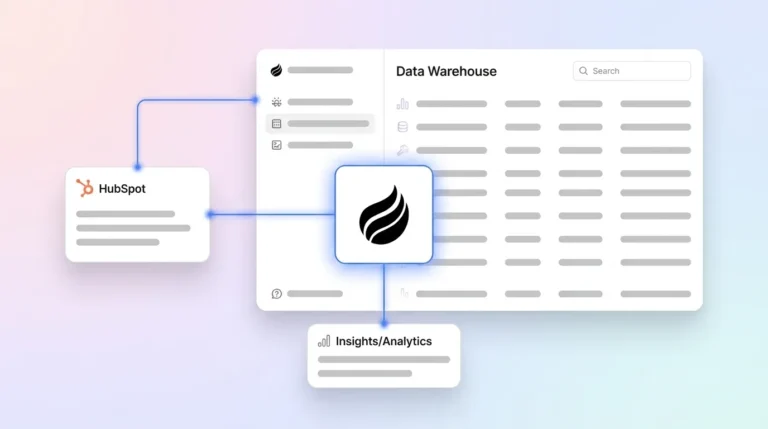
Most attempts at agentic CRM fail because they bolt AI onto traditional architectures that lack real-time data integration and bidirectional flow. Coffee’s data warehouse architecture avoids this trap by capturing full interaction history instead of overwriting fields. Clarify and Salesflare suit teams under 10 people but face scalability questions once Salesforce or HubSpot quotas and required fields become central to operations.
Risks, Tradeoffs, and Limitations
Legacy CRMs such as Salesforce, HubSpot, and Pipedrive offer proven enterprise integrations and large partner ecosystems, which matter for complex tech stacks. That maturity gives them a real advantage for some teams, yet it does not remove the core risk that any AI-driven CRM faces.
Gartner predicted in 2025 that 40% of agentic AI CRM projects will fail or stall by 2028 due to data quality issues rather than AI technology itself, and this risk applies to any agent-first platform deployed on a messy existing dataset. Coffee’s broader third-party integrations currently route through Zapier instead of native connectors, which adds a dependency for teams with complex automation stacks. Clarify lacks Salesforce and HubSpot integration depth for teams with established forecasting hierarchies. Salesflare’s pipeline intelligence remains lighter than Coffee’s for teams that need structured weekly reviews.
Decision Framework for Small US Sales Teams
| Team Profile | Best Fit | Rationale |
|---|---|---|
| 2–10 people, no existing CRM, want full automation | Coffee Standalone | Agent activates on email and calendar connection, zero manual entry, predictable seat-based pricing |
| 5–20 people, already on Salesforce or HubSpot, data quality problems | Coffee Companion | No migration required, agent enriches and writes back to existing system of record |
| 2–10 people, outbound-heavy, budget-sensitive, no existing CRM | Salesflare | Strong auto-capture for email and calendar, low cost, lighter pipeline intelligence |
| 2–10 people, greenfield, founder-led, no Salesforce or HubSpot dependency | Clarify | Ambient Intelligence reduces admin, credit-based pricing suits small teams, limited for established CRM stacks |
| 5–20 people, inbound plus outbound, marketing automation needed | HubSpot (paid tier) | Broad feature set, Breeze AI on paid tiers, manual entry burden remains without add-ons |
| 5–20 people, visual pipeline priority, moderate manual entry acceptable | Pipedrive | Intuitive UI, AI deal scoring, contact logging still requires rep input |
Frequently Asked Questions
How long does it take to implement Coffee and see value?
Coffee activates immediately after you connect Google Workspace or Microsoft 365 via OAuth. You skip field mapping, data import scripting, and pipeline configuration to get started. The agent begins scanning emails and calendars to auto-create contacts and log activities from day one. Most teams see a fully populated CRM within the first week without manual data entry. For the Companion App model on Salesforce or HubSpot, a simple authentication lets the agent start syncing and enriching data into the existing system of record, often within the same day.
How difficult is it to migrate existing data to Coffee?
Teams moving from spreadsheets or a lightweight CRM can rely on Coffee’s agent to pull contact and company data directly from email and calendar history. Historical interactions appear automatically instead of through manual CSV imports. Teams migrating from Salesforce or HubSpot that want to keep their current system of record can choose the Companion App model, which removes migration entirely because the agent works on top of the existing platform. Teams that want a full move to the Standalone CRM can import data, then let the enrichment agent fill gaps in historical records.
How does Coffee’s data quality compare to ZoomInfo or Apollo?
Coffee’s agent enriches records with job titles, funding data, and LinkedIn profiles via licensed data partners, which delivers data quality roughly on par with standalone enrichment tools for most small-team scenarios. The main difference is workflow. Coffee bakes enrichment into the agent’s process, so enrichment happens automatically when a contact is created and does not require a separate tool, login, or export-import cycle. Teams with highly specialized enrichment needs in regulated verticals may still want a dedicated enrichment provider, yet most B2B sales teams of 2–20 people can remove Apollo or ZoomInfo as separate line items.
What security certifications does Coffee hold, and how is data handled?
Coffee holds SOC 2 Type 2 certification and complies with GDPR. Customer data never trains public AI models. For US-based teams in industries with standard compliance requirements, these certifications cover the baseline security review. Coffee does not currently target heavily regulated industries such as healthcare or finance that require multi-year security reviews or HIPAA Business Associate Agreements. All data processed by the Coffee Agent, including email content, call transcripts, and calendar data, follows these compliance frameworks.
What does Coffee’s pricing model look like, and are there hidden costs?
Coffee uses seat-based pricing, so you pay for human seats and the agent’s work is included. Unlimited data capture, enrichment, meeting management, and pipeline intelligence come without extra metered costs. You do not pay separately for AI actions, LLM usage, or pipeline queries. This structure contrasts with platforms like Clarify, which uses credit-based pricing for AI actions, and with HubSpot and Salesforce, where deeper automation often requires tier upgrades that raise per-seat cost. For teams of 2–20 people, Coffee’s model keeps monthly spend predictable and avoids the add-on fees common in legacy CRM pricing.
Conclusion: Choosing an Automated CRM in 2026
AI-powered CRMs that handle scheduling, follow-ups, and meeting notes free reps from manual data entry and administrative tasks that dominate passive database-style systems. Legacy CRMs were built for a world where humans reliably entered data, and that world no longer exists. The only architecture that fixes data quality at the source uses an autonomous agent for data capture so accurate pipeline intelligence, forecasting, and deal visibility emerge without manual intervention.
For US-based sales teams of 2–20 people, Coffee stands out on this list as the only platform that offers both a standalone agent-first CRM for teams starting fresh and a companion agent for teams already invested in Salesforce or HubSpot. Every other option either requires meaningful manual entry, lacks integration depth for established CRM stacks, or locks key automation features behind expensive tier upgrades.