Written by: Doug Camplejohn, CEO & Co-Founder, Coffee | Last updated: July 14, 2026
Key Takeaways for 2026 Revenue Intelligence Buyers
- Forecast failure starts with poor CRM data quality, not the analytics layer. Most platforms build insights on incomplete records.
- Coffee is the only platform that autonomously captures emails, calls, and calendars, then writes structured MEDDIC/BANT/SPICED records back to Salesforce or HubSpot without rep input.
- Agent-first architecture closes the 79% data gap that undermines downstream forecasts and supports 5–10% accuracy for top performers.
- Teams reclaim 8–12 hours per rep per week and avoid the multi-month implementations common with Gong, Clari, and similar tools.
- Eliminate manual data entry and admin work. See Coffee’s pricing and deploy an agent that writes clean CRM data from day one.
What Revenue Intelligence Means in 2026
Revenue intelligence in 2026 focuses on capturing, structuring, and analyzing every buyer interaction so forecasts stay accurate and deal guidance stays actionable. The category has moved from passive storage, where reps manually fill CRM fields, to agent-driven execution that handles data capture automatically. Modern platforms ingest emails, calls, and calendar events, structure that data, and write it back to the system of record without human involvement. The global revenue intelligence market has expanded quickly as teams shift from observation to automation.
Top Revenue Intelligence Platforms Compared
The table below scores each platform on five criteria that RevOps leaders cite most often in 2026 evaluations. Scores reflect a composite of published benchmarks, independent rankings, and documented architecture characteristics cited inline.
Compare Coffee’s transparent pricing against your current stack cost and see the impact on total spend.
Data Quality and Automation as the First Evaluation Lens
Seventy-nine percent of opportunity data never enters the CRM without automation, and a similar share never reaches the CRM at all. Any AI insight built on that incomplete foundation stays structurally unreliable regardless of vendor claims.
Gong and similar conversation intelligence platforms operate only on post-call data. They require a call to occur before generating any insight, so they miss pre-call intent signals that represent most buyer activity. AI tools that automatically write structured data to CRM fields after every interaction can lift field completion rates to levels passive tools never reach.
Coffee’s agent ingests unstructured data such as email bodies, call transcripts, and calendar events, then structures it into named fields using frameworks like MEDDIC or SPICED before writing it back to the CRM. Autonomous agent architecture that connects conversational agents to CRM write operations reduces manual sales administration workloads by 60–80% compared to rep-driven data entry.
CRM Integration Depth and Data Ownership
Three integration architectures create very different data quality outcomes. Batch API sync introduces 12–24 hour data staleness, bidirectional real-time sync maintains two separate data stores, and CRM-native architecture stores engagement data as native records accessible to standard reports, APIs, and workflow automation.
Einstein Activity Capture shows the risk of non-native storage. It stores captured activity data on AWS infrastructure outside the Salesforce org, imposes a 24-month retention ceiling, does not support custom object association, and deletes data if the customer cancels the service. Clari’s integration is tightest with Salesforce and materially weaker for HubSpot- or Microsoft Dynamics-first organizations.
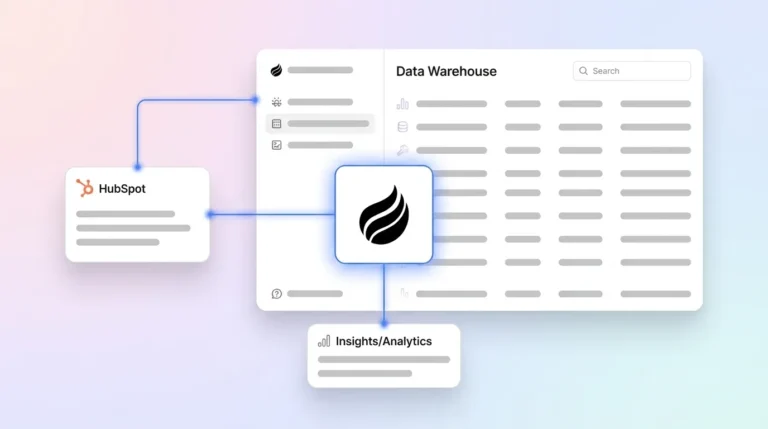
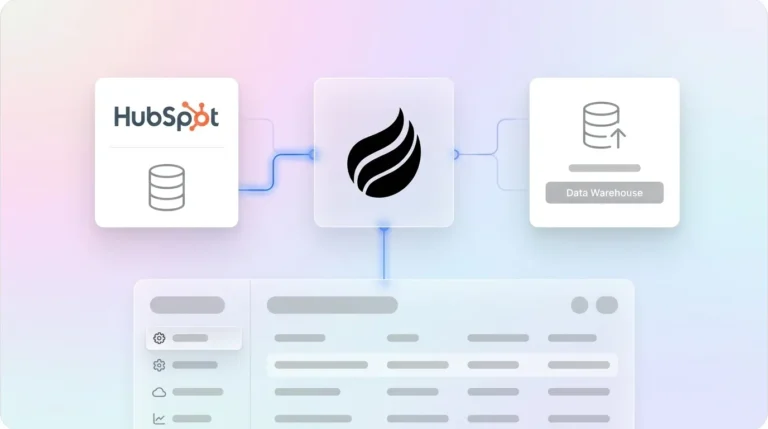
Coffee’s Companion App model authenticates directly to an existing Salesforce or HubSpot instance. The agent writes enriched contact records, activity logs, meeting summaries, and deal-stage signals back as native CRM records. Teams avoid external data stores, sync lag, and retention ceilings. Organizations already committed to either CRM keep their system of record while the agent handles every data-in task.

Forecasting Accuracy Tied to Clean CRM Data
Fewer than 20% of B2B sales organizations consistently forecast within 5% of actuals, and missed forecasts can erase meaningful annual revenue. The earlier 79% data gap directly feeds this problem, and 79% of sales organizations miss their forecast by more than 10%.
The primary issue is not the forecasting model. It is the data feeding that model. BCG research on AI in RevOps identifies poor underlying CRM data quality, not the forecasting model itself, as the biggest barrier to accurate revenue forecasting. AI and ML-assisted forecasting achieves ±8–15% variance versus ±25–35% for rep roll-up. Top performers using AI-assisted methods and high-quality CRM data reach pipeline forecast accuracy within 5–10% of actual close revenue.
Clari delivers strong forecasting scores but still depends on manual data input from reps, which is the same data-quality problem the tool aims to solve. Coffee fixes the upstream data issue first, so its downstream forecasting output stays structurally more reliable.
User Adoption and Admin Burden in Daily Workflows
Sales reps spend 70% of their time on non-selling tasks, including manual CRM updates. Coffee’s market data shows that 71% of sales reps feel they spend too much time on data entry, leaving only 35% of their time for selling.
Implementation of Gong or Clari often takes several months, while agent-based tools need only authentication setup. Individual reps can reclaim several hours per week that previously went to manual record-keeping when autonomous agents handle CRM write operations. Coffee’s agent targets 8–12 hours reclaimed per rep per week by consolidating the jobs of CRM, enrichment, recording, and forecasting into a single agent.
“The best sales intelligence platform is the one your reps actually use. Prioritize workflow-embedded insights over standalone dashboards that require a separate login.” Coffee’s agent surfaces briefings, summaries, and pipeline changes inside the rep’s existing workflow instead of forcing a separate login to a parallel dashboard.
Total Cost of Ownership Across Your Stack
Stacking multiple sales tools like Gong, Clari, Outreach, and Einstein Activity Capture creates high per-user monthly costs that include platform fees, onboarding, and auto-renewal uplifts. For a B2B sales team, annual licensing for conversation intelligence, lead scoring, and outreach automation plus first-year implementation, integration, and training can reach a large combined number.
Coffee’s seat-based pricing includes the agent’s unlimited labor. Teams avoid separate fees for enrichment tools such as ZoomInfo or Apollo, call recording tools such as Fathom or Gong, and pipeline analytics add-ons such as Clari modules. The total cost of ownership equals the seat count multiplied by one published price.
Will AI Replace Sales Teams or Augment Them?
Cost considerations naturally raise a broader question for sales leaders who evaluate AI platforms. Many want to know whether these tools will eventually replace the teams that use them. The 2026 data does not support a replacement thesis. It supports an augmentation thesis with a clear productivity ceiling for human-only configurations. Hybrid AI plus human SDR pods reduced cost per qualified opportunity from $487 (human-only) to $224, a 54% drop. Pods configured with one human SDR per two AI SDR seats generate 1.9x more meetings per dollar than pure AI setups and 2.4x more than human-only teams.
A Gartner survey of 632 B2B buyers found that 61% prefer a rep-free buying experience, which raises the stakes of each remaining human conversation instead of removing the need for it. Gartner projects that agentic AI models will autonomously resolve 80% of routine client interactions by 2029. These are routine interactions, not complex enterprise deals that require judgment, relationship, and negotiation. In practice, AI in 2026 replaces administrative tasks, not salespeople.
Best AI Sales Agents for Revenue Growth
Agent capability in 2026 centers on whether the platform executes actions autonomously or only surfaces insights for humans to act on. A key 2026 evaluation dimension is the agentic action layer, which covers drafting follow-ups, triggering sequences, alerting reps to at-risk deals, and re-engaging stalled pipeline versus remaining purely observational.

The platforms evaluated fall into clear tiers of agent maturity.
- Gong: Provides call recording, transcription, AI summaries, and coaching scorecards but does not add automatic CRM field updates or task creation from calls.
- Clari: Functions primarily as a descriptive tool that visualizes quota gaps while depending on human managers to determine corrective actions.
- Salesforce Einstein: Performs strongly within the Salesforce ecosystem but stores captured activity data outside the Salesforce org and does not support custom objects, which limits autonomous write-back fidelity.
- HubSpot AI: Shipped Audit Cards in 2026 that timestamp every AI action, improving transparency, while agent autonomy remains bounded by HubSpot’s native workflow engine.
- Coffee: The agent autonomously creates and enriches contacts, logs activities, joins calls, generates MEDDIC/BANT/SPICED-structured summaries, drafts follow-up emails, tracks pipeline changes week over week, and identifies website visitors, all without rep involvement.
Best-Fit Platform by Team Size and CRM Stack
The right platform depends on team size, existing CRM commitment, and data-quality maturity. The scenarios below map those variables to practical choices and show how Coffee fits into each situation.
- Early-stage teams (1–20 reps, no CRM): Coffee’s Standalone AI-First CRM deploys in hours, requires no admin, and replaces the spreadsheet-to-CRM migration entirely. The agent manages the system of record from day one.
- Growing teams (20–100 reps) evaluating Gong or Clari: Implementation of Gong or Clari can take several months. Coffee’s Companion App deploys through authentication and begins writing clean data immediately, so teams get forecasting-ready CRM data without heavy implementation overhead.
- Salesforce-committed teams: Coffee’s Companion App writes natively to Salesforce standard and custom fields. Existing quotas, forecasting hierarchies, and required-field configurations remain intact, which newer alternatives often cannot support at the same depth.
- HubSpot-committed teams: Coffee’s Companion App authenticates to HubSpot and enriches records, logs activities, and writes meeting intelligence back as native HubSpot properties. Teams can remove separate enrichment and recording tools.
Risks and Limitations to Watch Before You Buy
Every platform category carries documented risks that buyers should weigh carefully before committing.
- Hidden maintenance costs: The average SaaS company runs 6–12 tools that touch revenue data, creating integration challenges where CRM, billing, product analytics, and support systems each maintain separate schemas.
- Incomplete automation: Even advanced revenue intelligence platforms require rep action to update CRM records meaningfully; auto-logging call summaries differs from autonomously extracting and populating MEDDPICC qualification fields.
- Integration gaps: A scoring model built on incomplete account data produces confident predictions about the wrong accounts, which destroys rep trust faster than no scoring at all.
- Overbuying: Most RevOps teams over-invest in the intelligence layer and under-invest in the data and execution layers that determine whether insights reflect reality.
- Transcription accuracy: Real-world sales-call audio produces word error rates of 8–12%, and AI-generated action items hallucinate in more than one-third of cases even under near-ideal audio. Any platform that relies only on transcript-derived CRM writes inherits this risk.
- Data readiness: Forty-eight percent of enterprises report that their revenue data is not AI-ready and 87% miss revenue targets despite record AI spend.
Decision Framework and Practical Checklist
Use the checklist below to match platform architecture to your team’s real constraints before you sign a contract.
- Identify your data-quality baseline. A Validity July 2025 study found that 76% of organizations report less than half of their CRM data is accurate. If your CRM data accuracy sits below 50%, prioritize platforms that fix data input before adding analytics layers.
- Audit your current stack cost. List every tool that touches revenue data, including enrichment, recording, forecasting, and sequencing. Calculate the all-in per-seat cost, then compare that total with a consolidated agent platform.
- Confirm CRM write-back architecture. Ask vendors whether captured data is stored natively in your CRM or in an external data store. Request documentation on custom object support and data retention policy.
- Measure implementation timeline against your quarter. Agent-based tools require only authentication setup while legacy platforms typically need several months for full rollout. A platform that takes two quarters to deploy cannot improve this quarter’s forecast.
- Validate security posture. Require SOC 2 Type II certification at minimum. Coffee is SOC 2 Type II and GDPR compliant, and data is not used to train public models.
- Pilot with three to five reps for 30 days. In structured pilots, small teams can cut admin time and improve lead quality and forecast accuracy before scaling.
Start a 30-day Coffee pilot with three to five reps and measure the data-quality lift firsthand.
Frequently Asked Questions
How long does it take to implement Coffee, and what does the process involve?
Coffee’s Companion App deploys through a simple authentication step that connects the agent to your existing Salesforce or HubSpot instance. Teams avoid multi-month configuration projects, dedicated admin hires, and complex field-mapping exercises. Once authenticated, the agent begins scanning emails and calendars to populate and enrich contact records, log activities, and join scheduled calls. Most teams see the agent writing clean data to their CRM within the same business day. The Standalone CRM follows the same pattern: connect Google Workspace or Microsoft 365, and the agent starts building the system of record automatically. This timeline contrasts with enterprise conversation intelligence platforms, which often require three to six months for full rollout because of complex configuration requirements.

How does Coffee handle data migration from an existing CRM like Salesforce or HubSpot?
For teams using Coffee as a Companion App, no migration is required. The agent operates on top of your existing Salesforce or HubSpot instance and writes enriched data back into the CRM you already use. Historical records, pipeline data, quota structures, and custom fields remain intact. The agent augments what exists instead of replacing it. For teams adopting Coffee’s Standalone CRM, the agent can ingest existing contact and company data during onboarding. Coffee’s team supports this process, and because the agent immediately starts auto-creating and enriching records from live email and calendar activity, the system becomes current quickly regardless of historical data quality.
Is Coffee secure, and how does it handle sensitive sales data?
Coffee is SOC 2 Type II certified and GDPR compliant. Data processed by the Coffee agent is not used to train public AI models. The agent connects to Google Workspace or Microsoft 365 through standard OAuth authentication, so credentials are never stored directly by Coffee. For teams in regulated industries, Coffee’s compliance posture covers the core certifications required by most mid-market security reviews. Teams in healthcare or finance with multi-year security review requirements or highly customized compliance frameworks should confirm that Coffee’s current certification scope aligns with their specific obligations before committing.
Can Coffee scale as our sales team grows beyond 150 reps?
Coffee’s seat-based pricing model scales linearly. You pay for human seats, and the agent’s labor is included at every tier without extra metering on processes or AI usage. The Companion App architecture suits small to mid-market companies committed to Salesforce or HubSpot, and those CRM platforms handle enterprise-scale workflow complexity such as territory management, complex approval chains, and multi-org configurations. Coffee’s agent writes data into that existing structure. For organizations approaching 150 or more reps with highly customized CRM architectures or strict enterprise compliance needs, Coffee’s team can assess fit during evaluation. Coffee is not designed for very large enterprises with Chase- or PwC-scale custom workflow requirements.
What happens to the data Coffee captures if we cancel the service?
For Companion App customers, all data that the Coffee agent has written back to Salesforce or HubSpot remains in your CRM as native records. Because Coffee writes to your system of record instead of storing data in a proprietary external database, canceling Coffee does not cause data loss. Contact records, activity logs, meeting summaries, and deal-stage updates persist in Salesforce or HubSpot exactly as they were written. This structure contrasts with platforms like Einstein Activity Capture, which delete captured activity data when the customer cancels the service. For Standalone CRM customers, Coffee provides standard data export options so that records can move to another system if needed.
Conclusion: Fix the Data Layer, Then Choose Your Analytics
The 2026 revenue intelligence market has reached a clear inflection point. Forecast failure is a data-quality problem, not a forecasting-model problem, and platforms that layer analytics on top of incomplete CRM data cannot solve it. The five criteria that matter most, including data quality and automation, CRM integration depth, forecasting accuracy, user adoption and admin burden, and total cost of ownership, consistently favor agent-first architectures that fix the input before improving the output.
Gong leads on conversation analysis for high-volume enterprise call environments. Clari leads on forecasting governance for Salesforce-centric organizations with mature RevOps functions. Both require significant implementation investment and carry per-seat costs that compound when stacked with enrichment and sequencing tools. Coffee is the only evaluated platform that addresses the root cause directly. Its autonomous agent writes clean, structured data into Salesforce or HubSpot without rep involvement, consolidates the point-solution stack, and delivers forecasting-ready CRM data from the first day of deployment.
For mid-market sales leaders and RevOps heads evaluating platforms in 2026, the decision framework stays straightforward. Fix the data layer first, and every analytics layer above it becomes reliable. Review Coffee’s plans and put an agent to work on your CRM data today.