Written by: Doug Camplejohn, CEO & Co-Founder, Coffee | Last updated: July 14, 2026
Key Takeaways for Small Sales Teams
- Legacy CRMs force sales reps to spend hours on manual data entry, which leads to low adoption and unreliable forecasts.
- Most small teams abandon traditional CRMs because the architecture demands constant human upkeep instead of automating data capture.
- Agent-led automation solves the root problem by automatically logging emails, calendars, calls, and enriching records without rep intervention.
- For teams under five people, an agent-led CRM delivers pipeline visibility and forecasting without the setup, maintenance, or per-seat costs of legacy systems.
- Teams ready to eliminate manual CRM work can see how Coffee removes data entry for their reps and let the agent handle the admin work.
The Problem: CRMs That Demand Constant Manual Upkeep
Legacy CRMs consume a large share of a rep’s week with administration instead of selling. The average sales rep spends only 35% of their time actually selling, and a significant portion of the remainder goes into CRM updates. According to Salesforce’s 2025 State of Sales report, reps lose an estimated 4.5 hours per week on data entry. For a 10-person team, that compounds to 4,420 hours of skilled labor spent on record-keeping every year.
The forum evidence is consistent. Teams describe their CRM as generating “too much admin” and say it “never gets updated.” CRM data entry consumes 1–1.5 hours per day per rep, which reflects a measurable burden. As a result, many CRM deployments suffer from low adoption where reps meet minimum entry requirements without using the system for daily work. The CRM becomes a compliance checkbox, not a strategic tool.
The downstream cost is measurable. A 4.1% error rate introduced by manual data entry compounds through forecasting and customer communication. CSO Insights research found that less than 50% of deals close as originally forecasted, and stale CRM data is a primary driver.
Why Most Small Teams Eventually Abandon Their CRM
When manual data entry becomes unsustainable, small teams follow a predictable abandonment cycle. A team adopts a CRM, reps resist manual entry, data quality degrades, management loses trust in the pipeline, and the team reverts to spreadsheets or Notion as shadow systems. As noted earlier, this manual entry burden, which can reach 1.5 hours per day per rep, drives that cycle.
The structural cause is fragmentation. Without an agent to unify information, a rep must toggle between a CRM for records, a data enrichment tool, a sequencing platform, and a call recorder. They then stitch outputs together by hand. Legacy CRM architectures create three structural bottlenecks: data decay with high administrative overhead, disjointed sourcing requiring multiple external tools, and rigid linear sequencing that demands manual human intervention.
The architecture itself creates these problems. Traditional CRM object schemas, permissions, and logging were built for human UI interaction and require complete rebuilding to support autonomous agent operation. Salesforce carries 25 years of legacy architecture. HubSpot started as a marketing tool with a CRM added later. Ninety percent of enterprise data is unstructured and invisible to standard CRM filters, yet legacy relational databases cannot handle unstructured data effectively. When fields are updated, historical context disappears permanently.
Thirty-seven percent of sales staff admit to fabricating CRM data because the burden of manual entry conflicts with quota pressure. Bad data in produces bad data out. Management makes forecasting decisions on a foundation that reps themselves do not trust.
How Agent-Led Automation Replaces Manual Data Entry
An autonomous agent fixes the root cause by keeping the CRM updated without human effort. Instead of requiring humans to serve the software, an agent-led CRM captures data from emails, calendars, and call transcripts automatically. The system of record stays current while reps stay focused on selling.
Coffee is built on this principle. After connection to Google Workspace or Microsoft 365, the Coffee Agent scans emails and calendars to auto-create contacts and companies. It then logs activity autonomously and enriches records with job titles, funding data, and LinkedIn profiles. During live calls, it joins via Zoom, Teams, or Meet to record and transcribe, then generates post-meeting summaries and follow-up drafts. Coffee’s AI search on deals, released in January 2026, answers natural-language prompts such as “Which deals are stuck in negotiation?” or “What is closing this month?” This approach delivers pipeline intelligence without a single manual export.

| Capability | Legacy CRMs (Salesforce, HubSpot, Pipedrive) | Coffee Agent |
|---|---|---|
| Data Entry | Manual, reps spend significant time entering records | Fully automated, agent captures contacts, activities, and deal updates from email and calendar |
| Unstructured Data Handling | Relational databases cannot process emails or call transcripts natively | Agent ingests and structures emails, call transcripts, and meeting notes into the system of record |
| Historical Context | Field overwrites destroy prior values, no built-in data warehouse | Built-in data warehouse preserves full history, Pipeline Compare surfaces week-over-week changes automatically |
| Adoption Friction | Thirty-seven percent of reps use legacy CRMs consistently, shadow systems emerge | Reps interact with an agent co-pilot instead of a data-entry form, adoption follows utility |
| Forecast Accuracy | AI models on incomplete CRM data have limited accuracy | Agent ensures clean input, effective CRM hygiene improves forecast accuracy by up to 22% |
CRM Value for Teams of Fewer Than Five People
For a team of fewer than five people, a legacy CRM is rarely worth the tradeoffs. The setup time, ongoing maintenance, and per-seat cost consume resources that a micro-team cannot spare. Nearly half of smaller businesses with fewer than 10 employees still skip CRM adoption entirely, often due to limited budgets or reliance on spreadsheets.
An agent-led CRM changes that calculus. Coffee’s pricing is seat-based, and the agent’s labor is included without extra metering. For a team of three to five, the agent handles contact creation, activity logging, meeting briefings, and follow-up drafts automatically. The team gets accurate pipeline visibility, deal history, and forecasting without assigning anyone to maintain the system. In practice, the agent becomes the administrator.
Why a CRM Still Matters in 2026
Modern sales teams still need a reliable system of record, but they no longer need one that creates extra work. The traditional objection to CRM adoption, “it creates more work than it saves,” applied to passive databases. It does not apply to agent-led systems.
The decision in 2026 centers on how the CRM gets its data. One option requires humans to feed it. The other feeds itself. Sellers spend a large portion of their time on activities that could be delegated, automated, or simplified, while dedicating less time to high-impact work. An agent-led CRM reclaims those hours. A passive database compounds the loss.
Eighty-three percent of sales teams with AI saw revenue growth this year versus 66% without AI. The case for a modern CRM in 2026 is not about software preference. It is about whether the system works for the team or the team works for the system.
Two Coffee Deployment Paths for Small Teams
Coffee offers two deployment models so small teams can adopt the agent regardless of their current stack.
Standalone AI-First CRM serves teams of 1–20 people that have outgrown spreadsheets and Notion but find legacy CRMs like HubSpot or Pipedrive expensive and manual. The Coffee Agent powers the entire platform. It manages the system of record, auto-creates contacts from Google Workspace or Microsoft 365, logs all activity, joins calls, and delivers pipeline intelligence through natural-language queries and the Pipeline Compare feature. There is no complex setup, no dedicated admin, and no manual data entry.

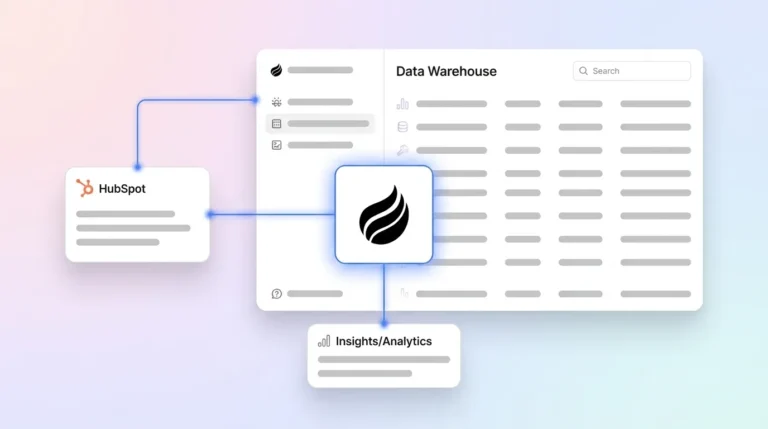
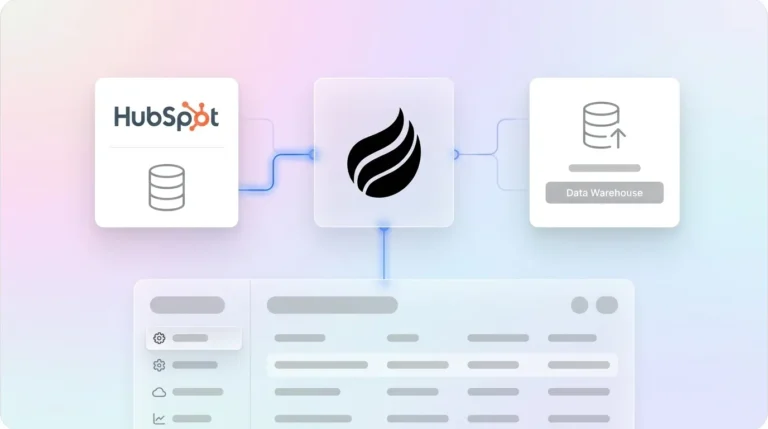
Companion App for Salesforce and HubSpot deploys the Coffee Agent as an intelligent layer on top of an existing CRM installation. Teams committed to Salesforce or HubSpot keep their system of record while the agent handles the “data in” process. It syncs, enriches, and writes insights back automatically. This path addresses low adoption and poor data quality without a platform migration. A simple authentication connects the agent, and it then resolves the garbage-in problem that makes legacy CRM forecasting unreliable.
Both paths eliminate manual data entry and deliver accurate pipeline intelligence. The difference is whether Coffee becomes the system of record or serves as the agent feeding one.
Frequently Asked Questions
What is an AI CRM agent, and how is it different from a CRM with AI features?
An AI CRM agent operates as an autonomous worker, not just an add-on feature. A CRM with AI features adds capabilities like predictive scoring or email suggestions on top of a passive database that still requires manual data entry. An AI CRM agent is architecturally different and captures, enriches, and updates records from emails, calendars, and call transcripts without human input. Coffee’s agent does not wait for a rep to log an activity. It logs the activity itself, structures unstructured data like call transcripts, and delivers pipeline intelligence as an output of that automated process. The distinction is between a tool that assists humans doing data entry and an agent that removes data entry entirely.
Is Coffee secure, and what compliance certifications does it hold?
Coffee is SOC 2 Type 2 and GDPR compliant. Data processed by the Coffee Agent is not used to train public AI models. For small teams handling customer data, Coffee meets the security standards required by most U.S. business contexts without the multi-year security review processes associated with heavily regulated industries such as healthcare or finance.
What tools and platforms does Coffee integrate with?
Coffee connects to Google Workspace and Microsoft 365 for email and calendar data capture. The AI Meeting Bot joins calls on Zoom, Teams, and Google Meet to record and transcribe. For teams on Salesforce or HubSpot, the Companion App syncs bidirectionally through a simple authentication flow. Broader integrations are available via Zapier, and deeper native integrations are on the product roadmap. Coffee also integrates with Stripe, automatically importing customers, enriching records, and logging paid invoices as Closed Won deals. It integrates with QuickBooks to sync invoices and payment statuses in real time.
What data sources does the Coffee Agent use to enrich contacts and companies?
The Coffee Agent enriches records using licensed data partners that surface job titles, company funding information, and LinkedIn profiles. This approach removes the need for standalone enrichment tools like Apollo or ZoomInfo for most use cases. Beyond enrichment data, the agent ingests first-party signals from emails, calendar events, call transcripts, and website visitor behavior through a tracking pixel. The pixel identifies anonymous website visitors by name, title, email, and LinkedIn profile. Coffee’s Suggested Leads feature then recommends the two or three specific individuals inside a visiting company who match the team’s buyer persona.

Is Coffee a good fit for a team already using Salesforce or HubSpot?
Yes. The Companion App deployment path is designed for teams committed to Salesforce or HubSpot that experience low CRM adoption, poor data quality, or missing data from calls and emails. The Coffee Agent authenticates with the existing CRM, handles all data capture and enrichment autonomously, and writes clean, structured insights back to the system of record. Teams keep their existing workflows, quotas, forecasting configurations, and required fields while the agent addresses the root cause of data quality problems. Coffee has deep integration knowledge of Salesforce and HubSpot architecture, including quota management, forecasting hierarchies, and required field validation, which distinguishes it from newer AI CRM alternatives that lack this depth.
Conclusion: Let the CRM Agent Do the Work
The most effective CRM for small teams in 2026 is the one that maintains itself. Legacy CRMs built on passive database architectures transfer the cost of data quality onto the humans using them. Small teams pay that cost in hours lost, forecasts missed, and eventual abandonment.
Coffee’s autonomous agent addresses the root cause. It captures data from emails, calendars, and calls automatically. It enriches records without manual research. It joins meetings, generates summaries, and drafts follow-ups. It delivers pipeline intelligence through natural-language queries and automated week-over-week comparisons. The agent does the work so the team can sell.
Whether a team needs a complete Standalone CRM or an agent layer on top of an existing Salesforce or HubSpot instance, Coffee provides a low-friction path to accurate pipeline data without manual data entry.