Written by: Doug Camplejohn, CEO & Co-Founder, Coffee | Last updated: June 18, 2026
Key Takeaways for Sales Leaders
- Manual CRM entry creates incomplete, delayed, and inconsistent data that breaks forecast accuracy at the source.
- Automatic activity capture records every call, email, and meeting in real time, producing trustworthy pipeline data for AI forecasting models.
- Agent platforms like Coffee outperform legacy CRMs and forecasting add-ons by unifying structured and unstructured data without rep effort.
- Native bidirectional sync with Salesforce or HubSpot keeps the system of record complete while keeping deployment fast and admin burden low.
- Teams ready to eliminate manual data entry can explore Coffee’s pricing and deployment options to keep their pipeline accurate automatically.
Evaluation Criteria for 2026 AI Sales Tools
Clear evaluation criteria keep AI sales decisions grounded in outcomes instead of feature lists. Integration quality and real adoption determine whether any tool delivers value, because a platform nobody uses delivers zero ROI. Evaluate every solution against these eight criteria:
- Automatic activity capture depth, which covers whether the tool logs calls, emails, meetings, and transcripts without rep action.
- Structured and unstructured data handling, which determines whether it can process email text, call transcripts, and calendar data alongside standard CRM fields.
- Data quality and completeness, which shows whether it eliminates the gaps that force reps to spend substantial time reconstructing deal history.
- Forecast accuracy impact, which indicates whether it moves accuracy toward benchmarks achieved by behavioral-signal-based AI forecasting versus judgment-based methods.
- Native CRM integration, which confirms whether it offers bidirectional sync with Salesforce or HubSpot that deploys in days rather than months.
- Admin and change-management burden, which reflects whether adoption requires retraining workflows or reduces them.
- Security and compliance, which checks whether it meets SOC 2 and GDPR standards, with a clear policy on whether customer data trains models.
- Scalability without added complexity, which shows whether it can grow with the team without lengthy reconfiguration.
See how Coffee’s agent-first architecture performs against these eight criteria in your own environment.
Side-by-Side Comparison of AI Solution Categories
| Category | Automatic Activity Capture | Data Quality & Unstructured Handling | Forecast Accuracy Impact | Integration & Admin Burden |
|---|---|---|---|---|
| Legacy CRMs (Salesforce, HubSpot) | None native, relies on manual rep entry or bolt-on tools | Structured fields only, unstructured data such as email text and transcripts not processed | Low, judgment-based forecasting typically has lower accuracy | High, reps spend an average of about 2 hours per day on manual CRM logging |
| Forecasting Add-ons (Clari, Gong) | Partial, captures some signals but depends on CRM data quality as input | Improves signal analysis but cannot fix incomplete source records | Higher when source data is clean, Clari customers report high forecast accuracy with maintained data | Medium, requires separate deployment, licensing, and ongoing CRM hygiene |
| Agent Platforms (Coffee) | Full, logs calls with transcript, AI summary, and next steps; emails with open tracking; meetings with full transcription, all without rep action | Structured and unstructured data unified from emails, calendars, and call transcripts into one record | High, complete, current activity data enables behavioral-signal forecasting with improved accuracy | Low, agent handles data entry autonomously, deploys as standalone or Companion App on existing Salesforce/HubSpot |
How Automatic Data Capture Differs Across Categories
Legacy CRMs capture nothing automatically, so every contact, activity, and stage update depends on a rep choosing to log it. Manual entry requires significant time for post-meeting administration and email documentation, and it introduces typos, wrong fields, and inconsistent quality across reps. The pipeline record that results becomes a partial reconstruction instead of a ground-truth account of deal engagement.
Forecasting add-ons improve what they can analyze, but they cannot manufacture data that was never captured. Their accuracy ceiling is set by the completeness of the CRM records they read, and stale or incomplete records directly undermine pipeline visibility regardless of how sophisticated the forecasting algorithm is.
Agent platforms address this data-completeness problem at the source. Coffee connects to Google Workspace or Microsoft 365 and immediately begins auto-creating contacts, logging activities, and processing call transcripts, while it captures both structured fields and unstructured content that legacy architectures discard. Automation can substantially reduce manual data entry, and an agent-first approach extends that further by handling enrichment, meeting summaries, and next-step drafting without rep involvement.

Deal-Risk Signals and Pipeline Compare Features by Category
Legacy CRMs surface deal risk only when a rep manually updates a stage or close date, which means risk remains invisible until someone reports it. Bad CRM data breaks forecasts through inaccurate stage reporting, unreliable close dates, and missing contact role information that prevents accurate risk assessment and reflects the same manual-data gaps described earlier.
Forecasting add-ons apply signal analysis on top of existing records and can flag engagement drops or stalled velocity, but only for the interactions that were logged. Deals where activity went unrecorded stay invisible to the risk model.
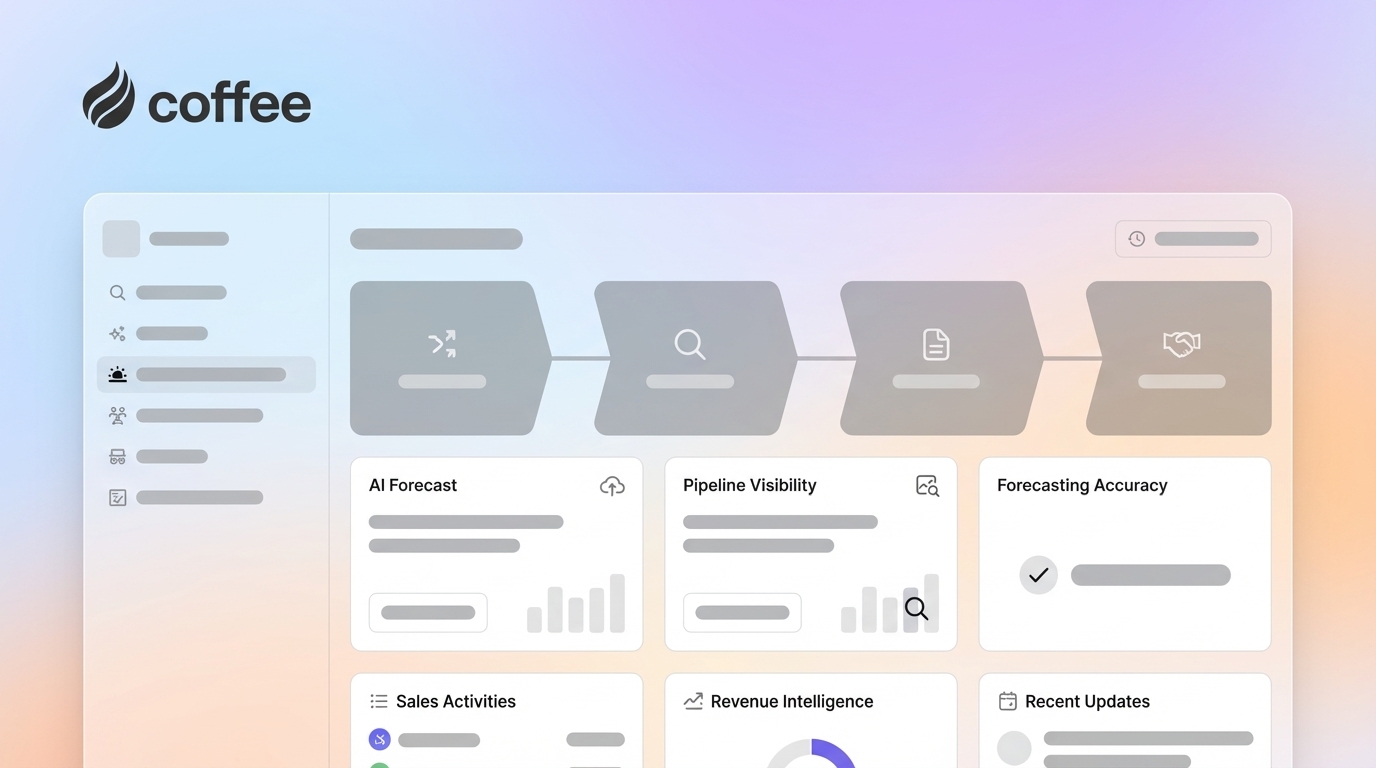
Agent platforms with built-in pipeline compare features, such as Coffee’s Pipeline Compare, track week-over-week changes automatically because the agent has captured every interaction. Progressed deals, stalled opportunities, and new additions surface without manual CSV exports or separate tooling. AI-powered platforms improve forecast accuracy by analyzing engagement frequency, email sentiment, meeting attendance, and competitive mentions to predict outcomes and flag deals needing attention, but they only perform this analysis when those signals exist in the record.
Companion App Integration Depth with Salesforce and HubSpot
Forecasting add-ons typically read from Salesforce or HubSpot but write back limited data, which creates a one-directional dependency on whatever the rep entered. Native bidirectional sync, where the agent both reads context and writes enriched activity data back to the system of record, sets the standard that matters for pipeline completeness.
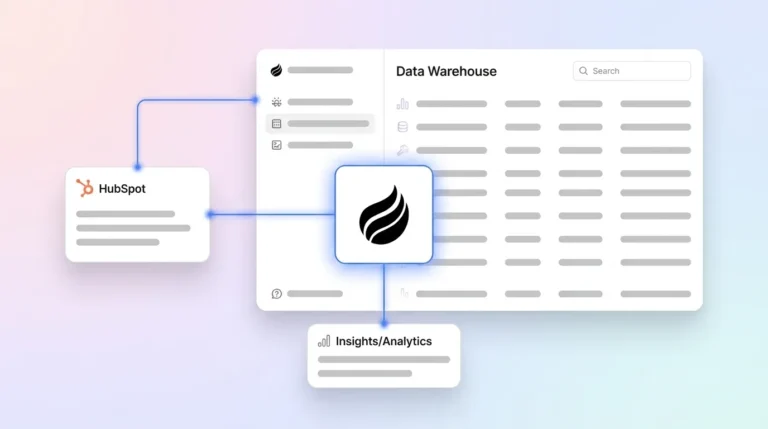
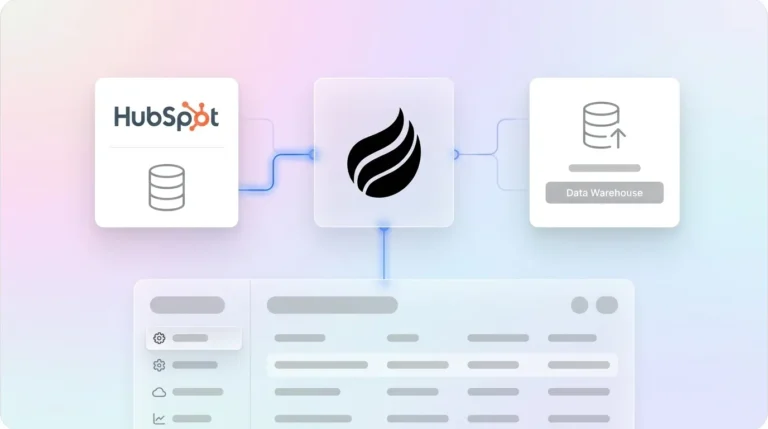
Coffee’s Companion App deploys through simple authentication against an existing Salesforce or HubSpot instance. The agent syncs data, enriches records, and writes call summaries, contact details, and activity logs back to the primary CRM. Native integration enables deployment in days rather than months, and the Salesforce or HubSpot instance remains the system of record, now populated with complete, agent-captured data rather than partial manual entries. This distinction matters compared with newer CRM alternatives that lack the integration depth to handle Salesforce’s required fields, quotas, and forecasting hierarchy correctly.

Deploy the Coffee Companion App on your existing Salesforce or HubSpot instance to start capturing complete activity data without migration.
Best-Fit Recommendations by Company Size and Tech Stack
1–20 reps, no entrenched CRM: The Coffee Standalone CRM fits as the appropriate starting point. Teams at this stage have outgrown spreadsheets but view legacy CRMs as expensive manual burdens. The agent manages the system of record from day one and prevents the data-entry debt that compounds as headcount grows.

30–150 reps on Salesforce or HubSpot: The Coffee Companion App serves as the correct deployment model. HubSpot is a serious contender for businesses from 50 to 2,000+ employees, and Salesforce suits mid-market and enterprise teams needing deep customization, but both require clean data to deliver value. Layering the Coffee agent on top preserves the existing investment while solving the data-quality problem that undermines forecast reliability.
Early-stage teams evaluating CRM for the first time: A startup with five salespeople has very different needs from an enterprise with hundreds of reps. The Standalone model scales from founder-led sales through early team growth without requiring a migration or re-implementation.
Operational and Long-Term Considerations
Change management becomes easier when the tool reduces work instead of adding it. Reps resist CRMs that demand logging, and they adopt agents that handle logging for them. An adoption-first evaluation framework prioritizes workflow integration, learning curve, and time to value, and those factors favor automatic capture over manual-entry systems.
Data governance still requires attention regardless of tool category. PwC’s 2026 Digital Trends in Operations Survey found that 87% of organizations say poor data quality has impacted their ability to achieve value from digital initiatives. An agent that captures data automatically reduces governance burden by eliminating the human compliance variable, but organizations still need defined field standards and audit processes.
Scaling implications favor agent architectures over manual systems. A good AI CRM should scale without becoming harder to manage, supporting expanding use cases and users without lengthy adjustments. Coffee’s seat-based pricing includes unlimited agent labor and avoids the metered costs that compound as team size and activity volume grow.
Risks and Limitations of Current AI Forecasting Approaches
Better algorithms cannot fix bad data. Forecasting models built on poorly maintained pipeline data produce unreliable forecasts regardless of model sophistication. Organizations that invest in forecasting add-ons before addressing data completeness will see marginal accuracy gains at best.
Automated capture handles objective activity data well but does not replace human judgment for strategic context. Automated capture misses deal risk assessment, relationship quality, and competitive positioning, which remain qualitative inputs that still require rep contribution. The practical model combines agent-captured activity data with structured human input for qualification fields like MEDDIC or SPICED.
Vendor stability and integration depth now matter more than ever. Given the vendor instability noted in the operational considerations above, tools built on shallow CRM integrations or single-source data pipelines carry higher obsolescence risk than agent platforms with native bidirectional sync and multi-source data ingestion.
Gartner predicts that through 2026, organizations will abandon 60% of AI projects unsupported by AI-ready data, which requires vendors to address SOC 2 compliance, data retention policies, and CRM data handling before deployment.
Decision Framework and Checklist
Use this checklist to match your situation to the right solution category:
- ☐ Does your current CRM have activity logged for every open opportunity in the last 30 days?
- ☐ Can you produce a week-over-week pipeline change report without a spreadsheet or manual export?
- ☐ Are call transcripts and email threads associated with deal records automatically?
- ☐ Do your reps spend fewer than 30 minutes per day on CRM data entry?
- ☐ Does your forecast accuracy fall within 5% of actual closed revenue each quarter?
- ☐ Is your current CRM vendor SOC 2 Type 2 and GDPR compliant, with a clear no-training-data policy?
If three or more answers are “no,” the root cause is data completeness, not forecasting methodology. The appropriate solution is automatic activity capture, either via the Coffee Standalone CRM or the Coffee Companion App layered on your existing Salesforce or HubSpot instance.
Frequently Asked Questions
Implementation Timeline for Coffee and Pipeline Accuracy
For the Companion App, implementation begins with simple authentication against your existing Salesforce or HubSpot instance. Once connected to Google Workspace or Microsoft 365, the Coffee agent begins auto-creating contacts, logging activities, and enriching records immediately. Most teams see materially more complete pipeline records within the first week as the agent backfills recent email and calendar activity. No lengthy professional services engagement or custom build is required.
Migration Effort from a Legacy CRM to Coffee
Teams adopting the Companion App do not migrate, because Coffee layers on top of the existing Salesforce or HubSpot instance and writes enriched data back to it. The system of record stays in place. Teams adopting the Standalone CRM can import existing contact and deal records, and the agent begins enriching and maintaining those records from the point of connection forward. Coffee is built with deep knowledge of Salesforce and HubSpot’s required fields, quotas, and forecasting structures, which distinguishes it from newer CRM alternatives that lack that integration depth.
Data Security and Privacy with Coffee
Coffee is SOC 2 Type 2 and GDPR compliant, and customer data is not used to train public models. The agent processes email, calendar, and call data to populate CRM records, but that data remains within the customer’s environment and is governed by Coffee’s documented retention and handling policies. Organizations in heavily regulated industries such as healthcare or finance that require multi-year security reviews fall outside Coffee’s current target profile.
How to Assess Whether Coffee Is the Right Fit
The most direct assessment method uses a short pilot against real open opportunities. Connect the agent to your Google Workspace or Microsoft 365 environment, let it operate for two to three weeks, and then compare the completeness of activity records against the same period in your legacy CRM. Measure the percentage of open deals with logged activity in the last 14 days, the time reps report spending on manual data entry, and whether pipeline review meetings require spreadsheet preparation. Those three metrics quantify the data-quality gap the agent closes. Coffee’s seat-based pricing with no metered agent usage makes a time-limited pilot straightforward to scope and cost.
Conclusion: Fix Data Capture to Fix Forecasts
Forecast accuracy starts as a data problem before it becomes an algorithm problem. Legacy CRMs and forecasting add-ons cannot produce reliable pipeline visibility when the underlying activity records are incomplete, delayed, or selectively logged by busy reps. The evaluation criteria that matter in 2026, including automatic capture depth, unstructured data handling, native bidirectional CRM sync, and low admin burden, consistently favor agent-first architectures over passive databases or analytical overlays.
For teams on Salesforce or HubSpot, the Coffee Companion App delivers complete activity capture without displacing the existing system of record. For teams building from scratch, the Coffee Standalone CRM provides an agent-managed pipeline from day one. Both deployment models address the same root cause: the manual data entry grind that makes every downstream forecast unreliable.
Replace manual data entry with Coffee’s agent and keep your pipeline accurate automatically.