Written by: Doug Camplejohn, CEO & Co-Founder, Coffee | Last updated: July 8, 2026
Key Takeaways for Startup Sales Teams
- Traditional CRMs force sales reps to spend up to 25% of their time on manual data entry, costing a 10-person team roughly 100 selling hours each week.
- Platforms like Attio, Salesflare, HubSpot, and Pipedrive rely on passive sync that still requires human prompts to log activities and enrich records.
- Coffee’s agent-driven approach auto-creates contacts, companies, and activity logs from email, calendar, and call transcripts without any manual input, saving 8–12 hours per rep weekly.
- Built-in Pipeline Compare and natural-language AI search give managers accurate week-over-week visibility without spreadsheets or CSV exports.
- Startups ready to eliminate data-entry overhead can see Coffee’s pricing and start a free trial today.
How We Evaluated Minimal-Data-Entry CRMs
Six criteria determine whether a CRM genuinely reduces administrative burden or simply repackages it.
- Depth of email and calendar automation: The system must log every interaction without a human trigger.
- Data capture quality: Contacts, companies, and activities should be created and enriched automatically from unstructured sources like transcripts and email threads.
- Hours saved per rep per week: Vendors should document how much time the product actually returns to sellers.
- Pipeline visibility without spreadsheets: Managers need to review deal health and forecasts inside the CRM without CSV exports.
- Integration flexibility: The platform should work as a standalone system, a companion layer on Salesforce or HubSpot, or both.
- Total cost of ownership: AI and automation features should sit inside base pricing, not behind expensive metered add-ons.
Side-by-Side Comparison: Attio, Salesflare, HubSpot, Pipedrive, and Coffee
The table below scores each platform against these criteria and highlights a core divide. Attio, Salesflare, HubSpot, and Pipedrive rely on passive sync that still needs human actions to keep data current, while Coffee’s agent-driven model removes manual data entry entirely. Focus on the “Hours saved per rep per week” and “Unstructured data handling” rows, because they show the clearest gap between passive and active automation. All figures are drawn from cited sources or vendor documentation.
| Criterion | Attio | Salesflare | HubSpot | Pipedrive | Coffee |
|---|---|---|---|---|---|
| Email & calendar auto-logging | Passive sync, real-time AI-powered enrichment on new records | Self-filling, scans email, calendar, phone, and social continuously | Native workflow triggers and email sequence automation, manual field updates still common | Syncs with calendar and email, activity-based alerts flag risks | Agent scans Google Workspace or Microsoft 365 on connection, auto-creates contacts, companies, and activity logs without any human prompt |
| Unstructured data handling (transcripts, email text) | Limited, flexible data model supports custom objects but no native transcript processing | Structured fields only, no native call transcript ingestion | AI summarizes customer histories from past meetings and support chats | No native transcript processing | Agent ingests call transcripts and email threads, structures BANT, MEDDIC, or SPICED notes directly into deal records |
| Hours saved per rep per week | Not independently documented at this level | CRM automation saves teams several hours per week (category benchmark) | CRM automation typically reduces sales admin time by 35-80% depending on the solution | Email auto-sync users log more client activities per week vs. manual | 8-12 hours per rep per week saved via agent-driven data entry elimination |
| Pipeline visibility without spreadsheets | Flexible views, no native week-over-week change tracking | Visual pipeline, no dedicated compare feature | Pipeline dashboards, advanced AI forecasting sold as a premium add-on | Visual pipeline, AI flags at-risk deals | Pipeline Compare visualizes week-over-week deal changes, AI search answers natural-language questions like “What's closing this month?” |
| Standalone or companion layer | Standalone only | Standalone only | Standalone, limited companion capability via integrations | Standalone only | Both, full standalone CRM or companion agent writing enriched data back to Salesforce or HubSpot |
| Entry-level pricing (per user/month, annual) | $29/user/month, free plan up to 3 users | Salesflare's entry-level Growth plan is priced at $29 per user per month when billed annually ($35 monthly) | HubSpot entry-level pricing starts from $10/user/month with a free plan | Pipedrive’s entry-level Lite plan starts at $14 per user per month when billed annually (higher on monthly billing), with only a 14-day trial and no permanent free plan. | Seat-based, agent labor included, no usage metering on AI |
Compare Coffee's pricing to the alternatives above, see full pricing and start your free trial.
What Minimal Data Entry Really Means in 2026
In 2026, vendors of modern CRMs must demonstrate how the system updates itself after a sales call without the team touching the keyboard. That standard separates genuine automation from passive sync dressed up in AI marketing language.
Passive sync platforms, including Attio and Salesflare, connect to email and calendar and record interactions that humans initiate. They eliminate re-entry but still depend on the rep to send the email, book the meeting, and close the loop. Zero manual data entry relies on email and calendar integration combined with call transcription and LLM-based semantic analysis that extracts and structures information automatically into contact records, a standard passive sync tools do not meet.

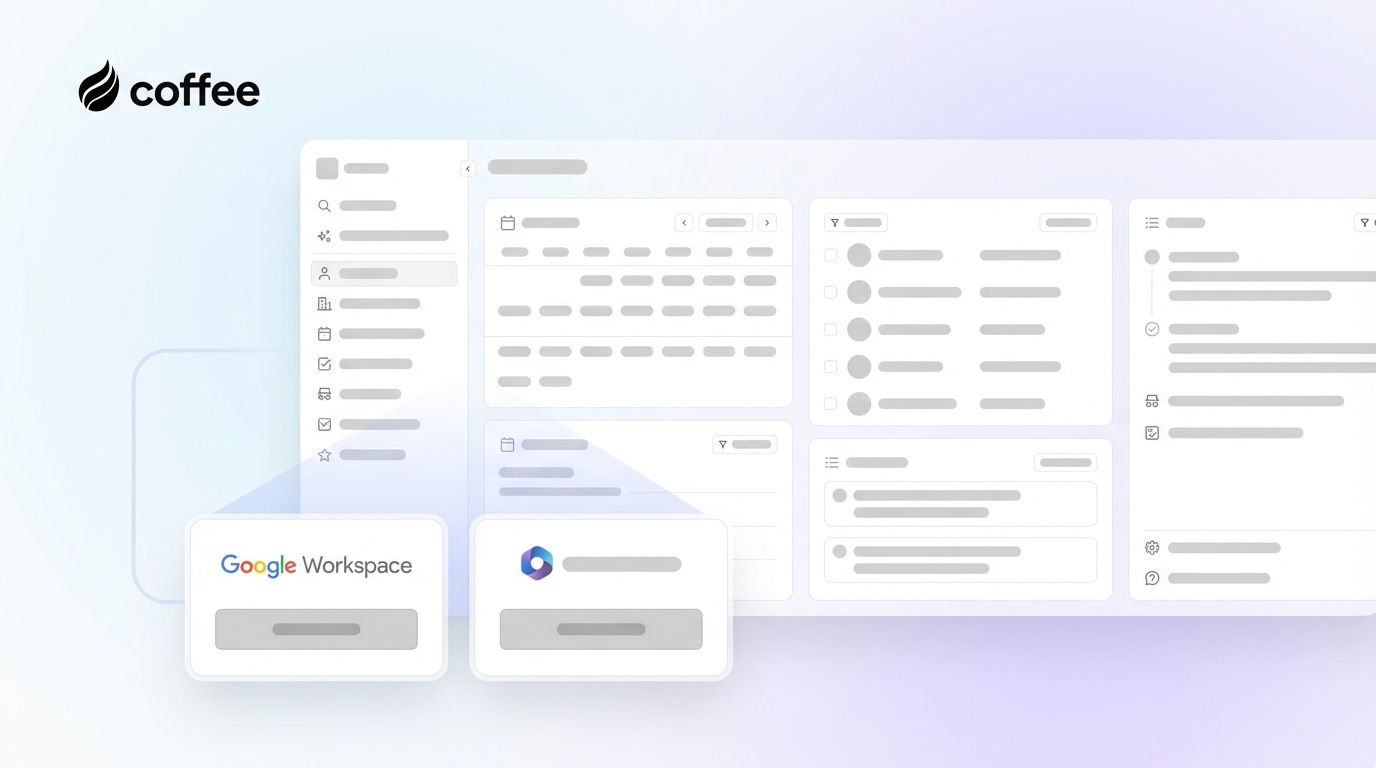
Coffee's agent operates differently. After you authenticate Google Workspace or Microsoft 365, the agent scans emails and calendars to auto-create contacts and companies, associates every note and interaction with the correct record, and automatically syncs invoices and payment statuses via QuickBooks integration for real-time financial visibility inside the CRM. Onboarding requires authentication, not configuration sprints. That speed matters most when you compare it with the hours lost to manual processes in traditional systems.

CRM That Logs Emails Automatically for Meetings and Follow-Ups
A field sales rep managing twenty meetings per week loses five hours weekly to manual data entry at fifteen minutes per meeting; a team of ten reps therefore loses 2,400 hours of sales capacity annually. Meeting automation creates the largest measurable gap between agent-driven CRMs and passive alternatives.
HubSpot and Pipedrive offer AI meeting summaries as features layered onto their core databases. Traditional sync-based tools retain only session-based context, which causes lost context and redundant administrative work in legacy systems, because their underlying architecture is a relational database where overwritten fields erase history permanently.

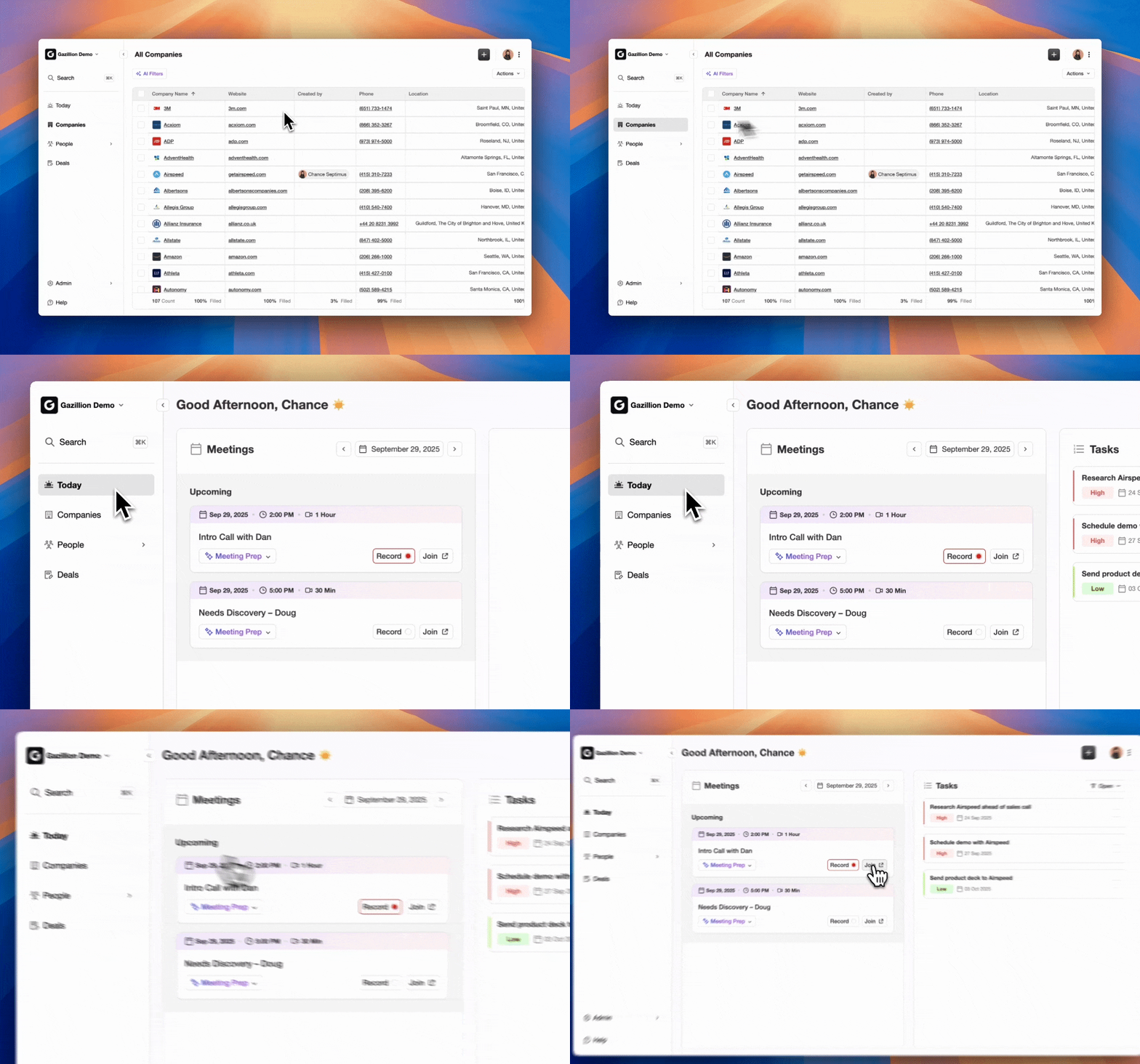
Coffee's agent joins calls via Zoom, Teams, or Google Meet, transcribes in real time, and after the call generates summaries, identifies next steps, and drafts follow-up emails in Gmail for one-click review and send. Custom Meeting Briefings and Summaries, launched in February 2026, allow users to define exact formats, from high-level executive summaries to granular technical breakdowns, so every output matches the team's actual workflow rather than a generic template. The agent also prepares a Today page briefing before each call, surfacing attendee roles and prior deal context without any manual research.

Pipeline Visibility Without Spreadsheets
IBM estimates that dirty data costs US businesses $3.1 trillion annually, and the root cause is consistent across companies. Humans skip or fabricate entries under quota pressure. 37% of sales staff admit to fabricating CRM data when facing too many required fields that prevent them from doing their job. Forecasts built on that data are structurally unreliable.
Attio and Salesflare provide visual pipelines but lack native week-over-week change tracking. HubSpot offers pipeline dashboards, but advanced generative AI and agentic forecasting features are typically sold as separate premium tiers rather than included in base licenses. Pipedrive's AI flags at-risk deals but does not maintain a historical data warehouse for trend analysis.
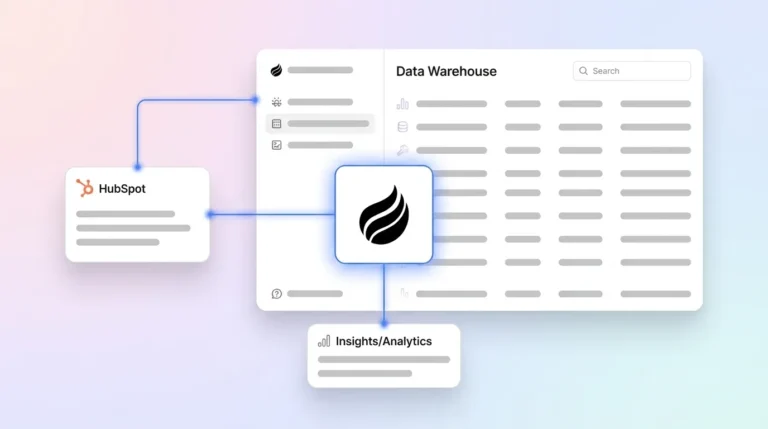
Coffee's Pipeline Compare feature, powered by a built-in data warehouse that retains full interaction history, visualizes week-over-week deal movement, including progressed deals, stalled opportunities, and new additions, without any CSV export. AI search on deals, released in January 2026, answers natural-language questions such as “Which deals are stuck in negotiation?” or “What's closing this month?” directly inside the platform. These capabilities matter most when they sit inside your existing workflow, which leads directly to how Coffee integrates with the systems you already use.
Using Coffee as a Standalone System or Companion Layer
Integration flexibility is a decisive factor for teams that already have a CRM investment. Attio, Salesflare, and Pipedrive are standalone-only products. Replacing an existing Salesforce or HubSpot instance with any of them requires full data migration, retraining, and workflow rebuilds, a project that at Series B typically ranges from $50,000 to $250,000 in total cost of ownership including professional services, data migration, and training.
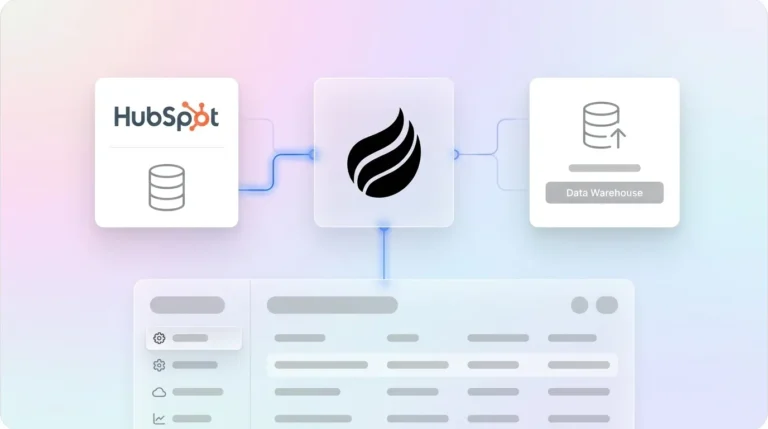
Coffee operates in both modes. For brand-new teams, the standalone CRM provides a complete system of record where the agent manages all data. For teams already committed to Salesforce or HubSpot, a simple authentication deploys the Coffee agent as a companion layer. As noted earlier, the companion agent preserves your existing system of record while eliminating the manual data-entry burden that caused low adoption. Improved summary templates, released in November 2025, are customizable and writable back to Coffee, HubSpot, or Salesforce, so teams keep their current reporting while upgrading how data enters the system.
Operational Considerations for US Startups
Change management often becomes the most underestimated cost in CRM adoption. Only 40% of businesses achieve a 90% CRM adoption rate, with ease of implementation and alignment to existing workflows as primary success factors. A system that expects reps to serve it will lose to spreadsheets.
Coffee meets the security and privacy requirements outlined earlier, with automated compliance workflows that handle unsubscribe requests without manual processing, a critical operational advantage for lean teams. Unsubscribe requests must propagate to the CRM within 10 business days under CAN-SPAM or 30 days under GDPR, and Coffee handles this automatically.
Pricing is seat-based with no metering on AI usage or agent processes, which contrasts sharply with Salesforce Agentforce 1 Editions that start at $550 per user per month and HubSpot's tiered AI add-ons. Hidden costs beyond licensing, including implementation, customization, and AI usage fees, typically add 60% or more, often doubling or tripling total spend, over the contract term with legacy CRM vendors.
Risks and Limitations of Passive Sync Approaches
Passive sync platforms record what humans do but cannot act independently. Three structural risks follow from that architecture, and each one directly weakens the forecast accuracy and pipeline visibility that startups need to scale efficiently.
- Incomplete activity logging: If a rep forgets to CC the CRM address, sends an email from a personal account, or takes a call outside the logged system, that interaction disappears from the record. Many B2B CRMs have incomplete records with missing critical fields, which limits segmentation and pipeline accuracy.
- Loss of historical context: Legacy relational databases overwrite fields on update. When a deal stage changes, the prior state disappears. Unlike those systems, Coffee's architecture preserves every state change, which enables the trend analysis described earlier.
- Continued reliance on human clerks: For a team of 10 reps, 25% admin time on CRM data entry translates to roughly 100 lost selling hours per week, the equivalent of 2.5 full-time sellers doing nothing but data entry. Passive sync reduces that time burden but does not eliminate it, leaving teams to choose between incomplete records and continued administrative overhead.
Decision Framework and Checklist for Choosing a CRM
Match the platform to your current circumstances by first deciding whether you already have a CRM investment. If you are starting fresh, Coffee Standalone removes setup overhead entirely. If you already rely on Salesforce or HubSpot but struggle with adoption, Coffee Companion preserves that investment while fixing the data-entry problem. Only when neither agent-driven option fits your budget should you consider passive sync alternatives.
- No existing CRM, 1-20 person team, Google Workspace or Microsoft 365: Coffee Standalone. The agent handles setup, contact creation, enrichment, and pipeline tracking from day one.
- Existing Salesforce or HubSpot with low adoption and dirty data: Coffee Companion. Authentication deploys the agent without migration, and it writes clean data back to the existing system of record.
- Budget-constrained team needing basic passive sync: Salesflare ($29/user/month) covers email and calendar auto-fill for structured data. Expect continued manual effort for transcripts, enrichment, and pipeline reviews.
- Team already deep in HubSpot ecosystem with startup discount: HubSpot Starter works for basic pipeline tracking, but 43% of CRM users only utilize half or fewer features of their platform, and AI forecasting requires paid upgrades.
- Team needing flexible data model for custom objects: Attio supports complex relational structures but lacks agent-driven automation and companion-layer capability.
Frequently Asked Questions
How long does Coffee implementation take for a 5-person startup?
Implementation for a small team is measured in minutes, not weeks. Connecting Google Workspace or Microsoft 365 triggers the Coffee agent immediately. It begins scanning emails and calendars to auto-create contacts, companies, and activity logs without any manual configuration. There is no data model to build, no field mapping to define, and no training sessions required before the system becomes useful. Most 5-person teams have a populated, active CRM within the first working day of authentication.
What migration effort is required when layering Coffee on existing Salesforce or HubSpot?
The Companion App model requires no migration. A simple authentication connects the Coffee agent to the existing Salesforce or HubSpot instance. The agent then handles the data-in process, capturing emails, calendar events, call transcripts, and enrichment, and writes structured insights back to the primary CRM. The existing system of record, including historical data, custom fields, quotas, and forecasting configurations, remains intact. Teams avoid the cost and risk of a full platform switch while immediately eliminating the manual data-entry burden that caused low adoption.
How deep are Zapier integrations compared with native agent capabilities?
Zapier integrations connect Coffee to third-party tools through trigger-and-action workflows, which suits point-to-point data transfer between systems. Native agent capabilities operate at a different level. The Coffee agent reasons across data sources, handles exceptions, retains persistent context across all interactions, and executes multi-step workflows without predefined triggers. Zapier handles “if X then Y” logic. The Coffee agent handles “understand the deal context and determine the right next action.” Deeper native integrations beyond Zapier are on the product roadmap.
How does Coffee data quality compare with dedicated enrichment tools?
Coffee's enrichment, including job titles, funding data, and LinkedIn profiles via licensed data partners, is roughly on par with dedicated tools like Apollo or ZoomInfo for most use cases a 1-20 person startup encounters. The practical difference is consolidation. Coffee delivers enrichment as part of the agent's automatic contact-creation workflow, which removes the need to purchase, configure, and maintain a separate enrichment tool. For teams with highly specialized enrichment requirements in niche verticals, a dedicated enrichment platform may provide incremental coverage, but for most early-stage sales teams, Coffee's built-in enrichment removes the need for an additional line item in the stack.
Conclusion: Why Coffee Fits Agent-First Startups
The CRM market in 2026 divides cleanly into two categories: passive databases that record what humans do and agent-driven systems that act without human prompting. Attio, Salesflare, HubSpot, and Pipedrive all occupy the first category to varying degrees. They reduce data-entry friction but do not eliminate the human data-entry role.
Coffee is the only platform in this comparison that removes that role entirely for both new teams starting from scratch and established teams already running Salesforce or HubSpot. The agent captures structured and unstructured data, enriches records automatically, orchestrates pre- and post-meeting workflows, maintains a full historical data warehouse for accurate forecasting, and consolidates the fragmented stack of CRM, enrichment, recording, and intelligence tools into a single seat-based price.
Put a Coffee agent to work on your pipeline, see pricing and start your free trial today.