Written by: Doug Camplejohn, CEO & Co-Founder, Coffee | Last updated: August 29, 2026
Key Takeaways for 500–5,000+ Seat Sales Teams
- Enterprise CRM enrichment at 500–5,000+ seats works best with live match-rate testing, field-level governance, SOC 2/GDPR compliance, and predictable per-seat pricing instead of per-record fees.
- Coffee’s autonomous agent ingests emails, transcripts, and calendar data, then enriches Salesforce and HubSpot records continuously without manual lookups or credit limits.
- ZoomInfo leads on native Salesforce governance and Bombora intent, but typically costs $30K–$100K+ per year and delivers weaker international coverage.
- Clay, 6sense, Cognism, and Apollo each serve specific use cases such as workflow building, ABM, EMEA phone verification, or SMB sales engagement, yet they still rely on rep-driven data entry at enterprise scale.
- Teams ready to replace fragmented enrichment tools with a single seat-based agent can explore enterprise CRM data enrichment pricing with Coffee.
Coffee: Agent-Led Enrichment for Large Salesforce and HubSpot Teams
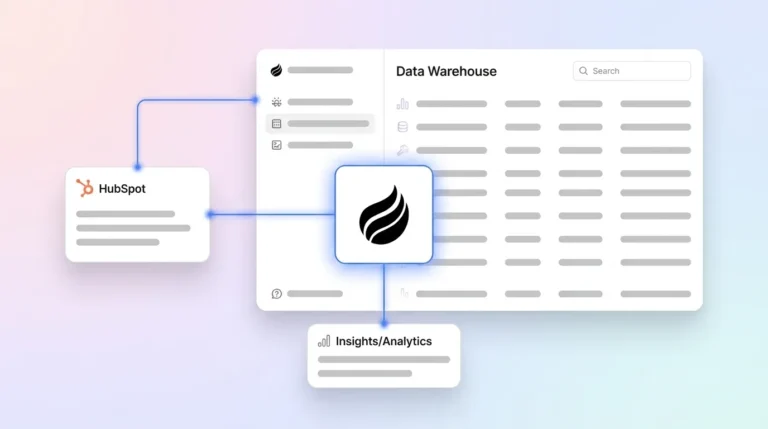
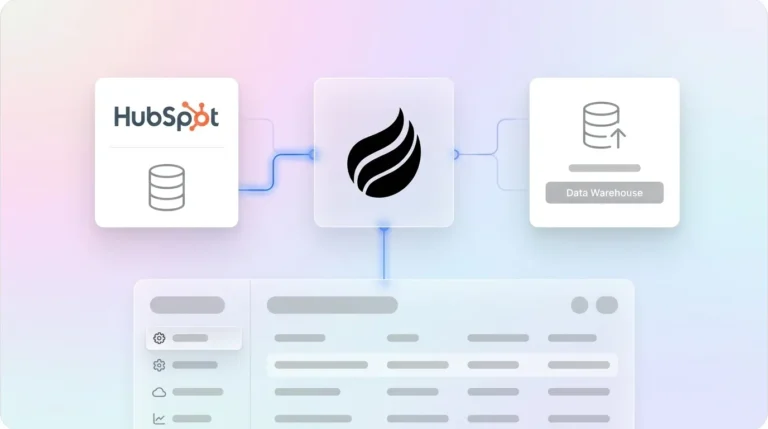
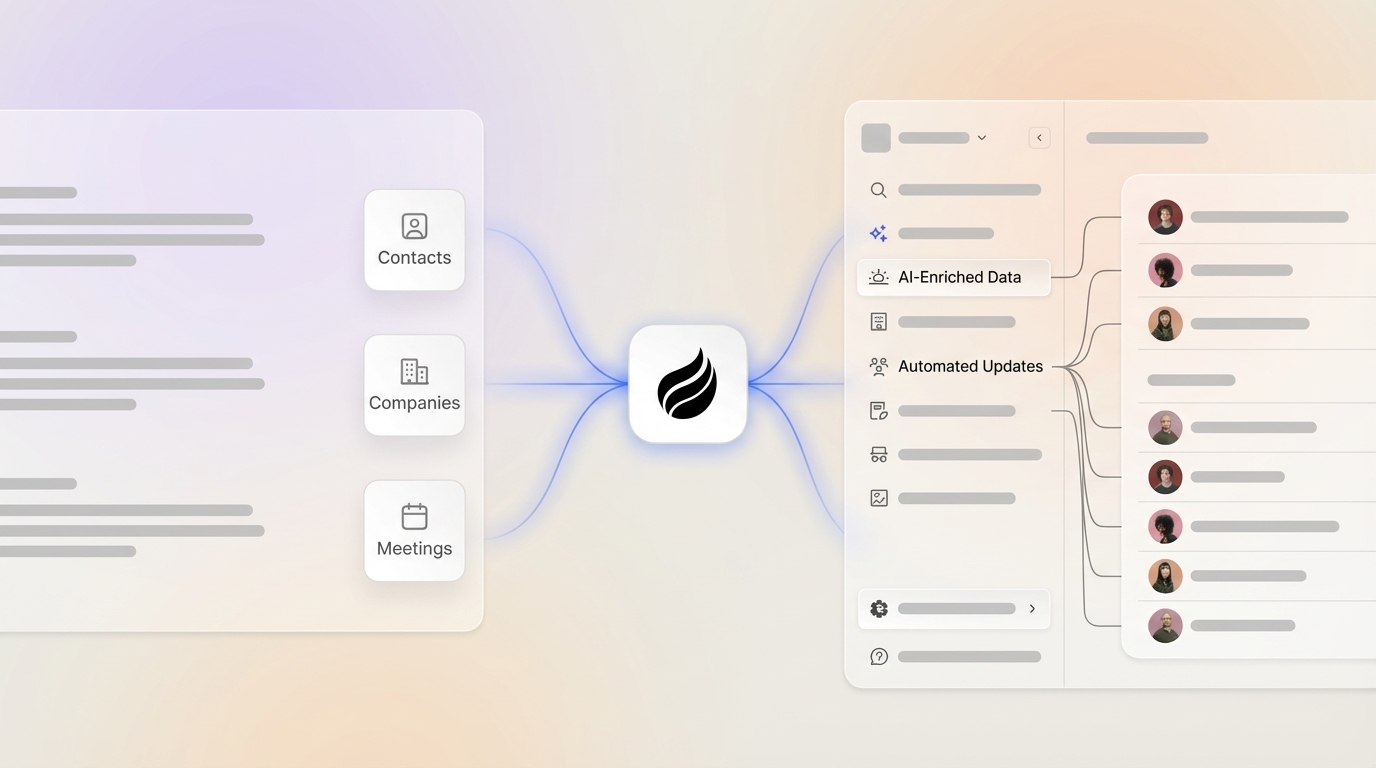
Coffee is an autonomous CRM agent that removes manual data entry by ingesting structured and unstructured data such as emails, calendar events, and call transcripts. It writes verified, enriched records directly into Salesforce or HubSpot without human triggers. Coffee runs continuously in the background, enriching contacts and companies, logging activity, and surfacing pipeline intelligence.

Strengths: Agent-led architecture processes both structured fields and unstructured sources like call transcripts and email threads that legacy enrichment tools cannot parse. The native Salesforce and HubSpot Companion App writes enriched data directly to standard and custom objects. Seat-based pricing with no per-record metering keeps total cost predictable at scale. Built-in Lead Finder, Campaigns, Visitor Identification, and Pipeline Compare consolidate the enrichment stack into one agent.

Limitations: Broader third-party integrations currently route through Zapier. Deeper native connectors sit on the roadmap. Coffee is not designed for heavily regulated industries that require multi-year security reviews or for organizations running fully custom Salesforce object architectures.
Ideal fit: Heads of Sales and RevOps leaders at 500–5,000-seat Salesforce or HubSpot teams who want verified enrichment, intent signals, and outreach sequencing from a single agent instead of a stack of ZoomInfo, Gong, and Salesloft subscriptions.

Pricing model: Seat-based. The agent’s work, including enrichment runs, meeting bots, and campaign sends, is included. No credit metering or per-record fees.
Salesforce/HubSpot integration: Simple OAuth authentication deploys the Coffee Agent as a Companion App. The agent syncs bidirectionally, enriches records on creation, and writes summaries, next steps, and firmographics to the correct Lead, Contact, and Account objects.

Explore enterprise CRM data enrichment pricing with Coffee.
ZoomInfo: US-Centric Enterprise Data and Governance
ZoomInfo is the incumbent enterprise data platform. It combines a 100M+ company database with native Bombora intent signals and deep Salesforce governance tooling. Its GTM Context Graph processes 1.5 billion+ data points daily, and its Buyer Intent product tracks signals from 210 million IP-to-organization pairings monthly.
Strengths: ZoomInfo offers the deepest native Salesforce integration among the tools compared, including scheduled enrichment, org charts, and enterprise-grade governance. Independent testing confirms this Salesforce depth. A March 2026 Cleanlist test of 1,000 leads found ZoomInfo returned verified emails for 84% and mobile numbers for 67% of records.
Limitations: International coverage outside the US shows materially lower quality. Module-based pricing for intent, engagement, and operations features often reaches $30,000–$100,000+ per year with a $15,000 minimum. ZoomInfo does not appear in major 2026 third-party email accuracy benchmarks from Anymail Finder or Dropcontact.
Ideal fit: Large US-centric enterprise organizations with dedicated RevOps teams and existing Bombora intent workflows.
Pricing model: Module-based annual contract with a $15,000 minimum, commonly $30,000–$100,000+ for the full suite.
Salesforce/HubSpot integration: Native managed package for Salesforce. The native HubSpot app supports bidirectional sync with verified direct-dial filtering.
Clay: Workflow Builder for Multi-Source Enrichment
Clay is a workflow builder for GTM engineers that aggregates 25+ enrichment providers into a waterfall model. Teams can query multiple sources in sequence and retain the highest-confidence value for each field.
Strengths: The multi-provider waterfall approach delivers broad coverage. Multi-provider waterfall tools exceed 85% coverage by querying 3–4 providers in sequence, with diminishing returns beyond that. Clay is highly flexible for technical teams that want to build custom enrichment logic.
Limitations: Per-credit pricing scales quickly at high volume, which makes Clay a poor fit for 1,000+ seat deployments. Clay also requires GTM engineering resources to build and maintain workflows, so it does not function as a turnkey sales solution. Pricing starts at $149 per month and scales unpredictably with usage.
Ideal fit: RevOps engineers at growth-stage companies building bespoke multi-source enrichment pipelines rather than large seat-based sales organizations.
Pricing model: Per-credit consumption with a $149 per month entry point and rapid cost escalation at enterprise volume.
Salesforce/HubSpot integration: API-based integration that requires custom workflow configuration instead of a native managed package.
6sense: Predictive Intent and Buying-Stage Signals
6sense is an account-based marketing and revenue AI platform that layers predictive intent scoring and buying-stage signals on top of CRM and MAP data. 6sense Qualified Accounts show 99% higher average opportunity value and close 27% faster than non-6QA opportunities, based on 6sense customer data.
Strengths: 6sense provides the strongest account-level intent and buying-committee signal depth among the platforms compared. Ninety-five percent of winning vendors are already on the buyer’s Day-One shortlist, so early intent detection becomes a meaningful revenue lever.
Limitations: Pricing starts at approximately $60,000 per year and often exceeds $100,000 for full deployment. Implementations typically take three to six months and involve multi-year contracts. 6sense runs two native HubSpot apps with a nightly sync cadence, which introduces latency for contact-level enrichment workflows.
Ideal fit: Enterprise ABM teams with dedicated marketing operations resources and annual budgets above $100,000 for intent infrastructure.
Pricing model: Annual contract with a $60,000+ minimum that frequently exceeds $100,000 for the full suite.
Salesforce/HubSpot integration: Native apps for both platforms with nightly sync for intent scores rather than real-time contact enrichment.
Cognism: GDPR-First Data for EMEA Prospecting
Cognism is a GDPR-first data provider with a Diamond Data tier that supplies human-verified mobile numbers with built-in DNC screening. This focus makes Cognism a strong option for European market prospecting.
Strengths: The Diamond Data tier supplies phone-verified mobile numbers with GDPR compliance controls. Explorium’s B2B data benchmarks list Cognism at 80–85% firmographic accuracy and 82–88% email accuracy. Cognism’s H1 2026 update introduced Intent Location Filtering and Topic Thresholds for territory-level intent prioritization. The native 2-Way Sync for HubSpot, launched February 2026, projects up to an 80% reduction in duplicate records.
Limitations: Pricing sits at approximately $22,500 per year for 5 users and focuses on EMEA markets rather than high-volume US enterprise enrichment. Customer reviews mention inconsistent mobile accuracy outside the verified Diamond tier.
Ideal fit: EMEA-focused sales teams that need GDPR-compliant verified mobile numbers and territory-level intent filtering.
Pricing model: Annual contract at approximately $22,500 per year for 5 users, scaling by seat.
Salesforce/HubSpot integration: CRM Enrichment for Salesforce with field-level overwrite controls and HubSpot 2-Way Sync launched in February 2026.
Apollo: Combined Prospecting and Sales Engagement
Apollo.io combines a prospecting database with native sales engagement and positions itself as a value leader for SMB to mid-market teams. Its native Salesforce integration includes 65+ data attributes, waterfall enrichment, and field-level admin controls.
Strengths: Apollo offers a free tier, and paid plans start at $49 per user per month. A March 2026 Cleanlist test found Apollo returned verified emails for 78% and mobile numbers for 41% of 1,000 leads. A 2025 Explorium benchmark recorded company match rates of 78.15% for Apollo.
Limitations: The credit-based or seat-based model becomes less predictable at enterprise scale. API rate limits restrict heavy programmatic usage for large sales teams. Apollo does not appear in major 2026 third-party email accuracy benchmarks from Anymail Finder or Dropcontact.
Ideal fit: SMB to mid-market teams of 5–100 reps that want combined data and engagement at a low entry cost.
Pricing model: Free tier with paid plans from $49 per user per month. Credit consumption escalates unpredictably at enterprise volume.
Salesforce/HubSpot integration: Native bidirectional Salesforce integration and a native HubSpot enrichment app with deduplication support.
Side-by-Side Comparison Matrix (2026 Enterprise Benchmarks)
Having reviewed each platform’s strengths and limitations, the matrix below consolidates the most important enterprise benchmarks side by side. Match-rate figures come from third-party tests on real B2B inputs, and pricing reflects published 2026 ranges. Intent-signal depth and duplicate-rate controls appear in prose where direct unit comparison is not possible.
| Dimension | Coffee | ZoomInfo | Cognism |
|---|---|---|---|
| Email match rate (verified) | Waterfall agent; multi-provider waterfall tools exceed 85% coverage by querying 3–4 providers in sequence, with diminishing returns beyond that | 84% verified email on 1,000-lead test (March 2026) | Explorium benchmarks list Cognism at 80–85% firmographic accuracy and 82–88% email accuracy |
| Global phone-verified coverage | Licensed data partners; agent enriches on record creation | 67% mobile on 1,000-lead test; lower quality outside US | Diamond Data: human-verified mobiles with GDPR DNC screening |
| Duplicate-rate controls | Agent writes to existing records; field-level overwrite rules on Salesforce and HubSpot objects | Enterprise-grade governance; native duplicate rules complement | 2-Way HubSpot Sync projects 80% reduction in duplicate records |
| SOC 2 / GDPR posture | SOC 2 Type II; GDPR compliant; data not used to train public models | SOC 2 Type II; ISO 27001 baseline | GDPR-first; Diamond Data includes DNC compliance |
| Per-record economics | Seat-based; unlimited agent enrichment runs included; no per-record metering | See pricing model above | See pricing model above |
| Intent-signal depth | First-party visitor identification; buyer persona-matched suggested leads; pipeline intent from activity signals | Bombora intent; 6T+ keyword-to-device pairings monthly; Guided Intent | Territory-level Intent Location Filtering; Topic Thresholds; technology renewal dates |
Apollo and Clay are excluded from the matrix because their per-record economics rely on credit-consumption models that do not compare cleanly to seat-based or annual-contract pricing at 1,000+ rep scale. 6sense is excluded because its primary value lies in account-level buying-stage scoring rather than contact-level enrichment match rates. Prose comparisons for these platforms appear in their sections above.
Decision Framework: How to Run a Match-Rate Test
A repeatable match-rate test on a live CRM instance provides a defensible basis for an enterprise enrichment RFP. The steps below apply to any Salesforce or HubSpot environment and build on each other.
- Extract a stratified sample. Pull 500–1,000 existing Contact or Lead records from your CRM, stratified across industry, seniority, company size, and geography. Weight the sample toward your actual ICP rather than the vendor’s reference dataset so match rates reflect performance on the contacts your reps actually work.
- Blank the fields under test. After you define the sample, remove email, direct dial, job title, and company firmographics in a sandbox environment. This step prevents vendors from simply returning your own data, which would inflate match rates. Do not share pre-enriched data with the vendor.
- Submit identical inputs to each vendor. Provide only name, company name, and LinkedIn URL as inputs. This lowest-common-denominator set keeps the test fair and stops vendors with more input fields from gaining an artificial advantage.
- Validate returned data independently. Run returned emails through a third-party verifier such as ZeroBounce, MillionVerifier, or BounceBan. Use a two-of-three consensus across independent verifiers to count a record as verified. Count only deliverable, connected results toward match rate so the scores reflect usable data.
- Score on five RFP dimensions. Use the verified results to score each vendor. Weight the dimensions below according to your organization’s priorities so the final ranking reflects both accuracy and operational fit.
- Verified email match rate on your ICP sample (suggested weight: 25%)
- Direct-dial or mobile match rate on your ICP sample (suggested weight: 20%)
- Field-level governance and overwrite controls in your CRM (suggested weight: 20%)
- SOC 2 Type II, GDPR, and CCPA compliance documentation (suggested weight: 20%)
- Per-seat TCO at your target headcount over 36 months (suggested weight: 15%)
Ready to test match rates on your own CRM data? Start your Coffee evaluation with a live Salesforce or HubSpot pilot.
Governance Checklist for 1,000+ Rep Rollouts
SOC 2 Type II certification plus GDPR and CCPA compliance act as non-negotiable vendor criteria for enterprise CRM enrichment. Before activating enrichment at 1,000+ rep scale, confirm every item below so legal, technical, and operational controls align.
- Signed Data Processing Agreement (DPA) governing the controller-processor relationship; a privacy policy alone is insufficient under European Data Protection Board guidelines. This DPA forms the legal foundation for all later technical controls.
- Field-level overwrite rules configured with “Complete if missing” as the default and “Overwrite” reserved for fast-decaying fields such as job title; never overwrite hand-verified fields such as confirmed direct dials. These rules operationalize the commitments in the DPA by protecting verified data.
- Sandbox testing completed before production rollout, with field mapping validated so firmographics land on Account objects and contact data lands on Lead or Contact objects. Sandbox testing confirms that overwrite rules and mappings behave as expected.
- Deletion-request propagation automated across CRM, enrichment database, and email tools, with a documented register logging every deletion or access request. This linkage keeps your right-to-be-forgotten process consistent across systems.
- Re-enrichment prevention controls active to block previously removed records from being re-appended. These controls ensure deletion workflows remain effective over time.
- Regional data rules configured so EU contact data stays in the EU or uses a documented transfer mechanism, and PIPL consent captured before enrichment of Chinese prospects. Regional rules align enrichment with local regulations.
- Scheduled re-enrichment cadence set, since business email addresses decayed at 3.6% in November 2024, higher than the traditional 1.5–2.1% monthly average. Monthly refresh for active pipeline and quarterly refresh for the remainder keeps data usable.
- Super Admin permissions audited, with enrichment settings and mapped properties reviewed after each platform update. Regular audits maintain governance as the platform evolves.
Change-Management Playbook for Large-Scale Deployments
Enterprise enrichment projects usually fail because of adoption, not technology. The sequence below reduces rollout risk for 500–5,000-seat deployments by staging governance, pilots, and expansion.
- Weeks 1–2: Governance and sandbox setup. Complete the governance checklist. Configure field mapping and overwrite rules in a Salesforce or HubSpot sandbox. Validate that enriched data writes to the correct objects before any production activation.
- Weeks 3–4: Pilot with a single team. Deploy to one sales pod of 10–20 reps. Measure match rate on their existing records, rep time saved on data entry, and CRM field completeness before and after. Companies investing in data enrichment report a 25% increase in sales productivity. Use pilot data to build your internal business case.
- Week 5: RevOps review and rule refinement. Audit overwrite logs from the pilot. Identify any fields where automated enrichment degraded data quality. Tighten overwrite rules before broader rollout so later cohorts inherit safer defaults.
- Weeks 6–8: Phased rollout by region or segment. Expand in cohorts of 100–200 reps and prioritize regions with the highest data decay risk. Configure intent-data workflows such as tasks and Slack alerts for Tier 1 accounts, personalized nurture triggers, and intent-tier downgrade after 14 days without signals. These workflows help reps act on the new data.
- Week 9+: Full deployment and continuous hygiene. Activate scheduled batch re-enrichment for the full database. Establish a quarterly governance review cadence. Monitor sync health dashboards and field completeness metrics monthly to catch issues early.
Frequently Asked Questions
How long does a security review typically take for an enterprise enrichment platform?
Security reviews for enterprise CRM enrichment platforms usually run four to twelve weeks, depending on infosec capacity and vendor readiness. Reviews move faster when the vendor provides a completed SOC 2 Type II report, a signed DPA, a completed security questionnaire such as CAIQ, and documented deletion-request workflows before the first meeting. Vendors that cannot produce these documents on request often add weeks to the process. Coffee’s compliance posture, described in the comparison above, addresses the most common infosec blockers early in the review.
What is the real cost difference between a waterfall enrichment model and a single-source database at 1,000+ rep scale?
Single-source databases typically achieve 50–75% match rates on ICP lists, so 25–50% of records return empty while still consuming a credit or counting against a seat entitlement. Waterfall models reach higher coverage by querying several providers in sequence. At 1,000 reps generating even modest enrichment volume, the gap between a 70% and an 88% match rate converts directly into thousands of unworked leads per quarter. Coffee’s seat-based model includes unlimited agent enrichment runs, so the agent can execute waterfall queries without adding per-record cost. Credit-based models like Clay’s grow more expensive as volume increases, which makes 36-month TCO comparisons essential before signing.
How should RevOps teams handle migration from ZoomInfo or Apollo to a new enrichment platform?
Migration risk stays lowest when the new platform runs in parallel with the incumbent for 30–60 days on a matched record sample. Export a representative set of enriched records from the incumbent, submit the same inputs to the new platform, and compare field completeness and deliverability side by side. Freeze overwrite rules on sensitive fields such as confirmed direct dials and executive contacts during this period. After the new platform’s match rate meets or exceeds the incumbent’s on your ICP, deactivate the incumbent’s sync and redirect enrichment triggers. Coffee’s Companion App authenticates via OAuth and begins enriching on record creation immediately, which makes parallel testing straightforward.
What intent-signal depth is actually necessary for a 500+ seat sales team?
Intent-signal depth should match deal complexity and sales cycle length. For transactional sales cycles under 30 days, first-party signals such as website visitor identification, email engagement, and form fills usually provide enough prioritization without a separate intent subscription. For complex enterprise sales cycles of 90+ days with multiple buying-committee members, third-party intent signals such as topic-level research activity, technology renewal dates, and job-change detection materially improve account prioritization. Coffee’s Visitor Identification feature turns anonymous website traffic into named prospects matched against your buyer persona, which delivers first-party intent without another platform. Teams that need third-party topic-level intent at scale should evaluate ZoomInfo’s Bombora integration or Cognism’s Topic Thresholds alongside Coffee’s native signals.
How does GDPR compliance affect enrichment workflows for teams selling into Europe?
GDPR requires every enriched European contact record to have a documented lawful basis for processing, typically legitimate interest for B2B professional data. Each record also needs a traceable acquisition source, a defined commercial purpose, and a mechanism for honoring erasure requests within 30 days. Enrichment platforms must support automated deletion propagation across CRM, enrichment database, and email tools, and must prevent re-enrichment of previously removed records. A signed DPA is mandatory because a privacy policy alone does not satisfy the controller-processor requirement under GDPR. For phone-verified mobile numbers in Europe, Cognism’s Diamond Data tier with built-in DNC screening is the strongest single-source option. Coffee’s GDPR compliance posture covers the agent’s enrichment and data-processing activities within governed infrastructure.
Conclusion: Pick the Agent That Removes Data-Entry Work
Legacy enrichment platforms treat sales reps as the integration layer, since humans must trigger lookups, review returned data, resolve conflicts, and log results. At 500–5,000 seats, that manual work costs more than the platform subscription. Coffee’s agent architecture reverses this pattern. The agent runs enrichment continuously, writes verified records directly to Salesforce or HubSpot, surfaces intent signals from first-party visitor data, and consolidates enrichment, engagement, and intelligence into a single seat-based subscription without per-record metering.
ZoomInfo delivers the deepest Salesforce governance and Bombora intent for US-centric enterprise teams that accept $30,000–$100,000+ annual spend. Cognism offers the strongest EMEA phone-verified coverage. Clay suits GTM engineers building custom waterfall pipelines. 6sense leads on account-level buying-committee intent for ABM programs. Apollo provides the lowest entry cost for sub-100-rep teams. None of these platforms removes the data-entry labor that erodes CRM ROI at scale. Coffee does.
See how Coffee’s seat-based pricing compares to your current enrichment stack and calculate your 36-month TCO.