Written by: Doug Camplejohn, CEO & Co-Founder, Coffee | Last updated: July 17, 2026
What You Will Get From This CRM Comparison
- Built-in CRM automation captures data from email, calendar, and call transcripts automatically, so reps avoid hours of manual entry.
- Legacy CRMs rely on workflow rules that only handle structured data, while AI agents process both structured and unstructured inputs to keep records accurate without human help.
- Coffee is the only platform in this list with full agent-based automation that removes data entry, handles unstructured data natively, and supports both standalone and companion-app deployments.
- For 10–30 person tech companies, Coffee cuts admin overhead by replacing separate tools for enrichment, recording, and pipeline tracking with a single agent.
- Eliminate manual data entry and let your sales team focus on selling—see how Coffee’s agent handles it for you.
Why Reps Still Hate Their CRM
Most field sales reps spend five or more hours per week on manual CRM data entry. Salesforce’s 2026 State of Sales report shows that reps spend 60% of their time on non-selling tasks such as hunting for pitch decks, typing customer notes, and chasing internal approvals.
The root cause sits in the architecture. Legacy CRMs store only structured data in relational fields. After a call, the system cannot read the transcript, pull out deal context, or update the record. The rep must do that work manually.
37% of sales staff admit to fabricating CRM data to satisfy required fields. Even accurate data degrades quickly. B2B contact records decay at 22.5% to 30% per year as people change jobs and companies merge. The result is a shadow CRM in spreadsheets and Notion docs that becomes the real workspace while the official system fills with stale, incomplete records.
A 10-rep sales team loses 2,800 hours annually to manual data entry, worth about $140,000 at a $50 per hour loaded cost. For a 10–30 person tech company, that waste acts as a structural drag on revenue capacity.
Workflow Builders Versus Agent-Based Automation
Traditional CRM workflow automation, such as Salesforce Workflow Rules launched in the Winter ’04 release, runs fixed if/then rules triggered by a single event like a field change. The system fires once on one trigger and then stops. It cannot read an email body, interpret a call transcript, or reason across multiple data sources at the same time.
Traditional workflow automation processes only structured data such as form fields and CRM records, while AI agents handle both structured data and unstructured data including freeform text and contextual signals. When a workflow encounters an email reply that does not match an anticipated format, it fails in unpredictable ways. An agent interprets the intent, chooses an action, and writes the result back to the CRM without human help.

Agent architecture uses three layers: a perception layer that reads CRM fields, activity logs, and enrichment data, a reasoning layer powered by an LLM that selects actions, and an action layer that writes back to the CRM. AI agents also retry actions, reroute, or escalate through reason-act-observe loops without human intervention. Traditional workflows either halt or repeat on failure. That difference separates a system that degrades over time from one that improves.
With this framework in mind, you can now look at how major CRM platforms implement automation and where each one falls short.
Automation Depth Across Major CRM Platforms
The table below scores each platform on four dimensions. “Automation Depth” describes the mechanism, such as workflow rules or agent reasoning. “Data-Entry Elimination” shows whether humans still need to type data after setup. “Unstructured Data Handling” indicates whether the platform can process email bodies and call transcripts natively. “Deployment Model” explains how the platform fits into an existing stack.
| Platform | Automation Depth | Data-Entry Elimination | Unstructured Data Handling | Deployment Model |
|---|---|---|---|---|
| HubSpot | Workflow builder with branching logic, advanced sequences and required fields on Professional tier | Partial, can save time on data entry on the Professional tier, but reps often still log unstructured context manually | Limited, Breeze AI drafts emails but does not auto-structure call transcripts into CRM fields natively | Standalone CRM |
| Pipedrive | Activity-based workflow triggers, AI sales assistant for deal suggestions | Low, stage advances can be automated but contact enrichment and note logging remain manual | Minimal, no native transcript-to-field mapping | Standalone CRM |
| Salesforce | Flow Builder and Agentforce agents, autonomous agents log calls, update opportunities, and draft emails | Moderate to high on Enterprise tiers, with significant admin overhead to configure and maintain | Moderate, Einstein and Agentforce process some unstructured signals but require extensive setup | Standalone CRM, no companion model for other CRMs |
| Zoho | Workflow rules plus Zia AI assistant, Zia enables smoother workflows without technical expertise | Low to moderate, Zia scores leads and suggests actions but does not remove manual note entry | Limited, Zia operates primarily on structured CRM data | Standalone CRM |
| Close | Built-in calling and email sequences, Chloe AI agent for follow-up drafting on Growth tier and above | Moderate, activity logging from calls is native, but enrichment and transcript structuring need manual review | Partial, call recordings are stored but not auto-mapped to structured deal fields | Standalone CRM |
| Coffee | Full agent that perceives, reasons, and acts across structured and unstructured data from email, calendar, and call transcripts without human input | High, the agent auto-creates contacts, logs activities, enriches records, and generates summaries with no rep action required | Full, the agent ingests email bodies, call transcripts, and meeting notes and maps them to structured records automatically | Standalone CRM or Companion App on top of Salesforce or HubSpot |
The key distinction is that HubSpot and Salesforce have added AI features but still depend on predefined workflow logic for most data capture. Workflow-based RevOps encodes static logic in a dynamic environment, which creates fragility, data degradation, and decision latency over time. Coffee’s agent architecture avoids that fragility by reasoning across inputs instead of matching them to rules.
See how Coffee’s full agent architecture compares to workflow-based alternatives.
CRM Fit for 10–30 Person Tech Teams
Series A+ startups with 10–50 users often see CRM implementations take 6–10 weeks for small teams or 3–5 months for mid-market, with first-year costs from $5,000 to more than $80,000 depending on platform. At this size, admin overhead becomes a critical constraint. Recall that reps lose 60% of their time to non-selling tasks, yet 10–30 person teams rarely have a dedicated Salesforce admin or RevOps engineer to maintain complex workflow trees.
HubSpot Professional and Salesforce both deliver meaningful automation but demand significant configuration effort. CRMs should be disqualified if automation features sit behind paid add-ons or hard monthly action limits that trigger before the team grows beyond 10–30 users. Pipedrive and Zoho are easier to administer but provide shallower automation for unstructured data.
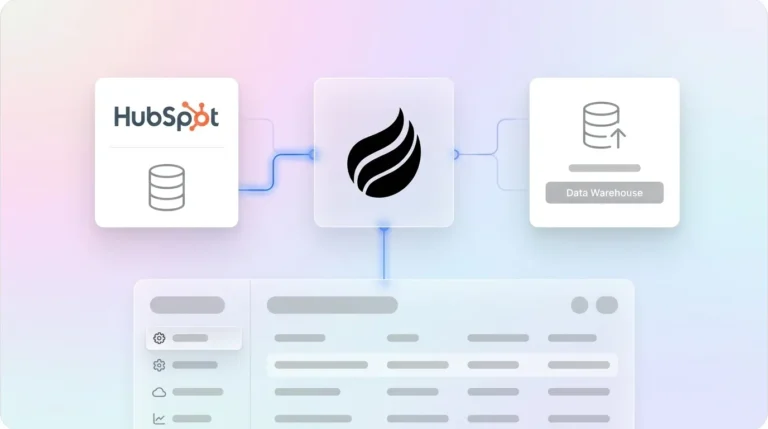
Coffee serves this size segment through two paths. Teams without an existing CRM commitment use the Standalone CRM, where the agent manages the system of record from day one. Teams already running Salesforce or HubSpot deploy Coffee as a Companion App. A simple authentication lets the agent sync data, enrich it, and write insights back to the primary CRM without displacing existing workflows or forcing migration.
Both deployment models deliver the same consolidation benefit. By replacing separate tools for enrichment, recording, and pipeline tracking with a single agent, Coffee cuts tool sprawl and the admin overhead that slows 10–30 person teams.
Pipeline Intelligence Without Extra Spreadsheets
A key 2026 benchmark for pipeline updates is a data freshness target where all deal stages reflect events from the last 24 hours with no manual updates from reps. Legacy CRMs miss this benchmark because they depend on rep discipline to log activities. When reps skip updates, pipeline reviews turn into interrogation sessions instead of strategic discussions.
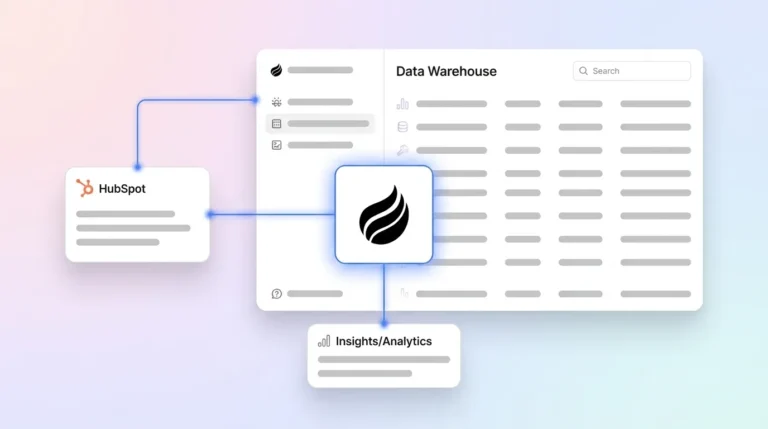
Coffee’s Pipeline Compare feature keeps pipeline data fresh. The agent captures every interaction into a built-in data warehouse, then visualizes week-over-week changes automatically. It highlights progressed deals, stalled opportunities, and new additions without a single CSV export. Companies using CRM often report more accurate forecasts. That accuracy becomes realistic only when an agent captures the underlying data instead of a human under quota pressure.
Visitor Identification as Built-In Automation
None of the other platforms in this comparison include native website visitor identification. Coffee turns anonymous traffic into named, qualified prospects through a single tracking pixel placed in the site’s <head> tag. The agent infers visitor identity such as name, title, email, and LinkedIn profile along with company, pages visited, time on site, and visit frequency.

Standalone tools like RB2B and Warmly usually surface either company-level data or undifferentiated people lists. Coffee’s Suggested Leads feature instead uses the buyer persona to recommend the two or three specific individuals inside a visiting company most worth contacting, with LinkedIn profiles ready for outreach. Real-time Slack notifications alert reps to high-fit visitors, and one click adds the prospect to Coffee with all enrichment pre-filled. This flow closes the loop from pixel hit to personalized outbound without leaving the agent.

Decision Framework and Practical Checklist
Use the following criteria to match a platform to your current situation.
- No existing CRM, 1–20 reps: Choose Coffee Standalone CRM. The agent manages the system of record from setup and removes the need to buy separate enrichment, recording, or forecasting tools.
- Committed to HubSpot or Salesforce, 10–30 reps, low adoption: Choose Coffee Companion App. The agent writes enriched data back to the existing CRM without migration and improves data quality immediately.
- Need workflow automation only, structured data inputs, no unstructured data: Choose HubSpot Professional or Close. Both provide solid workflow builders for teams with disciplined data entry habits.
- Budget-constrained, light automation needs: Choose Zoho Standard. Zia offers basic AI assistance at a lower price point, though unstructured data handling stays limited.
- Enterprise scale with dedicated admin resources: Choose Salesforce with Agentforce. The configuration overhead becomes reasonable at larger team sizes with RevOps staff.
- Evaluating any platform: Score vendors on a 1–5 scale using your actual company data, not the vendor’s sample dataset. Test whether a rep can log a meeting note, associate it with a deal, and tag contacts in under one minute.
- AI feature evaluation: Confirm that AI automation features such as deal scoring, email draft assist, and predictive forecasting are included in the base platform rather than sold as a separate SKU that raises per-user costs by 30–50%.
Test Coffee’s agent on your own pipeline data to validate the decision criteria.
Frequently Asked Questions
How long does Coffee implementation take for a 15-person team?
For a 15-person team using the Standalone CRM, implementation starts as soon as you connect Google Workspace or Microsoft 365. The Coffee Agent scans emails and calendars to auto-create contacts and companies from the first authentication. Most teams have a populated, active CRM within the first week without manual data migration.
For teams deploying the Companion App on top of Salesforce or HubSpot, a simple authentication grants the agent sync permissions. Enriched data begins writing back to the existing CRM in the same session. There is no complex configuration, no workflow tree to build, and no dedicated admin required.
What is the migration effort when moving from Salesforce or HubSpot?
Teams moving to Coffee’s Standalone CRM can import existing contact and company records through a standard CSV export from their current platform. Because the Coffee Agent immediately enriches and updates those records from live email and calendar activity, data quality improves from the first day instead of degrading like a static import.
Teams that prefer to keep Salesforce or HubSpot as the system of record avoid migration. They deploy Coffee as a Companion App, which layers the agent on top of the existing installation. This path suits teams that have invested in Salesforce or HubSpot customizations, quotas, forecasting configurations, and required fields and do not want to disrupt them.
How does Coffee handle integrations and data security?
Coffee currently connects to external tools through Zapier, with deeper native integrations on the roadmap. For email and calendar, Coffee connects directly to Google Workspace and Microsoft 365 through standard OAuth authentication.
Coffee is SOC 2 Type 2 certified and GDPR compliant. Customer data is not used to train public AI models. For teams evaluating AI vendors in 2026, these certifications address the main security and data residency concerns that appear during procurement reviews at tech companies of this size.
Does Coffee maintain data quality parity with dedicated enrichment tools?
Coffee’s enrichment for job titles, funding data, and LinkedIn profiles comes from licensed data partners and performs at roughly the same level as dedicated enrichment tools for most 10–30 person tech companies. The practical difference is consolidation. Coffee delivers enrichment as a built-in agent capability instead of a separate subscription that needs its own integration and maintenance.
Teams that previously purchased ZoomInfo or Apollo for enrichment, Gong or Fathom for call recording, and a separate forecasting tool can replace all three with Coffee’s agent. For edge cases that need specialized enrichment depth in highly regulated or niche verticals, Coffee’s Zapier integration allows connection to dedicated enrichment APIs.
Conclusion: Picking the Right Automation Depth in 2026
The core problem in 2026 still matches 2021. Legacy CRMs require humans to act as data-entry clerks. For nearly three decades, CRM systems have depended on sales reps and service agents to enter, update, and maintain data manually, and roughly 70% of CRM projects fall short of goals mainly because of adoption and data quality issues rather than software limitations. Workflow builders improve on pure manual entry but break on unstructured data, the fragility identified earlier, because they cannot process the emails, call transcripts, and meeting notes that hold the most valuable deal context.
Coffee is the only platform in this comparison that deploys a true agent across both structured and unstructured data, offers both a standalone CRM and a companion-app model for teams already committed to Salesforce or HubSpot, and includes pipeline intelligence and visitor identification as native agent capabilities instead of paid add-ons. The result is good data in and good data out, no matter which stack a team starts from.
Move from workflow fragility to agent-based automation—explore Coffee’s pricing.