Written by: Doug Camplejohn, CEO & Co-Founder, Coffee | Last updated: December 30, 2025
Key Takeaways
- Conversation intelligence in 2026 helps sales teams capture, organize, and analyze customer interactions without adding manual work.
- Deep CRM integration, automated data capture, and high quality insights matter more than basic call recording or transcription alone.
- Security, privacy controls, and user adoption support determine whether conversation intelligence data becomes trusted across the revenue team.
- Platforms that consolidate enrichment, recording, automation, and forecasting reduce tech stack complexity and improve data consistency.
- Coffee acts as an AI sales agent that automates meeting capture, follow up, and CRM updates, which you can access through Coffee pricing plans.
The Problem: Why Your Current CRM Is Not Enough for Conversation Intelligence
Many CRM setups rely on fragmented tools and manual workflows, which weakens conversation intelligence. Data often lives in separate systems for records, enrichment, outreach, and recording, so no single source shows the full customer story.
This fragmentation pushes reps into administrative work instead of selling. Key insights get lost, customer context falls through the cracks between meetings, and pipeline forecasts become less reliable. Teams then shift into spreadsheets as the real workspace, which limits visibility and makes coaching harder.
Conversation intelligence built on incomplete or inconsistent data cannot provide the clarity that sales leaders need. A different approach requires an agent that can own data capture, enrichment, and organization across every interaction.
Introducing Coffee: An AI Agent for Smarter Sales Conversations
Coffee improves conversation intelligence by working as an autonomous sales agent rather than a passive database. It captures interactions, organizes data, and updates your CRM so insights stay accurate and up to date.
Key conversation intelligence features include:
- AI Meeting Bot: joins Zoom, Teams, and Meet calls to record and transcribe automatically.
- Automated summaries: creates post-call summaries, highlights next steps, and drafts follow-up emails.
- Sales methodology support: structures notes using BANT, MEDDIC, or SPICED for consistent qualification.
- Pipeline intelligence: tracks pipeline changes with week over week comparisons and highlights risk.
- Contextual briefings: prepares reps with attendee details, roles, and past interactions before meetings.
You can explore how this AI agent supports your team on the Coffee pricing page.

10 Essential Factors to Find the Best Conversation Intelligence Platform in 2026
1. Deep CRM Integration Keeps Conversations Tied to Revenue Data
Effective conversation intelligence connects directly to your CRM data model, not just the user interface. The platform should read and write customer, deal, and activity data without breaking existing workflows.
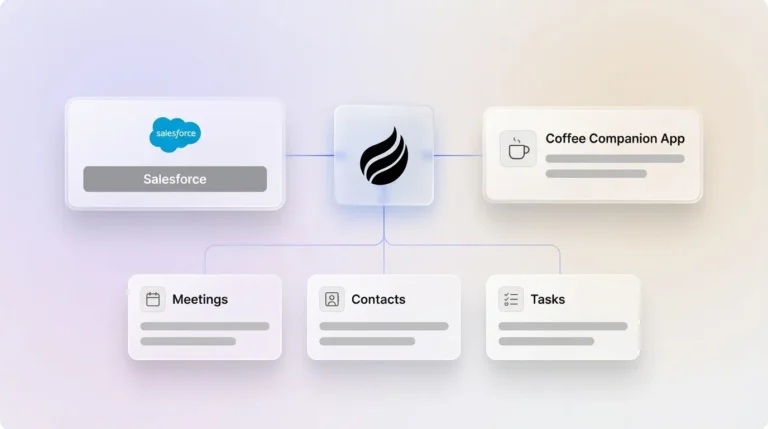
Coffee deploys as an intelligent layer on top of Salesforce and HubSpot. The agent syncs conversations, enriches records, and writes insights back into core objects, so every call links to the right accounts, contacts, and opportunities.
2. Automated Data Capture Removes Manual Entry
Strong CI platforms handle recording, transcription, logging, and enrichment automatically. Reps should not spend time creating contacts, updating fields, or copying notes between tools.
Coffee connects to Google Workspace or Microsoft 365 to auto create contacts and companies from email and calendar data. It enriches those records with licensed third party data, which reduces the need for separate enrichment tools and keeps attribution accurate.

3. Actionable Insights Deliver Good Data Out
Conversation intelligence should move beyond raw transcripts. The platform needs to surface key moments, risks, and next steps so managers and reps can understand deals in minutes.
Coffee’s AI Meeting Bot generates structured summaries, captures commitments, drafts follow ups, and organizes notes under frameworks like BANT or MEDDIC. This structure turns unstructured conversations into consistent, comparable data for coaching and reporting.
4. Security, Compliance, and Privacy Protect Sensitive Conversations
Any CI platform must treat recorded conversations as sensitive data. Strong encryption, access controls, and clear retention settings are essential for trust and compliance.
Coffee meets SOC 2 Type 2 and GDPR standards. Customer conversation data does not train public AI models, so teams keep control over what is captured and how it is used.
5. User Adoption Support Makes CI Part of Daily Work
Conversation intelligence works only when reps use it. The tool needs to fit into existing workflows, save time, and provide visible value in each meeting and follow up.
Coffee positions the agent as a co worker that handles administrative tasks. By taking over note taking, data entry, and follow up drafting, it helps reps reclaim hours each week and encourages ongoing use.
6. Pipeline Intelligence Improves Forecast Accuracy
Strong CI connects conversation content directly to pipeline changes. Leaders should see how specific calls influence stage movement, risk, and forecast quality.
Coffee’s Pipeline Compare view highlights week over week changes, such as new deals, progressed opportunities, and stalled accounts. This insight turns pipeline reviews into forward looking discussions supported by call level detail.
7. Customization Aligns With Your Sales Methodology
Each sales team defines qualification, risk, and next steps in its own way. CI should reflect that reality instead of forcing a generic template.
Coffee allows teams to structure fields and notes around BANT, MEDDIC, SPICED, or custom approaches. This alignment keeps reports meaningful and makes it easier to coach against your existing process.
8. Stack Consolidation Reduces Tools and Data Silos
Conversation intelligence can either add another point solution or help consolidate several categories. Consolidation reduces cost, logins, and integration work.
Coffee combines CRM style record keeping, enrichment, recording, and forecasting support in one agent driven platform. This reduces vendor count and helps keep all interaction data in one consistent system.

9. Transparent Pricing Scales With Your Team
Pricing for CI tools can become complex when based on minutes, seats, and features. Clear, predictable pricing makes it easier to roll out across the team.
Coffee uses a seat-based model where companies pay for human users while the agent’s work is included. This avoids surprise metering and supports simple expansion as the team grows.
10. Support and Onboarding Speed Up Time to Value
Strong onboarding and responsive support help teams reach value quickly. Implementation should focus on connecting systems, aligning fields, and training managers on how to use insights.
Coffee emphasizes quick setup with standard Salesforce and HubSpot deployments, prebuilt meeting workflows, and coaching on how to use summaries and pipeline views in existing processes.
Coffee vs. Traditional Conversation Intelligence
|
Capability |
Coffee (AI Agent Approach) |
Traditional CI Solutions |
Legacy CRM + CI |
|
Data capture |
Automated by an agent across channels |
Manual setup and maintenance are often required |
Fragmented and spread across tools |
|
CRM integration |
Deep data level integration and sync |
Often surface-level API connections |
Limited and often manual transfer |
|
Insights quality |
Contextual and methodology structured |
Basic transcription and keyword spotting |
Minimal analysis and raw recordings |
|
User experience |
Agent handles busywork so reps sell |
An additional tool to manage and learn |
Ongoing manual entry and updates |
Conclusion: Build a More Insightful Sales Motion With Conversation Intelligence
Sales teams that use conversation intelligence in 2026 gain clearer visibility into deals, customer needs, and rep performance. Deep CRM integration, automation, methodology alignment, and strong security turn raw conversations into reliable revenue data.
Coffee takes an AI agent approach that consolidates tools, automates data entry, and delivers structured insights from every interaction. This helps leaders, managers, and reps stay aligned around a single, accurate view of the customer.
You can see how Coffee supports your sales team and review plan options on the Coffee pricing page.
Frequently Asked Questions: Conversation Intelligence
Data privacy and security in conversation intelligence
Conversation intelligence platforms should operate within strong privacy frameworks. Coffee maintains SOC 2 Type 2 and GDPR compliance, and customer conversation data does not train public AI models. Teams can review certifications, access controls, and retention settings to confirm that the platform aligns with internal policies.
Conversation intelligence impact on forecast accuracy
Conversation intelligence can improve forecast accuracy by linking pipeline changes to actual discussions. Coffee’s Pipeline Compare feature tracks deal movement and flags stalled opportunities based on meeting history, which supports more grounded forecasting conversations.
Addressing sales team resistance to conversation intelligence
Sales teams often resist tools that add steps or feel like oversight. Coffee focuses on time savings by automating note-taking, data entry, and follow-up drafting, which can save reps several hours each week. As reps see clear benefits, adoption usually improves.
Conversation intelligence integration with Salesforce or HubSpot
Effective CI tools integrate with CRM systems at the data level. Coffee’s Companion App installs as an intelligent layer on Salesforce or HubSpot and uses simple authentication to sync records. The agent enriches conversations and writes insights back into the CRM without changing existing views.
Conversation intelligence vs. call recording software
Call recording software captures audio or video, but often stops there. Conversation intelligence analyzes these recordings, extracts insights, and connects them to deals. Coffee extends this further by updating CRM records, drafting follow-ups, and preparing briefings for future meetings based on past conversations.