Written by: Doug Camplejohn, CEO & Co-Founder, Coffee | Last updated: July 22, 2026
Key Takeaways for Salesforce Data Quality in 2026
- Salesforce data quality tools fall into three camps: reactive cleanup, hybrid enrichment, and proactive prevention at the source.
- DemandTools and Cloudingo excel at large-scale reactive deduplication and cleanup, while DataGroomr and Plauti add AI-assisted matching and enrichment.
- Coffee Companion App is the only agent in this comparison that prevents bad data from entering Salesforce by automating capture, enrichment, and activity logging before reps touch records.
- Prevention-first tools reduce long-term costs and admin workload compared to reactive solutions that depend on recurring manual configuration and scheduled jobs.
- Teams ready to stop bad data at the source can deploy Coffee’s prevention agent to protect Salesforce data quality from day one.
The Problem: Why Salesforce Data Quality Automation Matters in 2026
Company data often sits in silos, which limits visibility and personalization at the exact moment AI-driven workflows depend on it. B2B CRM records decay at 22.5–30% per year, reaching 35–70% annually in high-turnover industries like SaaS. This decay creates measurable downstream costs. Sales reps spend an estimated 27% of their time verifying, updating, and hunting for accurate contact details instead of selling, and Gartner research places the average annual cost of poor data quality at $12.9 million per organization. The impact on revenue is direct: 76% of CRM users report that less than half of their organization’s CRM data is accurate and complete, and 37% report losing revenue as a direct consequence. For mid-market RevOps leaders, the math is clear: manual rules and point solutions have failed, and the window for a prevention-first architecture has opened.
Comparison Scope: Native Salesforce Tools vs Companion Agents
This comparison uses five criteria that map directly to common failure modes in legacy Salesforce data management.
- Proactive prevention vs post-entry cleanup, meaning whether the tool stops bad data at the source or fixes it later.
- Depth of native Salesforce integration and required-fields handling, including direct writes to Salesforce objects and respect for required fields, validation rules, and picklists.
- Automation of deduplication, enrichment, and activity logging, with a focus on continuous operation instead of admin-triggered batch jobs.
- Implementation effort and ongoing admin burden, including deployment time and maintenance overhead.
- Total cost of ownership including hidden fees, such as per-record charges, enrichment credits, or connector fees beyond the base license.
The table below applies these criteria to each tool and gives a side-by-side view of how they compare on the first three dimensions.
Side-by-Side Comparison Table: DemandTools, Cloudingo, DataGroomr, Plauti, and Coffee
The table below rates each tool across the first three criteria. Ratings reflect published capabilities and documented limitations. When a capability does not fit a shared scale, the nuance appears in the detailed criterion sections.
| Tool | Criterion 1: Prevention vs Cleanup | Criterion 2: Native SF Integration | Criterion 3: Dedupe + Enrich + Activity |
|---|---|---|---|
| DemandTools | Reactive, batch cleanup, mass updates, field standardization | Deep, AppExchange native, respects validation rules | Strong dedupe and mass update, no enrichment or activity logging |
| Cloudingo | Primarily reactive, real-time API interception available | Deep, AppExchange native, scheduled auto-merge | Strong dedupe, limited enrichment, no activity logging |
| DataGroomr | Hybrid, Live Dedupe real-time cross-object matching plus batch | Deep, AppExchange native, MCP protocol for AI agent access | Seven new enrichment providers in Summer ’26, no activity logging |
| Plauti | Hybrid, rule-based prevention plus AI-assisted verification | Deep, AppExchange native, respects required fields | Strong dedupe with AI contextual reasoning, limited enrichment, no activity logging |
| Coffee Companion App | Proactive, agent captures, enriches, and logs before rep entry | Deep, direct Salesforce sync, respects required fields, quotas, and forecasting | Automated enrichment, deduplication, and full activity logging from emails, calendars, and calls |
Criteria 4 and 5, which cover implementation effort and total cost of ownership, involve non-comparable metrics across vendors and appear in the prose sections below.
Proactive Prevention vs Reactive Cleanup in Practice
Reactive cleaning fixes problems after they compound, while proactive monitoring catches issues before they cascade, similar to dispatching a fire crew versus installing a smoke alarm. Cleansing without hygiene produces a clean database that becomes dirty again within 90 days as new records enter without controls. Fixing data after creation costs 10x more than preventing bad data at entry. Each tool in this comparison sits at a different point on the prevention-to-cleanup spectrum, so the right choice depends on where data quality debt originates.
Criterion 1: Proactive Prevention vs Post-Entry Cleanup
Native Salesforce Duplicate Rules evaluate only on record create or edit, which allows list imports and API syncs to introduce hundreds of undetected duplicates that later require mass deduplication jobs. DemandTools and Cloudingo specialize in handling that reactive workload at scale. Cloudingo can intercept records from external platforms in real time via API integrations, which adds a prevention layer, although the main use case remains scheduled cleanup. DataGroomr’s Summer ’26 Live Dedupe supports real-time cross-object matching on new and updated records, which moves it closer to prevention.
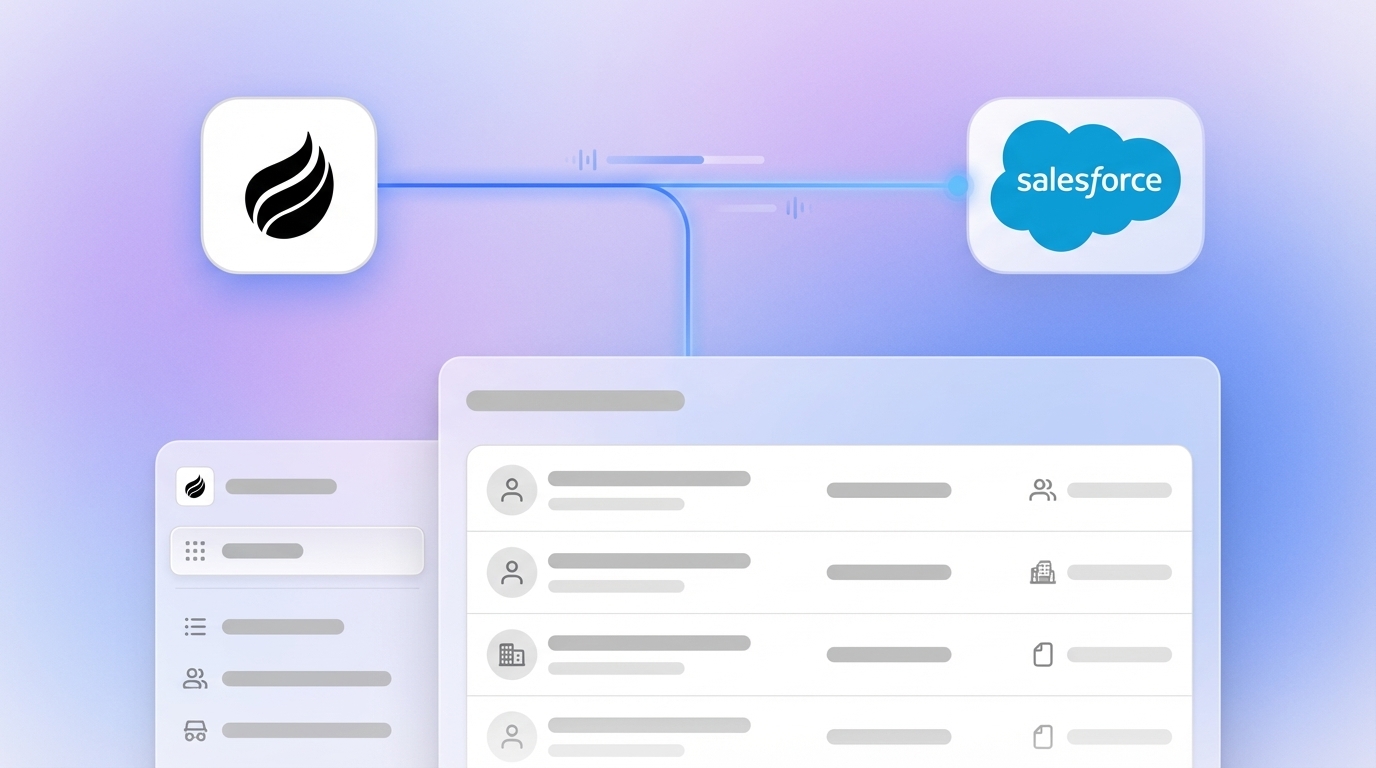
Coffee Companion App operates entirely upstream. The agent scans emails and calendars to auto-create contacts and companies, enriches records at the moment of creation, and logs every interaction without rep input. This proactive prevention through automated activity capture ensures sales interactions are logged in Salesforce without manual effort, directly addressing the finding that Salesforce is missing 72% of sales activity data, meaning only 28% of activities are logged. Bad data never enters the system because the agent controls intake.

Explore Coffee’s prevention-first approach to Salesforce data quality automation.
Criterion 2: Depth of Native Salesforce Integration and Required Fields Handling
Native Salesforce integration without middleware matters because a managed package can install from the AppExchange and write directly to Lead, Contact, and Account records with no code. DemandTools, Cloudingo, DataGroomr, and Plauti all meet this standard. DataGroomr’s Summer ’26 release added MCP protocol connectivity, which allows enrichment prompts to reference Salesforce data and business logic directly.
A 2026 workflow example shows where integration depth becomes critical. A mid-market RevOps team enforces required fields by stage, such as email and company name at Lead, then budget and decision-maker at SQL. Vantage Point’s 2026 framework recommends requiring email, source, and company name at the Lead stage and budget range, timeline, and decision maker at the SQL stage. Tools that bypass validation rules on API writes break this enforcement and weaken governance. Coffee’s Companion App is built with explicit awareness of Salesforce’s required fields, quotas, and forecasting architecture, which sets it apart from newer AI-native CRM alternatives.
Criterion 3: Automation of Deduplication, Enrichment, and Activity Logging
Best-practice dedupe automation includes scheduled scans, auto-merge rules that resolve high-confidence matches automatically while flagging fuzzy matches for review, and auto-conversion of matching Leads into existing Contacts. DemandTools and Cloudingo deliver this reliably. DataGroomr’s Mass Enrich jobs now run on a recurring schedule, which enriches records on a continuous cadence. Plauti combines deterministic rules for consistency with AI contextual reasoning for edge cases such as shared surnames or uncommon nicknames.
Activity logging remains the missing piece for these tools. The time burden described earlier, with reps spending 27% of their time on data-related tasks, translates directly to cost. For a $100K OTE rep this equates to $20–30K in non-selling time annually. Coffee’s agent joins calls, transcribes them, generates summaries and next steps, and writes structured notes back to Salesforce automatically after every interaction. No other tool in this comparison performs all three functions together: deduplication, enrichment, and activity logging.

See how Coffee automates deduplication, enrichment, and activity logging in one agent.
Criterion 4: Implementation Effort and Ongoing Admin Burden
Each external system integration in a Salesforce implementation adds 20–40 hours of effort for field mapping, error handling, data flow testing, and documentation. DemandTools and Cloudingo install from the AppExchange and provide configuration UIs, yet building match rules, merge rules, and scheduled jobs still requires dedicated admin time. A focused implementation of one or two Salesforce AI features often takes three to five months from project initiation to stable production deployment.
Ongoing governance requires clear ownership and a regular review cadence, with a comprehensive review each year to reflect changes in business structure, tech stack, team, or regulations. Coffee Companion App connects through a simple authentication to Google Workspace or Microsoft 365 and begins capturing data immediately. The agent handles ongoing maintenance autonomously, so there are no match rules to tune, no merge jobs to schedule, and no enrichment credits to monitor.

Criterion 5: Total Cost of Ownership Including Hidden Fees
Published list prices for DemandTools, Cloudingo, DataGroomr, and Plauti use different pricing models, such as record volume, org size, or module bundles, which makes per-seat comparisons unreliable. The hidden cost categories remain consistent across reactive tools, however.
Mid-market companies with 200 employees and 40 sales reps typically incur $1–2.5M per year in total bad data costs, including $150–300K in direct costs, $400–600K in productivity loss, and $500K–$1.5M in opportunity cost. Reactive tools reduce direct and productivity costs but cannot eliminate them because cleanup jobs run after data has already degraded. Organizations should budget for ongoing Salesforce integration maintenance at 15–20% of the initial build cost per year as platforms evolve. Coffee uses seat-based pricing with no per-record charges, enrichment credit meters, or connector fees, so the agent’s labor is included.
Scenario-Based Winner Tables
Three buyer profiles map to clear tool recommendations based on the five criteria above.
| Scenario | Primary Need | Recommended Tool |
|---|---|---|
| Large existing Salesforce org with 500K+ dirty records and no current deduplication | Bulk reactive cleanup, scheduled auto-merge, transparent merge audit logs | DemandTools or Cloudingo |
| Mid-market RevOps team needing enrichment automation and real-time dedupe on inbound leads | Continuous enrichment, cross-object real-time matching, AI-assisted merge decisions | DataGroomr (Summer ’26) or Plauti |
| Mid-market team committed to Salesforce with low CRM adoption, missing activity data, and unreliable AI outputs | Prevention at source, automated capture, enrichment, activity logging, and deduplication before rep entry | Coffee Companion App |
Operational Considerations and Scaling
Traction Complete’s 2025 CRO Survey revealed a perception gap. Fifty percent of CROs agreed their CRM data was clean in Traction Complete’s 2025 CRO Survey, while RevOps leaders were less confident because they handle the manual cleanup work. Duplicate records and legacy data clutter remain common challenges. Change management often becomes the most underestimated variable in any data quality rollout. User acceptance testing, documentation, training, and enablement are required parts of Salesforce change implementations, and skipping alignment before production deployment leads to inconsistent adoption and higher post-launch support burden.
Scaling introduces new objects, integrations, and data sources, which forces reactive tools to undergo rule reconfiguration. Coffee’s agent-based architecture scales with the team. As new reps connect their Google Workspace or Microsoft 365 accounts, the agent begins capturing their activity immediately with no extra configuration.
Risks and Limitations by Tool
Every tool in this comparison carries documented limitations that RevOps leaders should weigh before committing.
- DemandTools: Strong for deduplication, mass data updates, and field standardization within Salesforce, but it does not enrich records or log activities and remains reactive by design.
- Cloudingo: Enables administrators to define matching filters across multiple fields and run scheduled automated cleanup jobs with full visibility into merge decisions, yet enrichment capabilities are limited and activity logging is absent.
- DataGroomr: Summer ’26 adds seven new enrichment providers and real-time cross-object matching, but the tool still requires admin configuration of triggers, match models, and enrichment schedules.
- Plauti: Combines deterministic rules with AI reasoning for edge-case duplicate resolution, although enrichment depth and activity logging sit outside its core scope.
- Coffee Companion App: Designed for mid-market teams committed to Salesforce or HubSpot and not suited for large enterprises with complex custom workflows or heavily regulated industries that require multi-year security reviews. Deeper third-party integrations beyond Google Workspace and Microsoft 365 currently run through Zapier, with additional native integrations on the roadmap.
Decision-Framework Checklist for RevOps Leaders
Use this checklist to connect your organizational context to the right tool category.
- Budget: If the main constraint is controlling per-record or per-enrichment costs, consider seat-based models such as Coffee instead of volume-based models such as DataGroomr enrichment credits.
- Team size: Native or lightweight tools often suffice for smaller teams, while larger multi-system environments justify third-party orchestration platforms. Teams under 50 reps with limited admin capacity gain the most from agent-driven automation.
- Primary data quality failure mode: If the org has 500K+ existing dirty records, start with DemandTools or Cloudingo for reactive cleanup. If historical data is relatively clean but ongoing capture is weak, start with Coffee.
- AI readiness: Seventy-four percent of sales teams with AI are prioritizing data hygiene to support it. If Agentforce or Einstein features sit on the roadmap, prevention-first architecture becomes a prerequisite because reactive cleanup alone cannot sustain AI output quality.
- Customization level: Orgs with complex custom objects, Apex-dependent workflows, or multi-cloud Salesforce deployments should validate each tool’s handling of required fields and validation rules before deployment.
Frequently Asked Questions
How long does it take to implement a Salesforce data quality automation tool?
Implementation timelines vary by tool type and organizational complexity. Reactive cleanup tools such as DemandTools and Cloudingo typically require two to four weeks for initial configuration of match rules, merge rules, and scheduled jobs, followed by ongoing admin time to tune rules as new data sources appear. AI-assisted tools such as DataGroomr and Plauti add enrichment mapping and trigger configuration, which extends initial setup to four to eight weeks for a mid-market org. Coffee Companion App connects through a single authentication to Google Workspace or Microsoft 365 and begins capturing data within days for most teams. Across all tools, the longest variable is data governance, which includes defining ownership, review cadences, and change management processes.
Do these tools require deep Salesforce admin expertise to maintain?
DemandTools, Cloudingo, DataGroomr, and Plauti all require a Salesforce admin to configure and maintain match rules, merge rules, enrichment field mappings, and scheduled jobs. As the Salesforce org evolves with new objects, integrations, and required fields, admins must update these configurations manually. Coffee Companion App aims to minimize ongoing admin burden. The agent handles data capture, enrichment, and activity logging autonomously, and its architecture reflects Salesforce’s required fields, validation rules, quotas, and forecasting structures. RevOps leaders without a dedicated Salesforce admin will find agent-driven tools easier to sustain long term.
Can these tools be used together, or must a team choose one?
These tools can work together in a layered architecture. A common mid-market pattern combines a reactive cleanup tool for historical deduplication with a proactive agent for ongoing capture. A team might run a one-time DemandTools deduplication project to bring the existing database to a known clean state, then deploy Coffee Companion App to prevent new bad data from entering. This hybrid approach addresses both existing data debt and the ongoing intake problem. The main risk of running multiple tools is configuration overlap, so overwrite rules must be defined clearly when both a reactive tool and an agent write to the same Salesforce fields.
How do these tools handle data security and compliance requirements?
AppExchange-native tools such as DemandTools, Cloudingo, DataGroomr, and Plauti process data inside the Salesforce org, which simplifies GDPR, HIPAA, and SOC 2 compliance because data remains within the Salesforce trust boundary. Coffee Companion App is SOC 2 Type 2 and GDPR compliant, and data ingested from emails, calendars, and call transcripts does not train public models. For organizations in heavily regulated industries such as healthcare or finance that require multi-year security reviews, Coffee is not the ideal fit. Mid-market SaaS and technology teams will find Coffee’s compliance posture suitable for standard procurement reviews.
How do I evaluate whether Coffee Companion App is the right fit before committing?
The clearest signal is the primary source of data quality failure. If reps create duplicate records because they cannot find existing accounts, if activity data is missing because reps do not log calls, or if AI features produce unreliable outputs because enrichment is incomplete, the organization faces prevention failures that reactive tools cannot fix sustainably. Coffee targets this scenario. If the main problem is a large backlog of existing dirty records that need bulk merging and field standardization, a reactive tool should come first, with Coffee added later as the prevention layer. The Coffee pricing page lists current plan details and offers a path to a live demo so teams can validate fit against their specific Salesforce configuration.
Conclusion: Choose Prevention-First Automation
Earlier we noted that prevention costs a fraction of post-entry cleanup, and sellers overwhelmed by too many tools are 45% less likely to attain quota. The five-criteria framework in this article maps cleanly to three tool categories: DemandTools and Cloudingo for reactive cleanup at scale, DataGroomr and Plauti for hybrid enrichment and AI-assisted deduplication, and Coffee Companion App for teams that need to stop bad data at the source. The right choice is not the tool with the longest feature list. The right choice is the tool that addresses the specific failure mode currently costing the organization revenue. For mid-market RevOps leaders whose main problem is incomplete capture, missing enrichment, and unreliable AI outputs, a prevention-first architecture offers the only sustainable path to a Salesforce instance that earns rep trust and produces accurate forecasts.
Deploy the Salesforce companion agent that stops bad data before it enters your CRM.