Written by: Doug Camplejohn, CEO & Co-Founder, Coffee | Last updated: July 6, 2026
Key Takeaways for RevOps Teams Using Gong
- Most RevOps teams using Gong face a manual gap. Transcripts stay in Gong while CRM fields remain empty until reps update them.
- Coffee acts as a companion agent that ingests Gong transcripts, applies BANT/MEDDIC/SPICED scoring, and writes structured data directly to Salesforce or HubSpot without Zapier or manual entry.
- Compared tools like Gong Native, Chorus, Clari, and others provide recording or forecasting but do not automate post-call CRM write-back for custom methodologies.
- Coffee’s seat-based pricing includes unlimited agent labor, which removes variable per-transcript or per-LLM costs that other platforms introduce.
- Eliminate the manual layer after every Gong call, and see Coffee’s pricing and start your trial today.
Goal-Based Comparison Table for Gong-Centric Workflows
The table below maps each tool to its primary workflow strength and CRM integration reality. Use it to see which category fits your current stack, whether you want a companion agent for existing Gong data, an enterprise coaching platform, or a forecasting-first system.
| Tool | Primary Use Case | CRM Write-Back | 2026 Pricing Reality |
|---|---|---|---|
| Coffee | Post-Gong automation agent; BANT/MEDDIC/SPICED scorecard write-back to Salesforce/HubSpot | Native, zero-Zapier write-back to Salesforce & HubSpot | Seat-based; agent labor unlimited — view transparent pricing |
| Gong Native | Enterprise coaching baseline; conversation intelligence at scale | Connector-based; exports selected data as Task records; AI Data Extractor limited to 20 mapped fields | $1,400–$3,000/user/year + $5,000–$65,000 platform/implementation fees |
| Chorus by ZoomInfo | Pipeline intelligence enriched by ZoomInfo B2B database | Activity sync to Salesforce/HubSpot; unlimited recording, no per-minute charges | Custom enterprise pricing; bundled into ZoomInfo Sales OS |
| Clari Copilot | Deal-risk forecasting with live battlecards | Integrated with Clari forecasting layer; conversation intelligence via Wingman acquisition | Custom; enterprise contract required |
| Jiminny | Mid-market call scoring and pipeline risk | Native HubSpot and Salesforce integration | Mid-market seat-based; published tiers available |
| Claap | Async video collaboration and call review | Limited; primarily async sharing workflows | Freemium to mid-tier seat-based |
| Aviso | Revenue-AI forecasting fused with conversational signals | Unified platform ingesting CRM, call, and marketing data | Enterprise custom pricing |
| Revenue.io | Real-time in-call guidance inside Salesforce | Pop-up battlecards and cues directly inside Salesforce | Seat-based; mid-to-enterprise range |
Coffee – Companion-App Agent for Post-Gong Automation
Coffee focuses on eliminating the manual work that happens after Gong records a call. Coffee expanded call recording ingestion in January 2026 via Zapier integration with Gong, Fathom, Fireflies, and a Desktop app for MacOS, Windows, and Linux, so existing Gong customers can connect their transcript pipeline to Coffee without changing their recording stack.
Once a transcript enters Coffee, the agent applies structured sales methodology scoring automatically. Custom Meeting Summaries launched in February 2026 make that scoring actionable. RevOps teams define exact output formats such as BANT qualification fields, MEDDIC economic buyer identification, or SPICED situational context. Coffee then populates those formats from every Gong transcript without rep involvement.
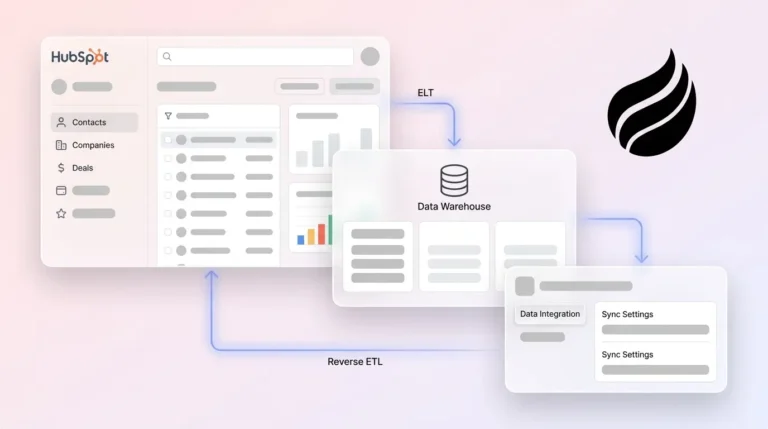
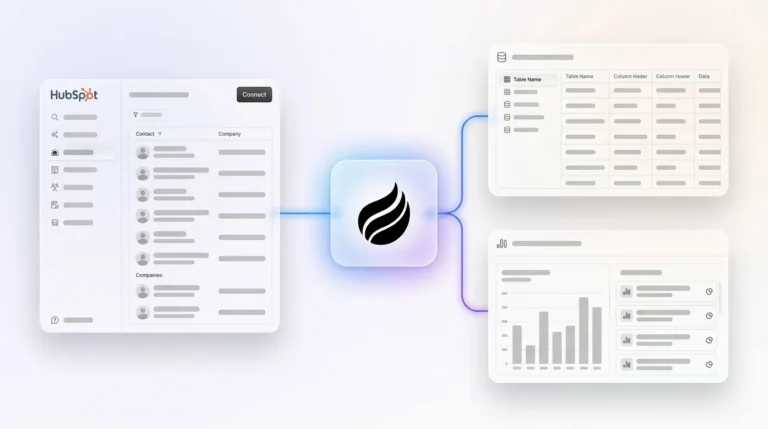
Those summaries write back directly to HubSpot or Salesforce, so deal records update with structured data instead of unstructured call notes. This closes the gap between what was said on the call and what appears in the CRM.
Pipeline intelligence compounds over time because Coffee keeps writing structured data from every call. Coffee’s AI search on deals, released in January 2026, answers natural-language questions such as “Which deals are stuck in negotiation?” or “What is closing this month?” and relies on that accumulated data.
The Intelligence layer introduced in February 2026 improves this further by storing deep context on ICP, product, and competitive positioning so each transcript analysis reflects your specific sales motion instead of a generic summary. Pricing is seat-based with unlimited agent labor included, so teams avoid metering on LLM calls or transcript volume.
Gong Native – Enterprise Coaching Baseline
Gong records and transcribes every sales call at scale, making them searchable across the entire team while surfacing deal risk signals such as competitor mentions, pricing objections, and late-stage buyer silence. For enterprise teams managing 50+ reps, Gong’s coaching scorecards track individual rep performance on key skills based on actual call data rather than subjective manager opinion. Gong Labs analysis of 1.8 million opportunities shows that multi-threading boosts win rates by 130% in deals over $50K, which reinforces its value for coaching.
The integration architecture, however, creates the manual layer that Coffee removes. Gong’s AI Data Extractor can update up to 20 mapped CRM fields per workspace. Gong-hosted conversation data such as recordings, transcripts, and AI insights is not directly queryable via SOQL or usable in standard Salesforce reports without admin intervention. Many teams enable only activity sync and skip deal intelligence sync entirely, which removes much of the pipeline intelligence value.
Gong Foundation pricing ranges from $1,400–$1,600 per user per year plus a mandatory platform fee of $5,000–$50,000 and implementation fees of $7,500–$65,000, with full bundles reaching $2,400–$3,000 per user per year. For teams already paying this cost, the absence of automated CRM write-back creates a significant gap that a companion agent like Coffee fills without replacing the Gong investment.
Chorus by ZoomInfo – Pipeline Intelligence Layer
Beyond Gong’s core coaching platform, several enterprise alternatives position call intelligence inside a broader revenue operations stack. Chorus by ZoomInfo is the most visible example and combines conversation analysis with B2B database enrichment.
Chorus was acquired by ZoomInfo for $575M in 2021. Chorus uses natural language processing to identify key moments such as pricing discussions, objection handling, and next-step commitments, then integrates those signals with ZoomInfo’s B2B database to enrich call context with company intelligence and buying signals.
Chorus fits best for teams already inside the ZoomInfo ecosystem that want call intelligence enriched by firmographic data. The CRM write-back capability covers activity sync to Salesforce and HubSpot. Custom methodology scoring and structured field population still require extra configuration. Enterprise contracts often exceed six figures annually depending on team size and feature requirements.
Clari Copilot – Deal-Risk Forecasting
Clari Copilot provides real-time call assistance through live battlecards and talk track prompts during active calls and integrates with Clari’s forecasting layer. Clari provides boardroom-grade top-down pipeline visibility and forecasting, with conversation intelligence added via its Wingman acquisition. The platform targets enterprise revenue teams that need forecast-grade deal inspection tied directly to call signals.
The primary limitation for mid-market RevOps teams is cost and complexity. Clari’s forecasting suite requires enterprise contracts, and the Copilot conversation layer delivers the most value when the full Clari platform is in use. Teams that want only post-call CRM automation without a forecasting platform replacement will find Clari over-engineered for that workflow.
Jiminny – Mid-Market Scoring for Teams Without Gong
Jiminny offers call recording, transcription, AI-generated summaries, automated call scoring, competitive intelligence, deal and pipeline risk signals, and native HubSpot and Salesforce integration for mid-market teams of 30–200 reps. It acts as a combined recording and scoring solution for teams that do not already own Gong and want a single platform.
For teams already paying for Gong, Jiminny introduces redundant recording costs. Coffee’s companion-app model avoids this by ingesting existing Gong transcripts instead of replacing the recording layer. That approach makes Coffee a more cost-efficient path to automated CRM write-back for current Gong customers.
Claap – Async Collaboration and Light Summaries
Claap focuses on async video review and collaborative annotation of recorded calls, which suits distributed teams that want structured call review workflows without live coaching infrastructure. Its AI summarization features generate post-call notes, but CRM write-back remains limited compared with dedicated conversation intelligence platforms.
Claap’s freemium entry point makes it accessible for small teams. RevOps leaders who need automated BANT/MEDDIC scoring and Salesforce or HubSpot field population, however, will find its automation depth too shallow for structured pipeline management at scale.
Aviso – Revenue-AI Forecasting for Enterprises
Aviso is a unified revenue AI platform that ingests conversational signals from calls and fuses them with CRM data, marketing engagement, and relationship intelligence to power predictive forecasting, AI deal inspection, and next-best-action execution. Aviso surfaces playbooks to counter competitor mentions detected on calls and shows how those mentions shift quarterly revenue forecasts.
Aviso operates as an enterprise-tier platform with pricing and implementation complexity to match. It fits organizations where revenue forecasting accuracy is the primary KPI and where call intelligence acts as one input into a broader revenue operations platform, not mid-market teams that want lightweight post-Gong CRM automation.
Revenue.io – Real-Time Guidance During Calls
Revenue.io delivers real-time call guidance through pop-up battlecards and behavioral cues directly inside Salesforce for high-volume inside sales teams. Its differentiation sits in-call, not post-call. Reps receive live prompts during conversations instead of structured analysis afterward.
For teams whose primary problem is rep behavior during calls, Revenue.io addresses that layer effectively. For teams whose primary problem is what happens to call data after the call ends, especially whether structured insights reach Salesforce or HubSpot without manual effort, Revenue.io does not close that workflow gap.
Analyze Gong Calls with ChatGPT – DIY Workflow for Budget-Constrained Teams
Teams without budget for dedicated tooling can still extract meaningful analysis from Gong transcripts using ChatGPT directly. This workflow relies on manual steps but produces structured outputs when prompts are specific.
Step 1: Export transcripts from Gong via Settings → Data Export → Transcripts (CSV or TXT). Step 2: Organize files into folders by outcome: Won, Lost, In Progress. This folder structure enables systematic pattern analysis that distinguishes language and objections in won deals from stalled conversations in lost deals. Step 3: Paste transcript batches into ChatGPT with targeted prompts.
Effective prompts for objection clustering include: “Identify the top 5 objections mentioned across these calls and categorize each as Price/Budget, Timing, Authority, Need/Fit, Trust, Competition, or Status Quo.” For custom scorecards, use: “Score this call against MEDDIC criteria. For each element — Metrics, Economic Buyer, Decision Criteria, Decision Process, Identify Pain, Champion — provide a 1–5 score and the exact transcript evidence.” Teams can retroactively run transcripts through an LLM at any time, starting with the most recent 60 to 90 days to capture current sentiment.
The limitation is scale and CRM integration. Every transcript requires manual export, manual prompt submission, and manual CRM entry. Coffee automates this entire chain. Understanding the DIY workflow’s labor cost also clarifies the pricing landscape, because the apparent software expense becomes a trade-off between manual hours and automation investment.
2026 Pricing Reality Check for Gong-Centric Stacks
AI sales call analysis tools fall into three tiers in 2026: dedicated conversation-intelligence platforms (enterprise, $$$), dialer-native analytics ($$ per seat), and meeting-assistant tools with sales features ($ or freemium). The ChatGPT DIY workflow costs only the ChatGPT subscription but carries high labor overhead. As noted in the Gong Native section, full-bundle pricing reaches $2,400–$3,000 per user per year, which makes the absence of automated CRM write-back expensive when you factor in ongoing manual labor.
Total cost of ownership includes implementation time, training requirements, ongoing maintenance, and data credit consumption beyond base licensing fees. Coffee’s seat-based model with unlimited agent labor removes the variable cost risk that per-transcript or per-LLM-call pricing introduces. For mid-market teams of 10–50 reps already paying for Gong, Coffee adds the automation layer without replacing the existing recording investment.
Common Objections Addressed for Coffee + Gong
Data quality: Coffee’s agent ingests Gong transcripts as ground-truth source data. The structured output quality depends on the transcript fidelity Gong already provides and the custom Intelligence context Coffee stores about your ICP, product, and methodology. Coffee’s Intelligence layer, described earlier, ensures that transcript analysis reflects your specific sales motion instead of generic AI summaries, which directly improves the quality of structured CRM data the agent writes back.
Export friction: The Gong integration, launched January 2026, eliminates the manual export step entirely and addresses the most common objection from teams evaluating Coffee alongside their existing Gong investment. The agent pulls transcripts automatically and processes them without rep involvement.
Hidden maintenance: Coffee is SOC 2 Type 2 and GDPR compliant. Data is not used to train public models. The companion-app model requires a one-time authentication to Salesforce or HubSpot. Ongoing maintenance is handled by the agent, not by a RevOps admin.
Decision Framework Matrix for Tool Selection
The matrix below translates company profile and primary goal into a specific tool category recommendation. Match your team size, existing stack, and top priority to find the option that closes your workflow gap.
| Company Profile | Primary Goal | Recommended Tool Category |
|---|---|---|
| SMB, 1–30 reps, no CRM yet | Automated CRM with call intelligence built in | Coffee Standalone CRM |
| Mid-market, 10–200 reps, existing Gong + Salesforce/HubSpot | Eliminate post-Gong manual CRM work; BANT/MEDDIC scoring | Coffee Companion App |
| Enterprise, 200+ reps, Gong already deployed | Boardroom-grade forecasting tied to call signals | Clari or Aviso |
| High-volume inside sales, Salesforce-native | Real-time in-call rep guidance | Revenue.io |
| ZoomInfo customer, mid-market | Call intelligence enriched by B2B database | Chorus by ZoomInfo |
| Budget-constrained team, technical RevOps | DIY transcript analysis without new tooling spend | ChatGPT + Gong export workflow |
Frequently Asked Questions
How long does Coffee take to implement with existing Gong data?
Implementation requires a one-time authentication connecting Coffee to your Gong account and your Salesforce or HubSpot instance. Most teams complete this in under an hour. Once connected, Coffee begins ingesting transcripts immediately. Custom summary templates and methodology scoring formats such as BANT, MEDDIC, and SPICED can be configured in the Intelligence layer and applied retroactively to historical transcripts, so teams can analyze the prior 60–90 days of Gong calls without extra export work.
Is Gong transcript data secure when used by Coffee?
Coffee is SOC 2 Type 2 certified and GDPR compliant. Transcript data processed by the Coffee agent is not used to train public AI models. The integration uses OAuth-based authentication for both Gong and the connected CRM, so Coffee accesses only the data scopes explicitly authorized during setup. Data residency and retention policies are configurable for teams with specific compliance requirements.
What migration effort is required to switch analysis workflows?
Coffee operates as a companion app, not a replacement for Gong or the existing CRM. There is no migration in the traditional sense. Gong continues recording calls, Salesforce or HubSpot remains the system of record, and Coffee adds the automated analysis and write-back layer between them. Teams do not need to retrain reps, change recording workflows, or export historical data manually. The agent handles the connection and begins producing structured CRM updates from the first transcript it processes.
Can Coffee replace Gong entirely or only augment it?
Coffee’s companion-app model is designed to augment Gong, not replace it. Gong’s core strengths such as enterprise-scale recording infrastructure, manager dashboards, and native conversation intelligence UI remain intact. Coffee adds the layer that Gong’s architecture does not provide: automated, methodology-structured CRM write-back without admin configuration or manual rep effort. For teams that do not yet have Gong and are evaluating their first call intelligence investment, Coffee’s Standalone CRM includes its own AI meeting bot for recording and transcription, which makes Gong optional instead of required.
Conclusion: Closing the Gap Between Gong and Your CRM
The gap between call recording and CRM accuracy is where pipeline intelligence dies. Gong captures every conversation, but without automated write-back, those insights stay trapped in transcripts instead of driving forecast decisions in Salesforce or HubSpot.
Coffee is the only tool in this comparison whose sole purpose is removing that manual layer. It ingests Gong transcripts, applies your methodology, and writes structured data back to Salesforce or HubSpot automatically on every call without rep involvement. The result is a CRM that reflects what was actually said in each deal conversation, not what a rep remembered to type after a long day.
Start automating your Gong transcripts with Coffee and turn every call into a structured CRM update starting today.