Written by: Doug Camplejohn, CEO & Co-Founder, Coffee | Last updated: June 29, 2026
Key Takeaways for Small Teams
- Legacy CRMs leave sales reps selling only 35% of the time because of constant manual data entry and admin work.
- Autonomous AI agents like Coffee capture contacts, activities, and deal updates automatically by scanning emails, calendars, and call transcripts.
- Coffee unifies structured and unstructured data, automates pre- and post-meeting workflows, and delivers week-over-week pipeline visibility without CSV exports.
- Teams can run Coffee as a full standalone CRM or as a companion on top of Salesforce or HubSpot, replacing multiple point tools.
- Ready to eliminate manual entry and reclaim 8–12 hours per week? See Coffee’s pricing and start your free trial.
How We Evaluate Zero-Data-Entry CRMs
Eight criteria separate a genuinely autonomous CRM from a semi-automated one.
- Zero manual entry: The system must capture contacts, activities, and deal updates without human input.
- Structured and unstructured data unification: The platform must ingest database fields and free-form sources like email threads and call transcripts.
- Meeting automation: The tool should handle pre-meeting briefings, call recording, post-call summaries, and follow-up drafting.
- Pipeline visibility: Week-over-week pipeline change should be tracked automatically, without CSV exports.
- Standalone vs. companion flexibility: The tool should serve as a full system of record or layer on top of an existing CRM.
- Weekly time saved: The platform should cut a meaningful amount of administrative hours per rep.
- Pricing transparency: Pricing should be simple, seat-based, and free of metered AI usage fees.
- SOC 2 / GDPR compliance: The platform should be certified for data security and privacy.
Side-by-Side Comparison: Coffee vs. HubSpot, Salesforce, Pipedrive, Clarify, and Day.ai
| Criteria | Coffee | Legacy CRMs (HubSpot / Salesforce / Pipedrive) | Newer AI Tools (Clarify / Day.ai) |
|---|---|---|---|
| Zero manual entry | Full agent automation, contacts, activities, and deals created without human input | Requires manual logging, automation add-ons cost extra | Partial, reduces some entry but not end-to-end |
| Structured + unstructured data | Unified, emails, transcripts, and calendar data ingested alongside structured fields | Structured fields only, transcripts require third-party tools | Day.ai focuses on unstructured only, Clarify limited |
| Meeting automation | Briefings, bot recording, summaries, follow-up drafts, BANT/MEDDIC/SPICED support | Requires separate tools (Gong, Fathom, SalesLoft) | Basic summarization, no pre-meeting briefings |
| Pipeline visibility | Automatic Pipeline Compare, week-over-week changes surfaced without exports | Manual CSV exports or paid forecasting add-ons | Limited pipeline tracking |
| Standalone vs. companion | Both, full standalone CRM or companion layer on Salesforce / HubSpot | Standalone only, no companion model | Standalone only, shallow Salesforce/HubSpot integration |
| Weekly time saved | 8–12 hours per rep | Minimal without heavy customization | Moderate, varies by use case |
| Pricing model | Seat-based, unlimited agent labor included | Seat-based plus metered add-ons | Seat-based, feature depth varies |
| SOC 2 / GDPR | SOC 2 Type 2 and GDPR compliant, data not used to train public models | SOC 2 compliant, GDPR varies by tier | Compliance status varies, less established |
The table above gives a high-level snapshot of how each platform handles automation and data entry. The next sections walk through these capabilities in more detail, starting with how each option captures and manages customer data.
How Each Platform Captures and Enriches Data
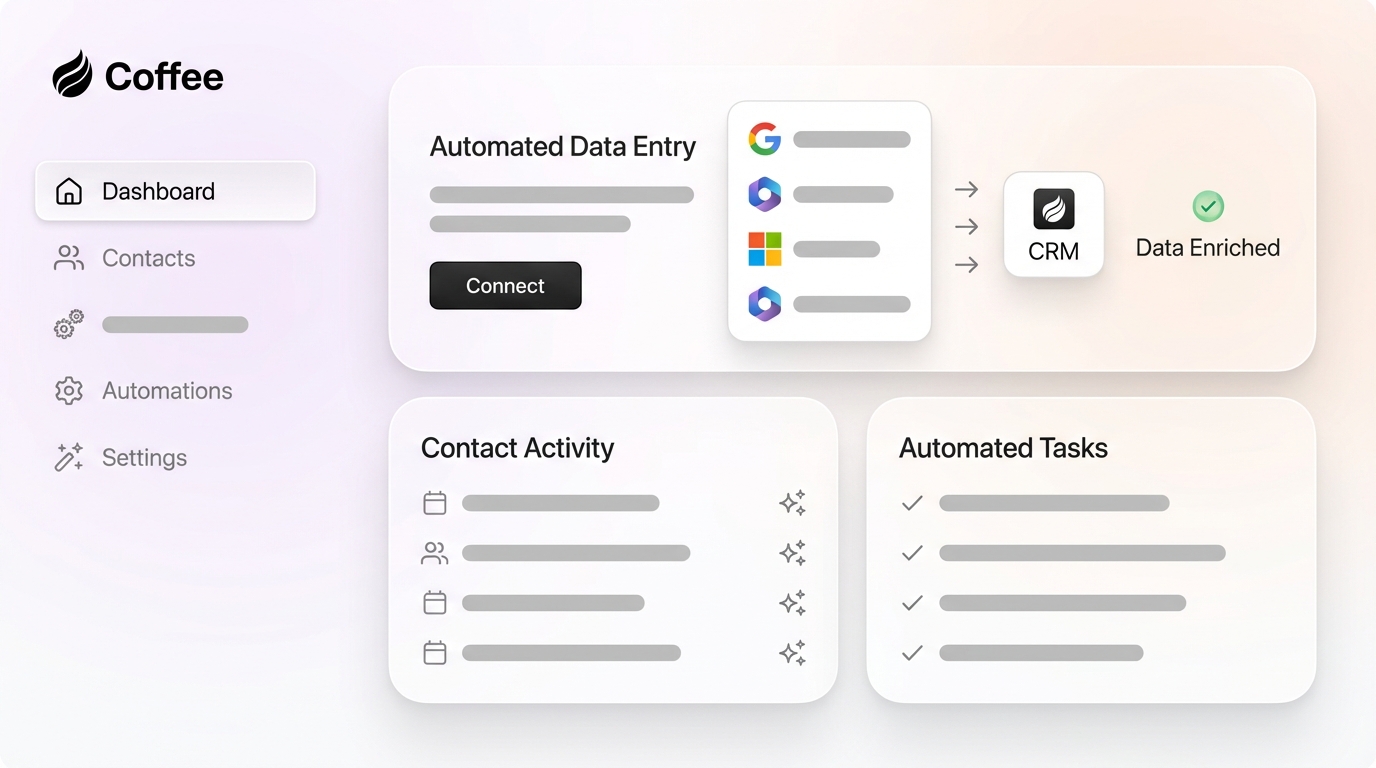
Coffee connects to Google Workspace or Microsoft 365 and immediately scans emails and calendars to auto-create contacts and companies. Every note and interaction attaches to the correct record automatically. The agent enriches records with job titles, funding data, and LinkedIn profiles via licensed data partners, which removes the need for standalone tools like Apollo or ZoomInfo. Activity logging such as last activity, next activity, and deal state updates continuously without rep involvement.

Legacy CRMs capture structured data only when a human enters it. Email sync exists in HubSpot and Salesforce, but call transcripts, unstructured notes, and enrichment require separate paid tools. Pipedrive offers basic email sync with no native enrichment. The result is a fragmented stack with HubSpot for records, ZoomInfo for enrichment, SalesLoft for outreach, and Fathom for recording, all stitched together manually.
Clarify and Day.ai reduce some manual work but cover only parts of the workflow. Day.ai emphasizes unstructured productivity data without a full structured CRM layer. Clarify lacks the integration depth to handle required fields, forecasting, and quota logic inside established Salesforce or HubSpot instances.
Meeting Automation, Notes, and Follow-Up
Coffee’s agent acts like a pre- and post-meeting executive assistant. Before a call, it surfaces a briefing with attendee roles, past interaction history, and open action items. During the call, the bot joins Zoom, Teams, or Google Meet to record and transcribe the conversation. After the call, it generates a structured summary, identifies next steps, and drafts a follow-up email in Gmail for the rep to review and send.

Notes can follow BANT, MEDDIC, or SPICED structures so qualification data enters the system in a consistent format. Reps spend their time selling while the agent handles documentation and follow-up prep.

Legacy CRM users must assemble this workflow from multiple tools. Gong or Chorus handles recording, Fathom handles transcription, and a separate template or rep effort handles follow-up drafting. Each handoff introduces risk and adds another line item to the software budget.
Clarify and Day.ai offer basic post-meeting summarization but do not match Coffee’s depth for pre-meeting briefings, sales methodology structuring, or follow-up email drafting.
Pipeline Intelligence and Week-over-Week Visibility
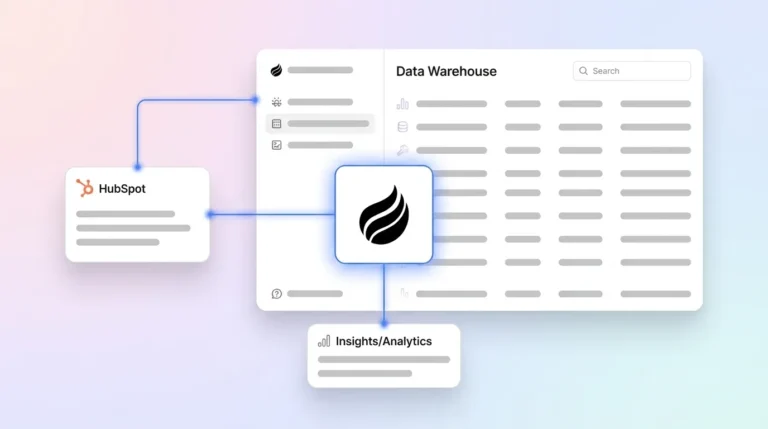
Coffee’s agent captures every interaction into a built-in data warehouse so pipeline history stays intact automatically. The Pipeline Compare feature visualizes week-over-week changes, showing which deals progressed, which stalled, and what entered the funnel. Pipeline reviews shift from debates about data accuracy to focused strategy discussions.
Legacy CRMs lose historical context when fields update because their relational databases overwrite prior values. Generating week-over-week pipeline comparisons requires manual CSV exports, spreadsheet work, or expensive add-ons like Clari or Boostup. For a 1–20 person team, that overhead quickly becomes prohibitive.
Beyond managing existing pipeline, Coffee also helps teams identify and capture new opportunities before they ever enter the CRM.
Visitor Identification and Lead-Gen Capabilities
Coffee includes a visitor identification feature that turns anonymous website traffic into named, qualified prospects. A single tracking pixel in the site’s head tag starts identifying visitors by name, title, email, LinkedIn profile, company, pages visited, and session duration. Real-time Slack notifications surface high-fit visitors, and one click adds the prospect to Coffee with enrichment already filled in.

Suggested Leads is the key differentiator. Competitors like RB2B and Warmly surface either the visiting company or generic people lists. Coffee uses the user’s buyer persona to recommend the two or three specific individuals inside the visiting company who are most worth contacting, with LinkedIn profiles ready for immediate outreach or drip enrollment.
Legacy CRMs do not provide native visitor identification. Newer tools like Clarify and Day.ai also lack this capability.
Where Coffee Fits: Standalone CRM vs Companion for Salesforce and HubSpot
Coffee operates in two deployment models, which gives small teams flexibility that competitors do not match.
Standalone CRM: Teams of 1–20 that have outgrown spreadsheets and Notion but find HubSpot or Pipedrive expensive and manual can use Coffee as the primary system of record. The agent manages all data in and all insights out. Setup involves connecting a workspace account, and most teams avoid complex migrations or administrator overhead.
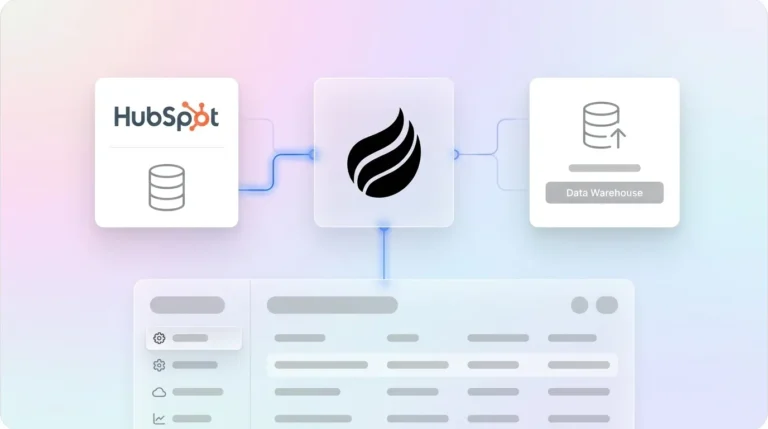
Companion App: Teams already committed to Salesforce or HubSpot can layer Coffee on top with a simple authentication. The agent handles data entry, enrichment, call logging, and pipeline updates, then writes accurate data back to the primary CRM. This approach solves low adoption and poor data quality without forcing a platform migration. Coffee’s understanding of Salesforce and HubSpot constructs such as required fields, quota logic, and forecasting hierarchies sets it apart from newer tools that lack this integration depth.
Choose your deployment model and remove manual entry from your sales workflow starting on day one.
Operational Factors: Security, Integrations, Pricing, and Change Management
Before committing to any CRM platform, small teams should review four operational factors that determine how smoothly the tool fits into existing workflows.
Security: Coffee is SOC 2 Type 2 and GDPR compliant, so customer data meets enterprise security standards. Customer data is not used to train public AI models, which addresses a common concern about AI-powered tools.
Integrations: Current third-party integrations run through Zapier, which covers most common workflows. Teams that rely on niche tools or complex data flows should review Coffee’s native integration roadmap.
Pricing: Coffee uses a seat-based model with no metered fees for agent labor, LLM usage, or automated processes. Teams pay for human seats, and the agent’s work is included regardless of volume.
Change management: For small teams, adoption is straightforward. Connect a workspace account and the agent begins working quickly. There is no lengthy onboarding or administrator configuration cycle, which contrasts with legacy CRMs that can take weeks to roll out.
Risks and Limitations for Different Buyer Profiles
Three limitations define Coffee’s current scope, and each one matters to a different type of buyer.
Integration depth: Third-party integrations currently route through Zapier. This setup works for most standard stacks but may not satisfy teams that need deep native connections to niche tools. If your environment relies on specialized software with complex data requirements, review Coffee’s integration roadmap before making a long-term commitment.
Data enrichment parity: Coffee’s built-in enrichment handles standard fields such as job titles, funding data, and LinkedIn profiles at a level roughly on par with dedicated tools. Teams with highly specialized enrichment needs, like real-time intent signals or detailed technographic data, may still want a supplemental source. For most small teams, the built-in enrichment removes the need for a separate tool.
Enterprise scale: Coffee targets teams of 1–20 people and does not aim to serve large enterprises with complex custom workflows or multi-year security reviews. Organizations in heavily regulated industries like healthcare and finance should evaluate enterprise-grade platforms built for those requirements.
Decision Framework: Matching Your Stack to Coffee
- No CRM today / using spreadsheets or Notion: Deploy Coffee Standalone so the agent becomes the system of record immediately, with minimal migration complexity.
- Using HubSpot or Salesforce with low adoption or dirty data: Deploy Coffee as a Companion App. Keep the existing system of record and let the agent handle all data entry and enrichment.
- Using Pipedrive or a lightweight CRM: Evaluate whether a Standalone replacement delivers more value than a companion layer. For most teams under 20 seats, the standalone model is the cleaner path.
- High tolerance for manual work or feature-checklist buyers: Coffee will not be the right fit. Legacy CRMs with extensive configuration options better serve teams that prefer static databases over autonomous agents.
Frequently Asked Questions
How long does implementation take and how much migration effort is required?
For the Standalone CRM, implementation starts when you connect a Google Workspace or Microsoft 365 account. The Coffee agent immediately scans emails and calendars to populate contacts, companies, and activity history. Most small teams avoid lengthy administrator configuration or data migration projects. For the Companion App, a simple authentication connects Coffee to an existing Salesforce or HubSpot instance, and the agent begins writing enriched data back to the primary CRM without disrupting current workflows.
How does Coffee’s data quality compare to dedicated enrichment tools like ZoomInfo or Apollo?
Coffee’s built-in enrichment covers job titles, funding data, and LinkedIn profiles via licensed data partners and serves the majority of small business use cases. For standard prospecting and contact enrichment, quality is roughly on par with dedicated tools. Teams with highly specialized requirements, such as deep technographic data or real-time intent signals, may still benefit from a supplemental enrichment source, although most 1–20 person teams can rely on Coffee alone.
Is a CRM still necessary in 2026?
A CRM remains necessary in 2026, but expectations have changed. A passive database that stores data only when humans enter it no longer supports competitive sales teams. The relevant decision now is whether the CRM operates as an autonomous agent or as a manual container. Teams that rely on spreadsheets or legacy systems sacrifice pipeline visibility, follow-up consistency, and forecasting accuracy. An autonomous CRM agent like Coffee handles the data work so the system of record stays accurate without human effort.
How does the Coffee agent handle required fields and forecasting inside existing Salesforce or HubSpot instances?
Coffee has deep knowledge of Salesforce and HubSpot architecture, including required fields, quota structures, forecasting hierarchies, and custom object logic. When it runs as a Companion App, the agent writes data back to the primary CRM in a way that respects these configurations, populating required fields from captured interaction data and keeping forecast categories and pipeline stages aligned. This behavior maintains the security standards discussed earlier and separates Coffee from newer AI tools like Clarify and Day.ai, which struggle to handle these constructs reliably at scale.
Conclusion: Replace Manual CRM Work With an Autonomous Agent
The best automated CRM for small businesses that reduces data entry in 2026 is not a legacy platform with automation add-ons. It is an autonomous agent built to handle data work so sales teams can focus on selling.
Coffee is the only solution that operates as both a full standalone system of record for early-stage teams and a companion layer for teams already committed to Salesforce or HubSpot. It unifies structured and unstructured data, automates the entire meeting lifecycle, delivers automatic pipeline intelligence, and turns anonymous website traffic into named prospects, all without turning reps into data-entry clerks.
Legacy CRMs will continue to demand manual maintenance, and newer point solutions address only fragments of the problem. Coffee addresses the entire workflow from capture to insight.